The Bicentennial Quarter and the Million Dollar Question
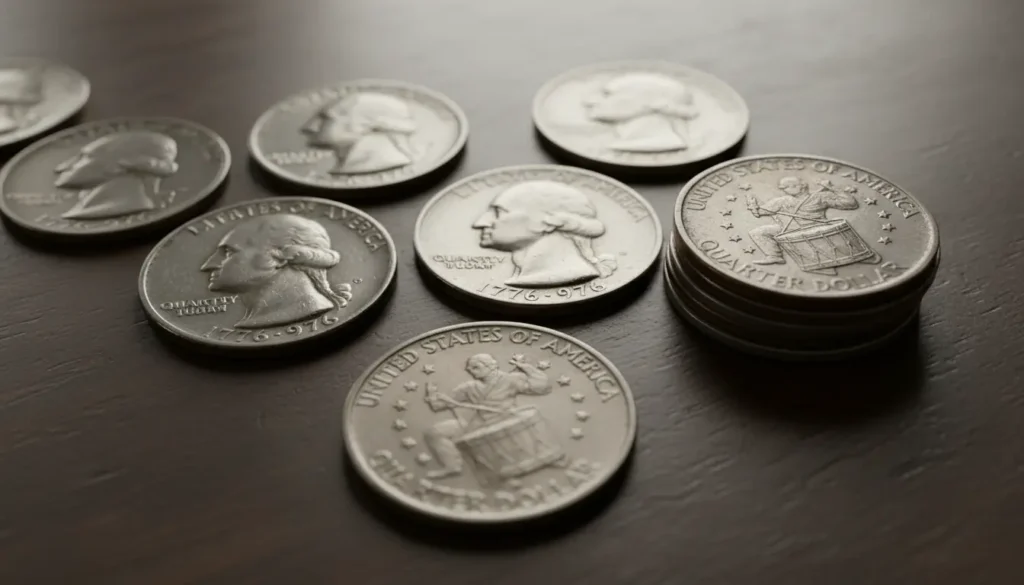
The 1976 Bicentennial quarter was issued to celebrate the United States’ 200th anniversary. Millions were struck for circulation and for proof and uncirculated sets. Because of that huge mintage, most Bicentennial quarters remain common in wallets and coin rolls.
That raises a practical question: could one of these coins be worth one million dollars? This article explains what makes a Bicentennial quarter valuable, how to check yours, and what would realistically be required to reach very high prices.
What Makes a Bicentennial Quarter Valuable?
Value depends on a few clear factors. Quality, rarity, mint errors, and documentation are the main drivers. Most circulation strikes are worth only face value or a small premium to collectors.
Quality and Grade
Coins in higher grades—those with fewer marks and sharper details—are worth more. Grading services such as PCGS and NGC assign numeric grades that help the market determine price. Proof coins and deep cameo proofs often command higher prices.
Mint Mark and Composition
Bicentennial quarters were produced at the Philadelphia, Denver, and San Francisco mints. Proof coins from San Francisco (1976-S) were struck in 40% silver for proof sets, and those silver proofs typically carry a higher baseline value than clad circulation strikes.
Errors and Varieties
Some error coins can be valuable. Examples include double die obverse, off-center strikes, clipped planchets, and broadstrikes. The severity and uniqueness of the error often determine how much collectors will pay.
How to Inspect Your Bicentennial Quarter
Follow a practical, step-by-step approach to assess whether your coin might be worth more than face value.
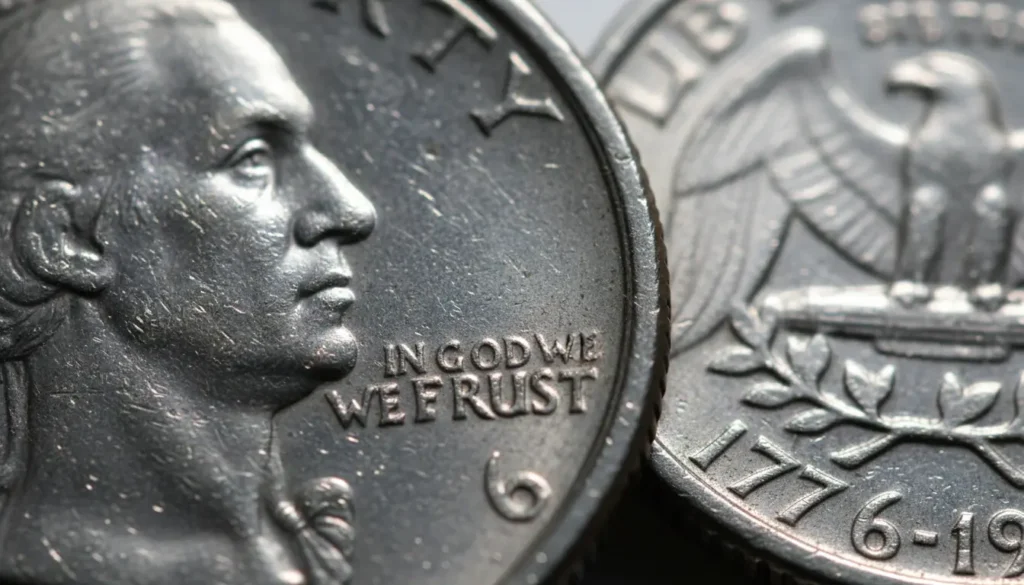
- Look at the mint mark under the eagle or near the date; ‘S’ proofs may be silver.
- Check the surface for unusual features: doubled design, missing elements, strange edges.
- Use a loupe or magnifier (10x) to spot doubling, die cracks, or repunched mint marks.
- Compare to reference photos from trusted numismatic sources or catalogs.
- If you suspect a rare error, do not clean the coin; handle it by the edges and keep it in a holder.
When to Get a Coin Graded
If your inspection finds an apparent error or the coin looks uncirculated and attractive, consider submitting it to a professional grading service. Grading and authentication give buyers confidence and can significantly increase realized prices.
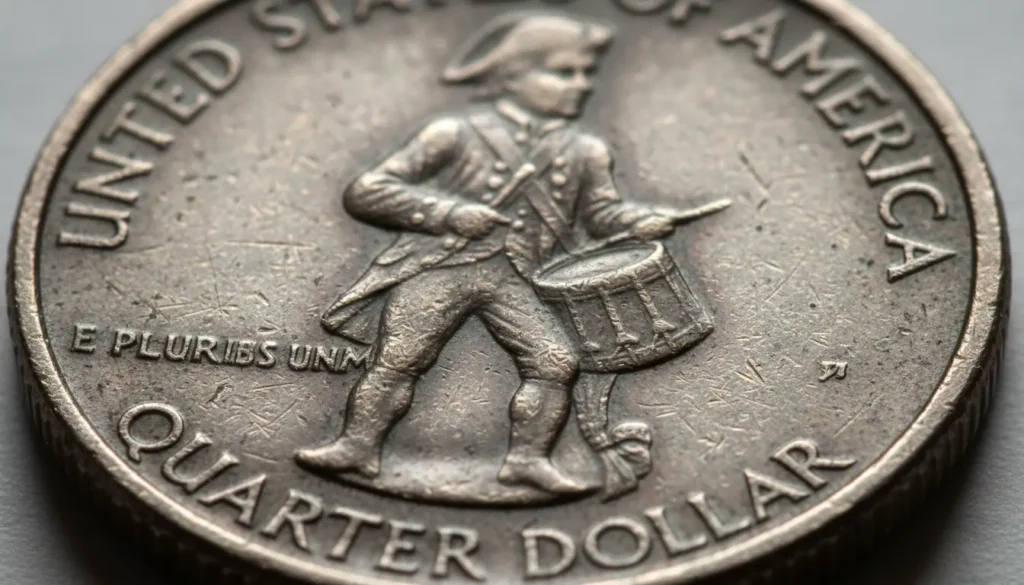
The Bicentennial quarter design features a drummer and a torch inside a colonial-style wreath. The design was used only for 1975–1976 and is unique among Washington quarters.
How Likely Is a $1 Million Value?
Realistically, it is extremely unlikely. Most Bicentennial quarters sell for face value up to a few dollars in circulated condition. Higher-grade or silver proof examples may reach hundreds or low thousands of dollars depending on grade and market demand.
For a Bicentennial quarter to reach $1 million, it would need to be a uniquely rare specimen with an extraordinary error, pristine condition, and impeccable provenance that attracts intense collector or museum demand. There are very few modern coins that ever reach seven-figure prices, and those are typically historically significant rarities or coins with unique legal history.
What Could Increase Value Dramatically?
Several elements combined could push a Bicentennial quarter into very high territory:
- One-of-a-kind, dramatic mint error that is verifiable and documented.
- Top-of-population grade from major grading services (e.g., MS/PR 70 with a single known example).
- Strong provenance linking the coin to an important event, collection, or historical figure.
- High-profile auction interest or competition among collectors and institutions.
Practical Steps If You Think You Have a Rare Bicentennial Quarter
Follow a cautious, methodical plan to preserve value and determine authenticity.
- Do not clean or alter the coin; cleaning can destroy value.
- Photograph the coin clearly from both sides in natural light.
- Compare with reputable reference images and error guides online.
- Seek a professional opinion from a local coin dealer or an accredited grading service.
- If graded, consider auctioning with a reputable numismatic auction house to reach serious collectors.
Small Real-World Example
A collector found a Bicentennial quarter in a jar of change that showed an obvious off-center strike. After documenting the coin and submitting photos to an online forum, the collector sent the coin to a grading service. The error was authenticated and graded, and the coin later sold at a specialized auction for several thousand dollars. While not close to a million, this example shows how verification and market exposure improve chances of a higher sale price.
Bottom Line on Bicentennial Quarter Values
The Bicentennial quarter in your pocket is almost certainly not worth one million dollars. However, errors, high grades, or silver proof examples can be worth far more than face value and are worth checking out. Careful inspection, documentation, and professional grading are the practical steps to determine real value.
If you find an unusual Bicentennial quarter, protect it, document it, and consult experts. That is the most realistic path to realizing any significant value.