Most 1976 Bicentennial quarters in circulation are common and worth face value to a few dollars. However, exceptional varieties and errors occasionally surface that attract collectors and dealers. This article explains what to look for, realistic value ranges, and whether a single quarter could ever be worth $1 million.
How rare is the Bicentennial quarter?
The U.S. Mint produced hundreds of millions of Bicentennial quarters in 1975–1976 to celebrate the United States bicentennial. Because of the large mintage, most pieces are common in circulated grades. High grade examples and routine varieties are plentiful, so typical value stays low.
Rarity comes from two main factors: extremely high grade (near-perfect condition) and unusual minting errors or patterns. Both are rare, but rarity alone does not guarantee a million-dollar value.
What makes a Bicentennial quarter valuable?
Collectors pay premium prices when a coin combines scarcity, demand, condition, and verifiable provenance. For Bicentennial quarters, the following attributes raise interest:
- Exceptional grading by a major service (MS/PR 69–70)
- Clear, dramatic minting errors (major doubling, off-center strikes, wrong planchet)
- Unique varieties with documented provenance
- Proof coins with strong cameo contrast and high-grade certification
Even with these traits, values usually range from tens to thousands of dollars rather than hundreds of thousands or millions.
Types of errors to look for on a Bicentennial quarter
Errors are the most common path to above-average values. Key error types include:
- Double die — clear doubling on lettering or date
- Off-center strike — part of design missing, often measured by percent off-center
- Wrong planchet or clipped planchet — coin struck on an incorrect metal disc or cut incorrectly
- Die cracks and cuds — raised lines or blobs from damaged dies
- Overstrikes and brockage — unusual impressions from prior strikes
Not all errors command big prices. The most valuable errors are dramatic, well-documented, and authenticated by grading services.
Could a Bicentennial quarter be worth $1 million?
In practical terms, a typical Bicentennial quarter from circulation will not be worth anywhere near $1 million. A million-dollar value would require a one-of-a-kind status, exceptional collector demand, and airtight provenance. For most modern-circulated commemorative coins, that combination is extremely unlikely.
Most auction records for modern U.S. quarters that reach high six or seven figures involve historically significant rarities from the 18th or 19th centuries, not common modern commemoratives. A Bicentennial quarter would need an unprecedented story—such as being a unique pattern or an official prototype with direct historical documentation—to approach that level.
Realistic high-value scenarios
- Certified MS70 or PR70 examples with verified provenance: value could be high among dedicated collectors, often in the low thousands to tens of thousands.
- Uniquely struck patterns or official dies used in mint testing with documentation: could command higher sums, but reaching $1 million would require exceptional circumstance.
- Eye-catching and well-documented major mint errors: prices can spike at auction, but again usually stay under six figures for modern quarters.
How to evaluate a Bicentennial quarter from your pocket
Follow these practical steps if you think you have a valuable Bicentennial quarter:
- Inspect the coin with a loupe (10x) for doubling, off-center features, planchet anomalies, or die breaks.
- Check for obvious signs of wear—unworn or lightly worn surfaces are more valuable.
- Photograph both sides in good light for reference and comparison.
- Compare to online guides or coin variety databases for known error types.
- If promising, submit the coin to a reputable grading service (PCGS, NGC) for authentication and grading.
Authentication is crucial. High auction prices depend on third-party certification and clear provenance. Never accept a private appraisal as definitive for rare or high-value coins.
Where to sell a rare Bicentennial quarter
If your coin is certified and appears valuable, these are common selling paths:
- Specialist coin auctions (Heritage, Stack’s Bowers) for high-value items
- Reputable dealers who handle error and modern coin markets
- Established online marketplaces with strong seller protections
Get multiple opinions and condition reports before committing to a sale. Auction houses often provide free preliminary evaluations and can advise on expected market interest.
Case study: A modest real-world example
A collector found an off-center 1976 quarter in change at a local store. After photographing the coin and comparing it to error guides, they took it to a coin show. A dealer advised grading and authenticated the off-center strike. The coin sold at a regional auction for several hundred dollars—far more than face value but well short of astronomical prices.
This example shows how errors can convert pocket change into a profitable find, but it also illustrates typical limits for modern quarters.
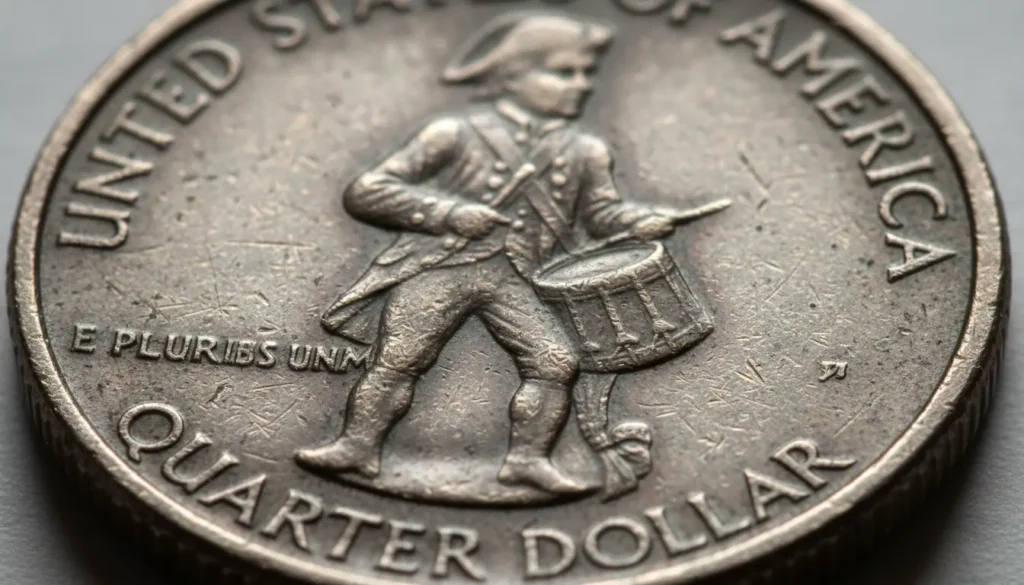
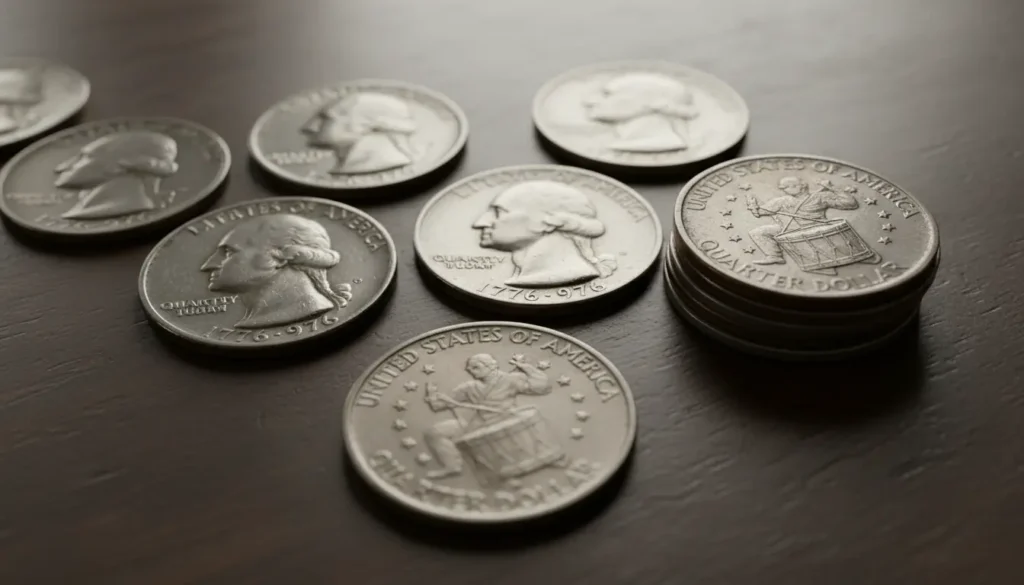
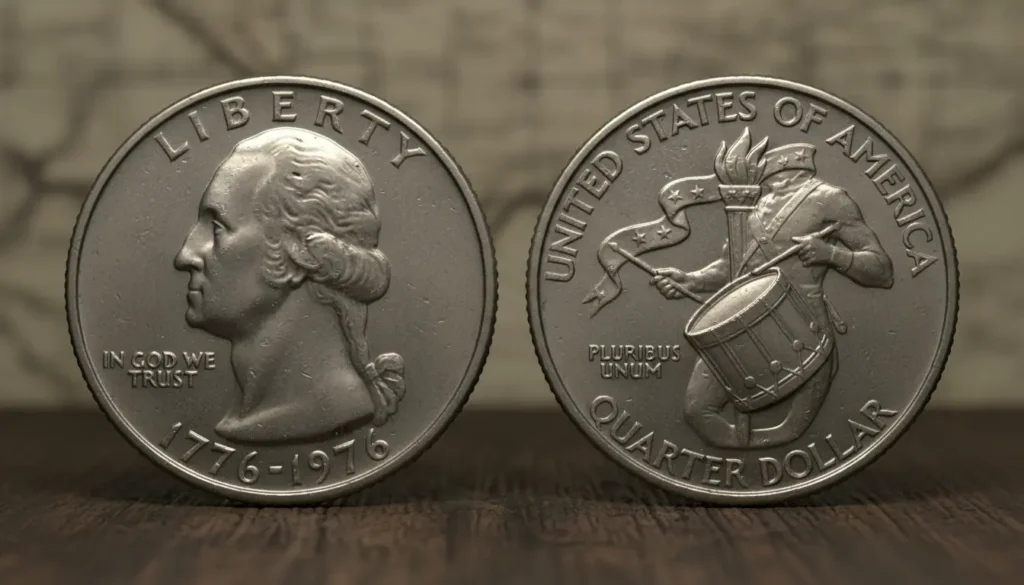
The Bicentennial quarter’s reverse design features a colonial drummer and the dual date 1776–1976. Millions of these were minted, making most pieces common in everyday circulation.
Final advice: Be curious, be realistic
Check your pocket change—finding a special coin is always possible. Use a loupe, take clear photos, and compare to trusted references. If you suspect a significant error or exceptional grade, get professional authentication before selling.
While a million-dollar Bicentennial quarter is extremely unlikely, careful inspection and authentication can still turn a surprising find into real value. Treat each discovery methodically and rely on certified grading and reputable auction channels for the best outcome.