Most 1976 Bicentennial quarters are common and worth only face value to a few dollars. Still, stories circulate about one landing a collector a seven-figure payday. This article explains what to look for, which varieties are genuinely rare, and how realistic a $1 million value really is.
What is the Bicentennial quarter?
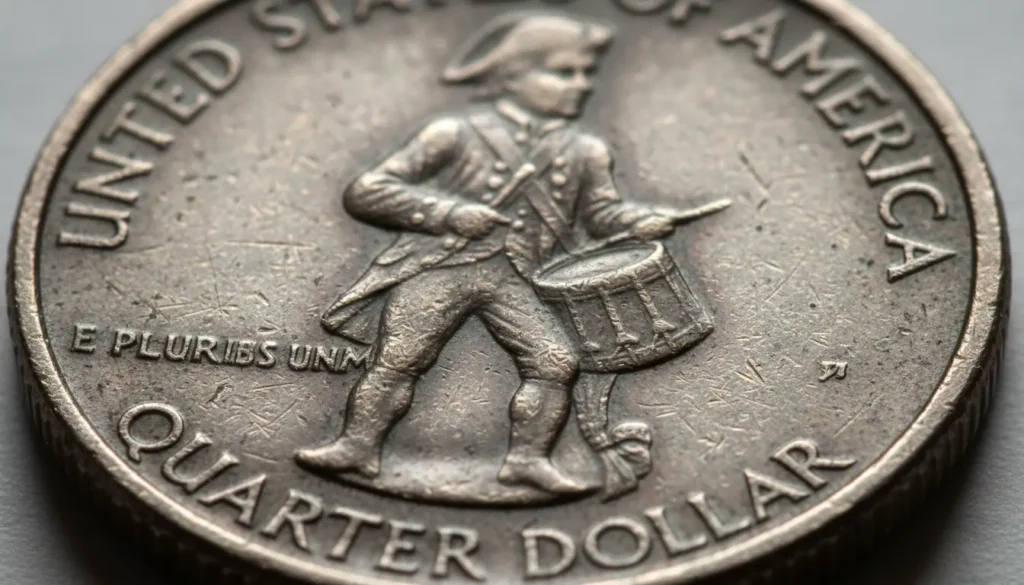
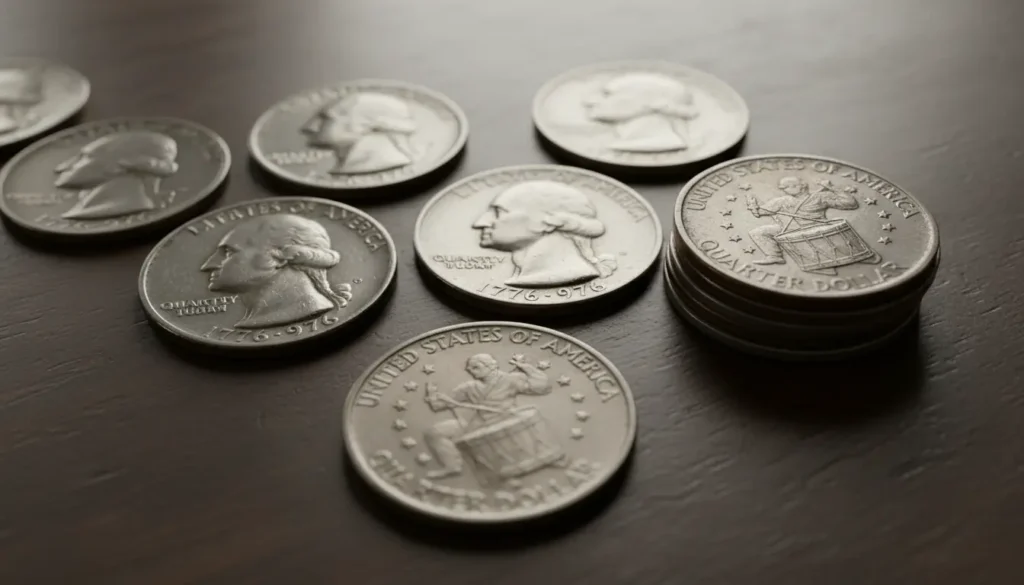
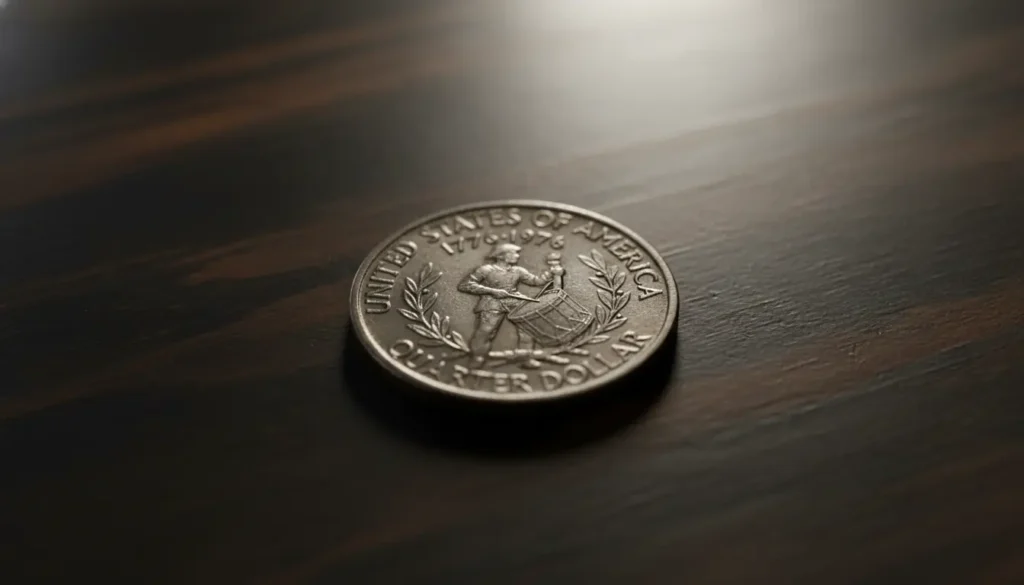
The Bicentennial quarter was issued to mark the 200th anniversary of American independence. Dated 1776–1976, it has a special reverse showing a colonial drummer and 13 stars.
Millions were struck at the Philadelphia, Denver, and San Francisco mints in both copper-nickel and 40% silver proof versions. High mintage makes most pieces common.
Why some Bicentennial quarters are rare
Rarity comes from unusual factors: mint errors, very high collector-grade condition, or extremely limited test strikes. Most circulated coins are abundant, so rarity depends on specific anomalies.
Key rarity factors for Bicentennial quarters
- Mint errors or varieties (mis-strikes, double dies, wrong planchets)
- Proof coins in 40% silver with premium cameo contrast
- High numerical grades from certification services (e.g., MS66–MS70 or PR69–PR70)
- Unique or documented trial strikes and patterns
How to tell if your Bicentennial quarter is valuable
Examine the coin carefully without cleaning it. Cleaning can destroy the surface and reduce potential value dramatically.
Here are practical steps to follow:
- Look for mint marks: D (Denver), S (San Francisco), or no mint mark (Philadelphia).
- Check for errors: off-center strikes, clipped planchets, double dies, or incorrect metal.
- Assess condition: sharp detail, no wear, and original luster indicate higher grades.
- Compare with verified auction results or price guides from reputable sources.
- If promising, photograph both sides and consult an expert or grading service.
Common error types to watch for
- Off-center strikes — part of the design missing on one side
- Double die — visible doubling in lettering or images
- Wrong planchet — struck on a different metal blank (very rare)
- Die cracks or clashed dies that create unusual raised features
Estimated values and the $1 million claim
Most Bicentennial quarters sell for face value up to a few dollars in circulated condition. Uncirculated business strikes typically command $2–$20 depending on grade.
Proof versions and silver proofs are more valuable. Typical values range from $10 to a few hundred dollars for nice proofs. Exceptionally high-graded proofs or rare error proofs can reach into the thousands.
As of 2024, no widely documented sale of a standard Bicentennial quarter has reached $1 million. The $1 million figure is extremely unlikely unless a coin has an extraordinary, verifiable provenance or an unprecedented mint error certified by major grading services.
What to do if you think you have a rare Bicentennial quarter
Follow these safe steps to protect potential value and get a reliable appraisal.
- Do not clean the coin. Keep it in a safe, dry holder.
- Take high-quality photos of the obverse and reverse under good lighting.
- Compare to resources: online coin forums, price guides, and auction records.
- Ask for opinions from multiple reputable dealers or local coin clubs.
- Consider professional grading from PCGS, NGC, or ANACS if the coin appears exceptional.
Grading and authentication tips
- Higher grades (MS or PR 65+) increase value nonlinearly.
- Obtain third-party authentication for error coins to prove the anomaly.
- Keep provenance and any paperwork that documents discovery or prior ownership.
The reverse of the Bicentennial quarter was designed by Jack L. Ahr and shows a colonial drummer surrounded by 13 stars. The obverse uses a modified portrait by John Flanagan.
Case study: A realistic find and outcome
A suburban collector found a shiny Bicentennial quarter in a small change jar and noticed unusual doubling over the date. He photographed the coin, compared photos online, and took it to a reputable dealer. The dealer recommended third-party authentication.
The coin was submitted to a major grading service and returned as an error variety with a premium grade. After auction marketing, the piece sold for several thousand dollars — far above face value but far below the sensational $1 million claim. The sale illustrates how careful documentation and grading increase buyer confidence and value.
Bottom line: Could your quarter be worth $1 million?
While not impossible in the absolute sense, a Bicentennial quarter reaching $1 million is extraordinarily improbable. Most valuable outcomes are in the hundreds to low thousands of dollars for genuine, verified rarities.
If you find a Bicentennial quarter with a clear error or exceptional grade, document it, avoid cleaning, and seek expert authentication. That process will give you the best chance of uncovering real value and avoiding scams.
For everyday collectors, Bicentennial quarters remain an accessible slice of U.S. history and a good introduction to spotting coin varieties and errors.