Overview of the Bicentennial Quarter
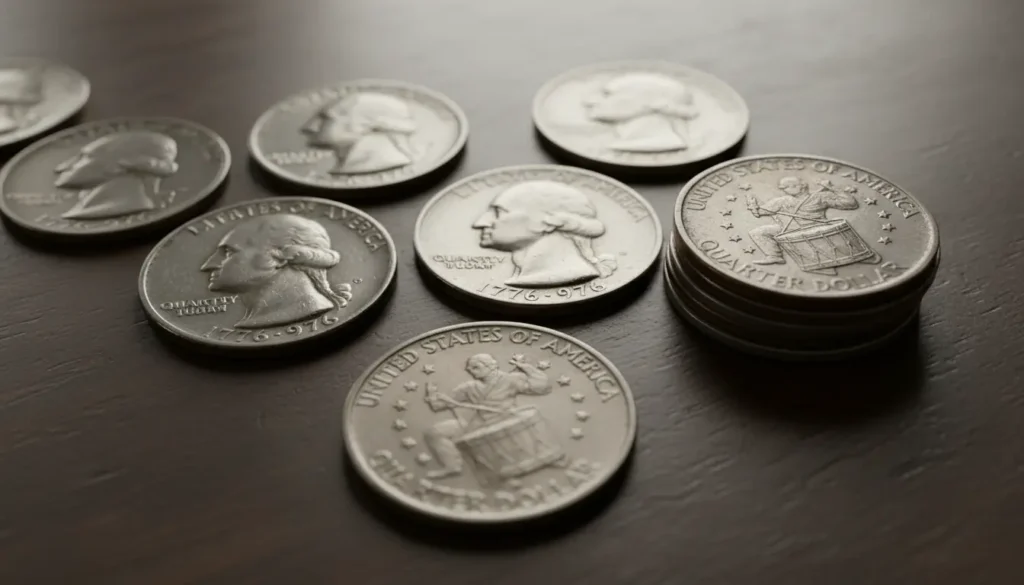
The Bicentennial Quarter was issued in 1975–1976 to celebrate the United States Bicentennial. Millions were produced and many remain in circulation and collections today.
Because so many were made, most Bicentennial Quarters are common and worth face value or modest premiums. That said, specific varieties and errors can be significantly more valuable to collectors.
What Makes a Bicentennial Quarter Rare?
Rarity comes from a few key factors: low original mintage, unusual minting errors, proof or silver composition, and condition or grade. Any one of these can boost value beyond ordinary levels.
Mint marks and production types
Bicentennial Quarters were struck at Philadelphia (no mint mark), Denver (D), and San Francisco (S). San Francisco proofs and some special strike varieties can attract collectors.
Error coins and varieties
Common valuable categories include:
- Off-center strikes
- Double dies on obverse or reverse
- Clipped planchets or wrong planchet material
- Die breaks and cud marks that create unusual designs
Errors that dramatically alter appearance are typically worth more than minor imperfections. However, dramatic values depend on demand and certified grade.
How to Inspect a Bicentennial Quarter
Follow a clear checklist when inspecting a potential rare Bicentennial Quarter. Use good lighting and a 5–10x loupe or magnifier.
- Check the date area for the dual date 1776–1976 clarity.
- Look for mint marks near the obverse neck area.
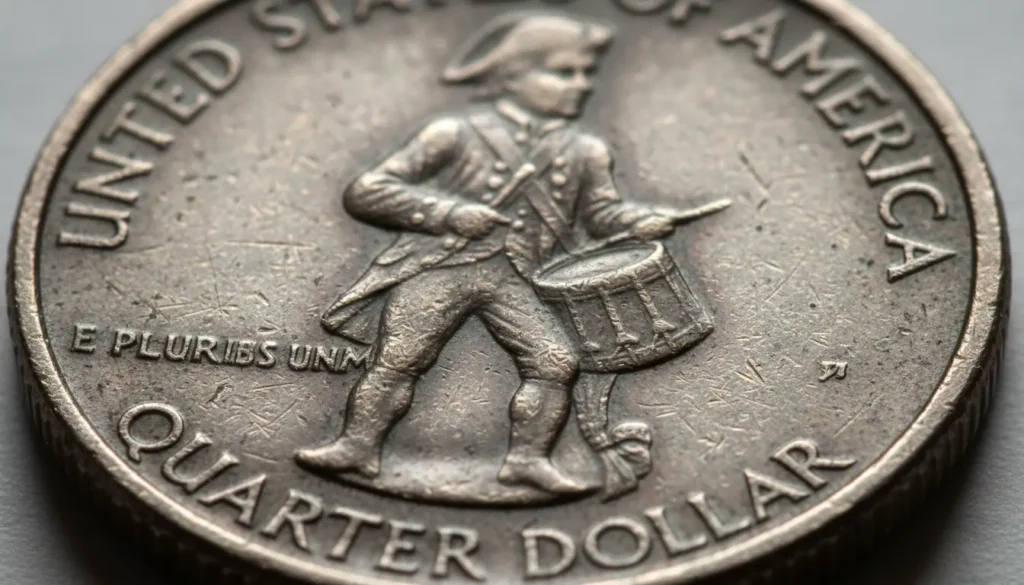
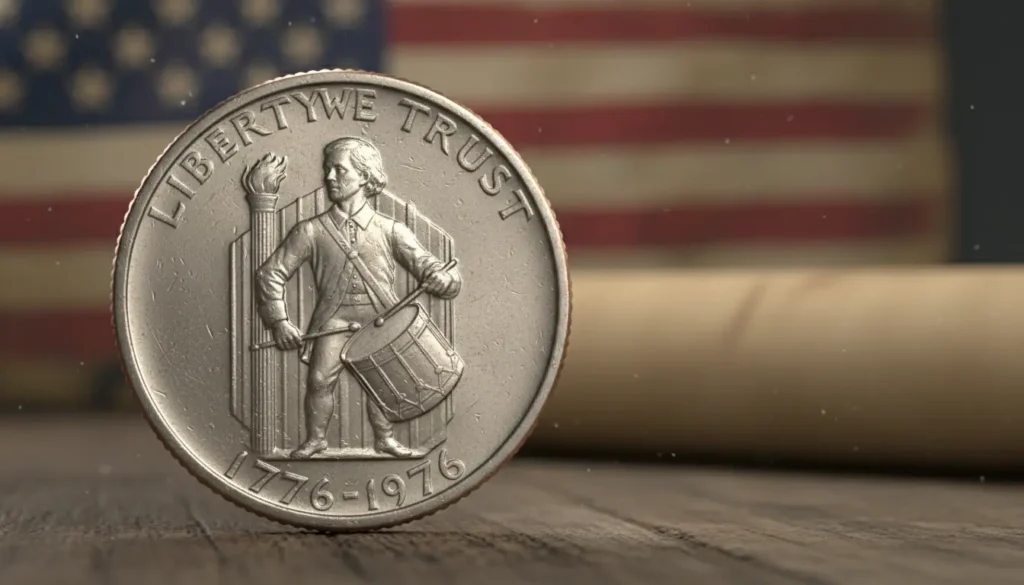
- Examine the reverse details — the drummer and colonial motifs — for doubling or die chips.
- Inspect the rim for clipped planchets or irregular strikes.
- Feel the weight and thickness for wrong-planchet cases; compare to a known-quarter.
When to consider professional grading
If you spot a major error or an extremely well-preserved coin (very high luster, no wear), submit it to a reputable grading service such as PCGS or NGC. Professional authentication and grading often unlock collector trust and higher sale prices.
Most circulated Bicentennial Quarters are worth about face value. Only certified error coins or high-grade proofs typically carry strong premiums.
Realistic Value Expectations
It is extremely unlikely that a Bicentennial Quarter from circulation is worth anywhere near $1 million. High auction results for U.S. coins that reach six or seven figures are almost always for very old, historically significant, or unique rarities.
For Bicentennial Quarters, realistic high values typically come from:
- Certified high-grade proof coins (especially silver-clad proofs)
- Documented mint errors with strong collector demand
- Coins with exceptional provenance or rarity
Case Study: How a Collector Turned a Find into Value
Example: A collector found a Bicentennial Quarter in a roll that showed an unusual die crack and heavy doubling on the reverse. They photographed the coin, compared details with online reference photos, and then sent the piece to a grading company for authentication.
After certification as a verified error coin, the collector listed it at auction with clear images and the grading report. The coin sold for a price well above typical circulation examples, illustrating that authentication and exposure are essential for unlocking value.
Step-by-Step: What To Do If You Think You Have a Rare Bicentennial Quarter
- Stop handling the coin by the faces; hold by the rim to preserve surfaces.
- Document the coin with high-resolution photos showing obverse, reverse, and any errors.
- Compare with reputable references and dealer marketplaces for similar types.
- Consider professional authentication if the error appears significant or the grade seems unusually high.
- Decide whether to sell via auction, specialist dealer, or private sale based on valuation and fees.
Selling and Getting a Fair Price
Before selling, gather documentation: photos, any provenance, and the grading certificate if you have one. Auctions and specialist coin dealers often yield better prices for unusual items because they reach targeted buyers.
Be aware of fees and timing. Auction houses charge commissions and require time to market, but they provide exposure and bidding competition. Dealers provide immediate offers but may pay less than a successful auction bid.
Final Practical Tips
Most Bicentennial Quarters are common, so manage expectations. Use careful inspection, documentation, and professional services when the coin appears to have a real rarity or high grade.
Even if a coin is not a million-dollar find, rare varieties and certified errors can still add meaningful value compared with face value. Good practices protect both the coin and your chances of a fair sale.
If you want, send a clear photo and a description of any markings or anomalies you see, and I can help evaluate what to check next.