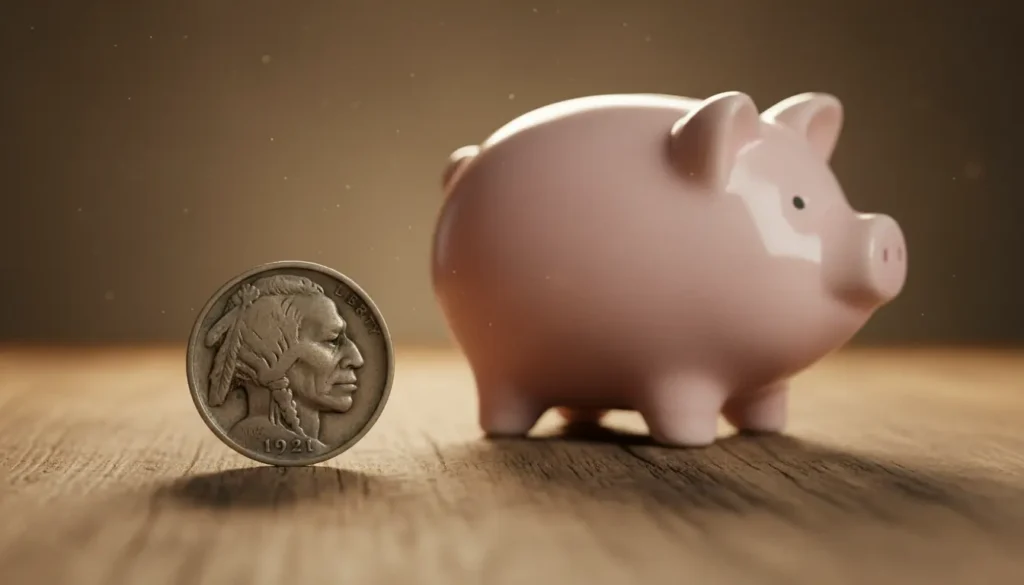
Finding a Buffalo Nickel That Sat in a Piggy Bank for 30 Years
Discovering a Buffalo nickel after it sat in a piggy bank for 30 years is exciting, but it calls for a careful approach. The coin might be common or it could be a key date or error that interests collectors.
This guide explains how to assess, preserve, and, if appropriate, sell or grade the coin in a practical and neutral way.
Quick background on the Buffalo Nickel
The Buffalo nickel, also called the Indian Head nickel, was struck by the U.S. Mint from 1913 to 1938. It is a popular series among collectors because of its age and recognizable design.
Certain dates and mint varieties are scarce or valuable. Knowing the basics helps you spot whether the coin has potential.
How to check the Buffalo Nickel that sat in a piggy bank for 30 years
Follow these practical steps before you do anything else. They protect the coin’s condition and help determine value.
- Handle with care: Hold the coin by the edges to avoid fingerprints and oils.
- Do not clean the coin: Cleaning can drastically reduce value, especially for old coins.
- Check the date and mint mark: Dates can be worn but look closely near the rim for remaining numerals.
- Look for varieties: Some Buffalo nickels, like the 1913-S Type 2 or the 1937-D three-legged, are more valuable.
Inspecting date and mint mark
The date is located on the front (obverse) of the coin near the rim. Mint marks for this series are on the reverse for most years, near the word “FIVE CENTS.” Use natural light and a loupe or magnifier.
If the date is worn off, the coin may still be collectible. Some worn coins still have value due to rarity or attractive surfaces.
Grading basics
Coins are graded by condition from Poor to Mint State. Even a Buffalo nickel that sat in a piggy bank for decades can range from heavily worn to lightly circulated, depending on the environment.
Look for detail on the buffalo’s shoulder and the Indian’s hair. Sharper details mean higher grades and usually higher values.
Common valuable Buffalo nickel dates and varieties
While many Buffalo nickels are common, a few dates and errors are notable to collectors. Check these as you examine the coin:
- 1913-S Type 2 — early strike, sought by collectors.
- 1918/7-S Overdate — rare overdate variety.
- 1937-D Three-Legged — famous error caused by die polishing.
- Key low-mintage dates such as 1926-S in higher grades.
Examples of what to look for
A well-defined buffalo horn and leg, clear date, and minimal rim nicks are signs of a coin in good collectible condition. A worn date or heavy surface marks lower the value.
Minor rim dings or light scratches from a piggy bank are common; these typically reduce value only modestly unless the coin is a rare date in high grade.
What to do next: preserve, research, and verify
Once you identify the coin, take practical steps to preserve and verify it. This protects the coin and gives you options for sale or grading.
- Place the coin in a mylar flip or acid-free holder to prevent further damage.
- Photograph both sides under good light to document condition and details.
- Use a current coin guide or online price database to get a ballpark value for the date and grade.
- Consult a reputable coin dealer or local coin club for a hands-on opinion.
When to get the coin professionally graded
Professional grading makes sense if you believe the coin may be a rare date, a high grade, or a notable error. Grading fees vary and should be weighed against potential value.
If unsure, get an appraisal from a trusted dealer before sending a coin to a third-party grading service.
Small real-world case study
A family found a Buffalo nickel that had sat in a piggy bank since the 1970s and brought it to a local coin shop. The dealer identified the date as common but noted the coin had attractive patina and moderate wear.
After discussing options, the family chose to sell to the dealer for a fair retail price and kept the experience as a small windfall. The dealer advised saving any other coins for potential higher-value finds.
Practical tips for selling or keeping your Buffalo nickel
- If you aim to sell quickly, local dealers offer immediate payment but lower prices than auctions.
- For maximum return, consider graded auctions or specialist coin houses for rare dates.
- If sentimental value matters, preserve the coin in a safe, climate-controlled place.
- Always avoid cleaning or polishing: collectors prefer original surfaces.
Final checklist: Buffalo nickel that sat in a piggy bank for 30 years
- Handle by edges and avoid cleaning.
- Document date, mint mark, and photos under good light.
- Compare with reliable guides and consult a dealer.
- Consider grading only if the coin appears rare or high-grade.
Finding a Buffalo nickel that sat in a piggy bank for 30 years can be rewarding whether it turns out to be common or rare. A careful, methodical approach protects value and helps you make an informed choice about selling or keeping the coin.