The 1975–1976 Bicentennial quarter is one of the most common U.S. quarters in circulation, but collectors still hunt for rare varieties and errors. This guide explains how to tell if your Bicentennial quarter might be valuable and whether a million-dollar coin is realistic.
What Is the Bicentennial Quarter?
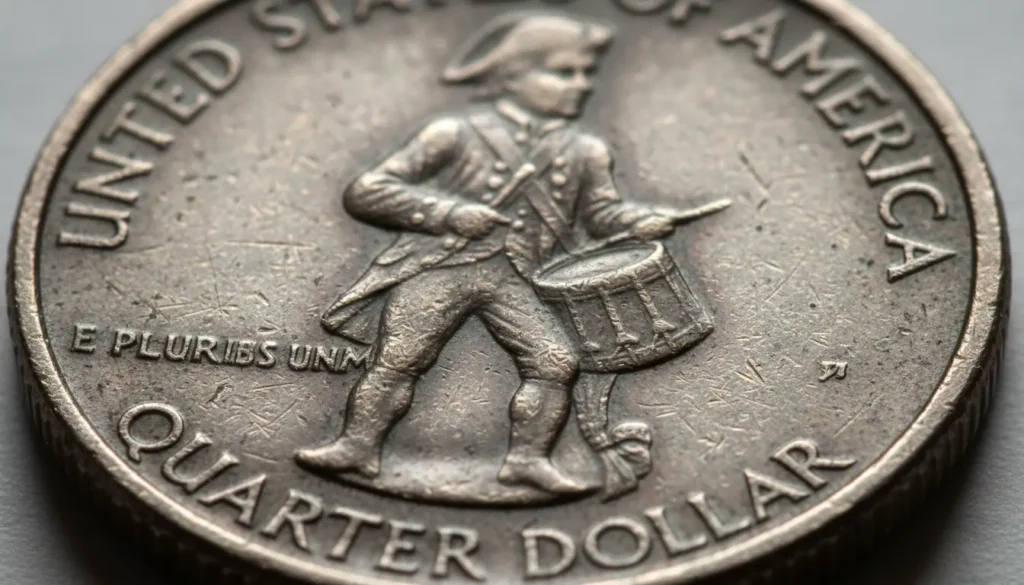
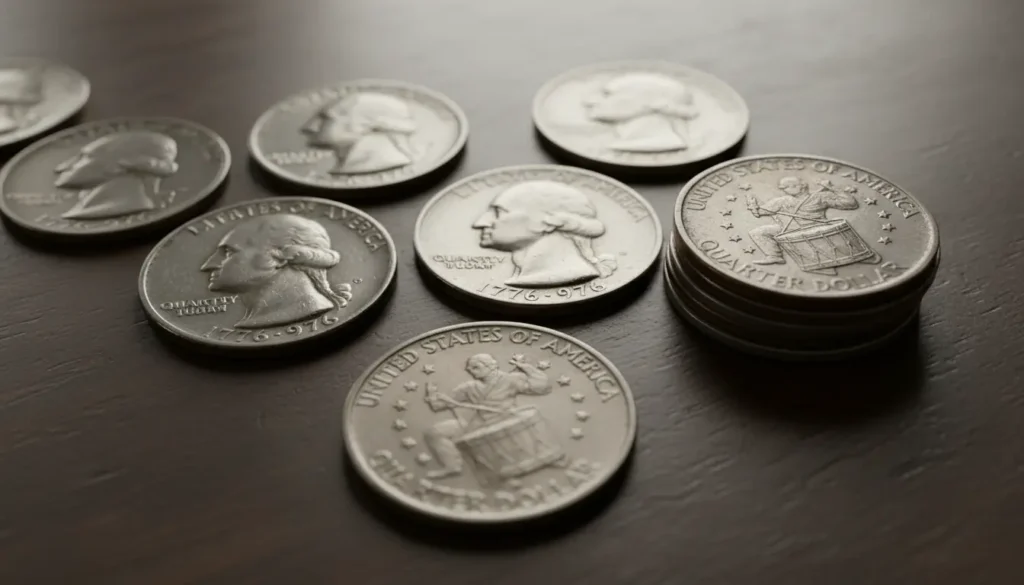
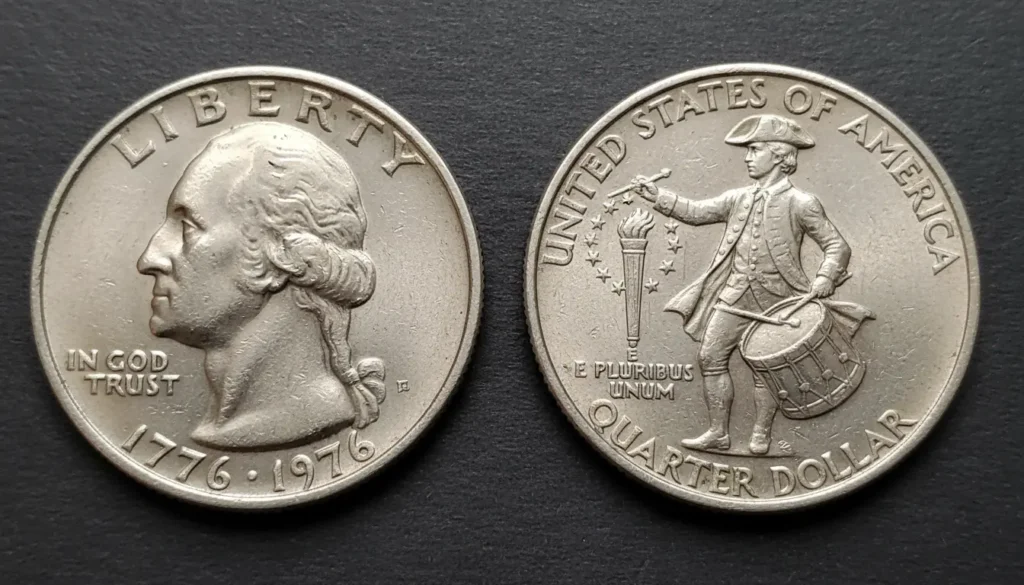
The Bicentennial quarter was issued to mark the 200th anniversary of U.S. independence. It features a special reverse showing a colonial drummer and the dual date 1776–1976. Millions were struck for circulation and for special sets.
Because so many were made, most Bicentennial quarters are common and worth only face value or modest premiums in high condition.
Could a Bicentennial Quarter Be Worth $1 Million?
In short: extremely unlikely. Modern coins reach seven-figure prices only when they are uniquely rare and historically significant, or when a dramatic provenance or error makes them one-of-a-kind.
For the Bicentennial quarter to reach $1 million, it would typically need multiple rare factors at once:
- Documented uniqueness (a single surviving example of a specific error or pattern).
- Absolute top grade (e.g., PCGS or NGC MS/PR 70) with strong eye appeal.
- Strong provenance or celebrity ownership.
- Exceptional error type that collectors prize (major die break, unique obverse/reverse pairing, or pattern coin).
Why $1 Million Is So Rare
Modern commemorative issues were produced in great numbers. Even most error coins from the mid-1970s have multiple examples, which keeps prices far below the seven-figure mark.
A single high-grade error or variety can fetch thousands to tens of thousands of dollars, but crossing the million-dollar threshold would be extraordinary and typically involve historic coins rather than modern circulation strikes.
How to Check If Your Bicentennial Quarter Is Rare
Follow a methodical approach to evaluate your coin. Start with basic inspection, then proceed to professional authentication if warranted.
Step-by-step inspection
- Look for mint mark: Check the obverse near the date. Common marks are D, S, or no mark.
- Check condition: High grade means sharp details and no wear. Use a magnifier for hairlines and luster.
- Search for errors: Off-center strikes, double dies, clipped planchets, or broadstrikes can increase value.
- Avoid cleaning: Cleaning or polishing lowers collector value significantly.
Error types that raise value
- Off-center strikes: Significant off-center errors can be collectible.
- Double die obverse/reverse: Major doubled devices are more valuable than minor machine doubling.
- Clipped planchets and broadstrikes: Visible and dramatic planchet problems can attract buyers.
- Silver proof struck coins: 1976-S proof quarters in 40% silver sets are distinct from regular business strikes.
What Rare Varieties to Look For
Most Bicentennial quarter varieties are modestly priced, but collectors prize certain types. Look for:
- Proof coins from 1976-S in silver sets (different finish and composition).
- Large or obvious mint errors that are well-documented.
- Pattern or trial pieces (very rare and usually known to specialists).
Millions of Bicentennial quarters were struck, but a small number of unusual errors still appear at coin shows and online auctions. Most of these attract collector interest rather than million-dollar prices.
Real-World Example: A Collector’s Discovery
A private collector once found a heavily off-center Bicentennial quarter while sorting pocket change. The coin had about 30% of the design missing but showed complete lettering for the date and part of the drummer. The collector submitted it to a grading service and the coin was authenticated as an off-center strike.
The coin sold for several hundred to a few thousand dollars at auction depending on grade and eye appeal. The sale showed how a dramatic error can turn a common coin into a collectible, though not into a million-dollar piece.
When to Get Professional Grading and Authentication
If your inspection turns up a major error or an exceptional specimen, the next step is professional grading. Reputable services include PCGS and NGC.
Grading provides authentication, assigns a grade, and places the coin in a tamper-evident holder, which helps with resale and insurance.
How to submit and sell
- Document the coin with clear photos before sending it.
- Choose a reputable grading tier based on expected value.
- After grading, sell through established auction houses or specialist dealers to reach serious collectors.
Practical Tips and Warnings
Keep realistic expectations. Most Bicentennial quarters are worth face value or small premiums even in high condition.
Avoid quick online buyers who offer lowball prices. Conversely, be cautious of buyers promising extraordinary sums without inspection or grading.
- Don’t clean coins—cleaning reduces value.
- Start with local coin clubs or reputable dealers for a preliminary opinion.
- Use grading services only if the coin appears rare or valuable after inspection.
Bottom Line
Your pocket change could contain an interesting Bicentennial quarter, and some error pieces command noteworthy prices. However, a Bicentennial quarter reaching $1 million would require an exceptional, one-of-a-kind combination of rarity, grade, and provenance.
Inspect coins carefully, document discoveries, and use professional grading and reputable sales channels when you believe a coin has serious value.