Many collectors and casual finders ask whether a 1976 Bicentennial quarter could be worth an extraordinary sum. This article explains what makes certain Bicentennial quarters rare and how to evaluate one if you find it in pocket change.
What is the Bicentennial Quarter?
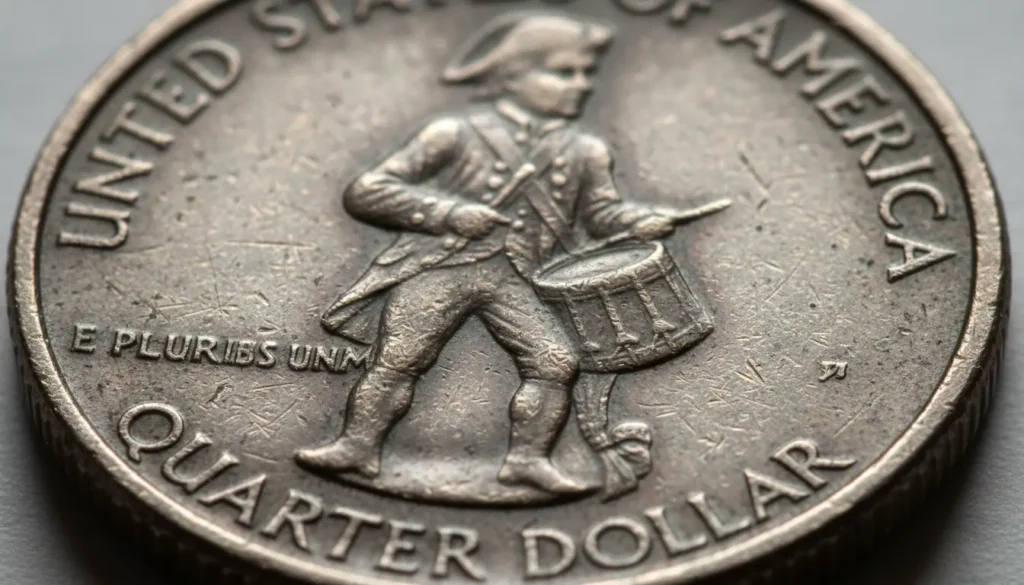
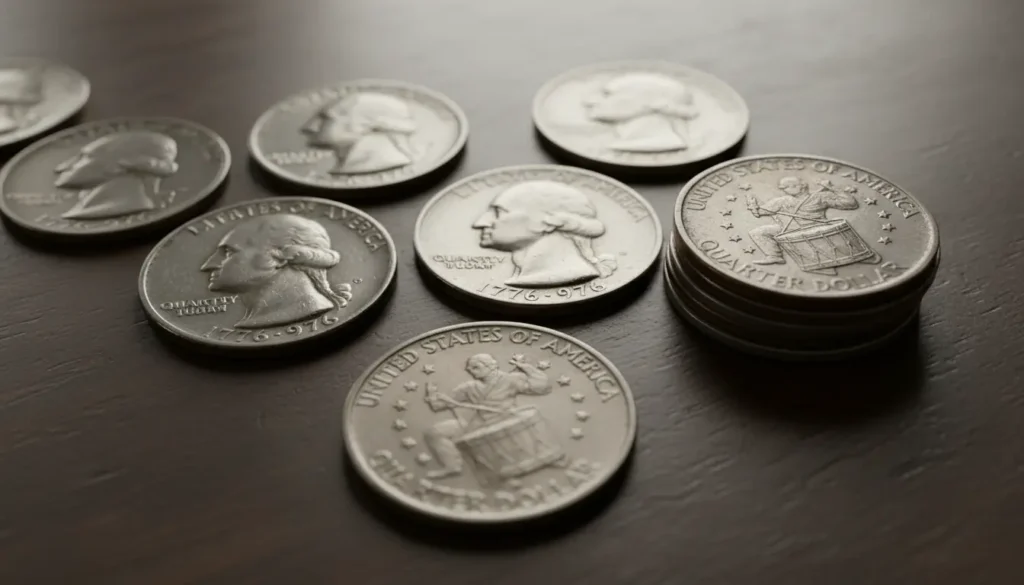
The Bicentennial Quarter was issued to mark the United States Bicentennial. The reverse shows a colonial drummer with the dual date 1776–1976.
These quarters were minted for circulation and in special sets. Millions were produced, but a few varieties and error coins are scarce and sought by collectors.
Design and production details of the Bicentennial Quarter
The obverse retained Washington’s portrait while the reverse used the Bicentennial design by Jack L. Ahr. The mint produced coins at Philadelphia, Denver, and San Francisco facilities.
Some quarters are clad for circulation; others were struck in 40% silver for special proof and mint sets. Knowing the type is the first step in assessing value.
Which Bicentennial Quarters are rare?
Most Bicentennial quarters are common and hold face value for daily use. Rare examples fall into a few categories, and those categories determine collector interest.
Rarity can come from low mintage variants, dramatic minting errors, high grade (uncirculated proofs), or unusual provenance.
Errors and varieties to look for on a Bicentennial Quarter
Key things to check include doubled dies, die cracks, off-center strikes, and incorrect planchets. Some errors are dramatic and attract collectors quickly.
- Double die obverse or reverse — doubled letters or design elements.
- Off-center strikes — part of the design missing due to misalignment.
- Die breaks and cuds — raised lines or blobs on the surface from a damaged die.
- Wrong planchet — a coin struck on a non-quarter blank is rare and valuable.
Could your pocket change be worth $1 million?
In practical terms, the chance that a random Bicentennial quarter in circulation is worth $1 million is extremely small. However, extraordinary examples can command high prices under the right conditions.
Value depends on multiple, interrelated factors that together create rarity and demand.
Factors that drive value for a Bicentennial Quarter
When evaluating a potential high-value coin, consider these elements. Each factor can multiply the coin’s market price if it is extreme or combined with others.
- Type and composition: 40% silver proofs or special mint issues are more valuable than regular clad circulation strikes.
- Condition (grade): Coins graded MS65 and above by major services like PCGS or NGC attract premiums.
- Errors and varieties: Significant minting errors—especially those documented and authenticated—can make a coin rare.
- Provenance: A well-documented history or prior auction results can increase buyer trust and price.
- Market demand: Collector interest in specific varieties affects final sale prices.
How to check a Bicentennial Quarter you find
Follow practical steps before assuming a windfall value. Careful handling and verification matter for accurate assessment and sale.
- Inspect the coin under good light and a loupe for doubling, die breaks, or off-center strikes.
- Check the edge and weight if you have a precision scale; silver proofs have different composition than clad quarters.
- Don’t clean or polish the coin—cleaning drastically lowers collectible value.
- If the coin looks unusual, have it professionally graded or authenticated by a reputable service.
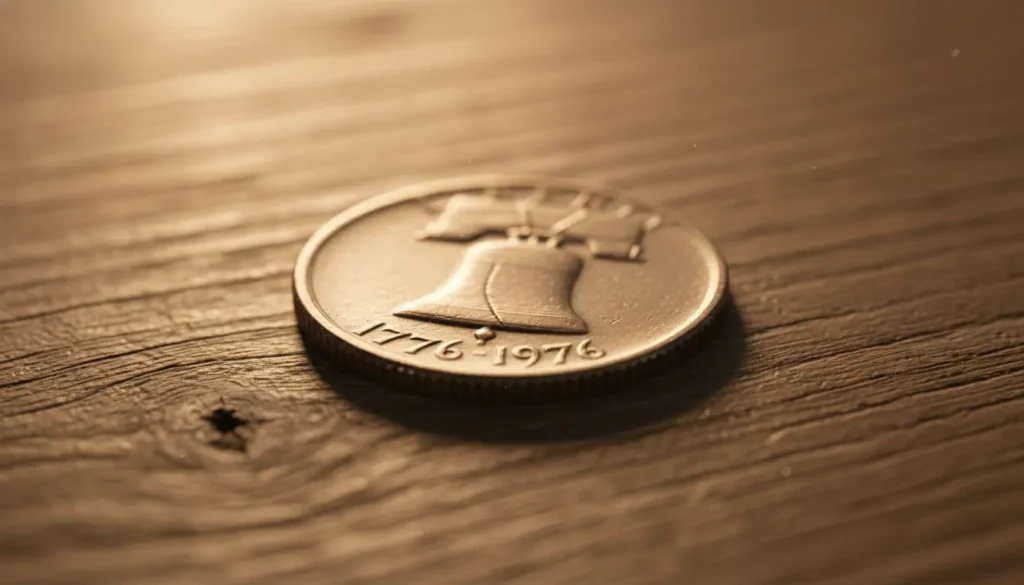
The Bicentennial reverse with 1776–1976 was used only for the 1975–1976 striking period, and the design celebrated the 200th anniversary of U.S. independence.
Real-world example: a careful find and sale process
A collector found a Bicentennial quarter in a small hoard of circulated coins that showed heavy die doubling on the reverse. The finder avoided cleaning the coin and sought opinions from a coin club.
After sending the piece to a professional grading service and getting a verified error attribution, the owner consigned it to a specialist auction house. The coin sold for a significant premium over face value, demonstrating how authentication and proper sale channels affect outcomes.
Practical advice for collectors and finders
If you suspect you have a rare Bicentennial quarter, follow a conservative path. Rushing to sell or altering the coin will often reduce its value.
- Preserve the coin’s condition—do not clean it.
- Get multiple opinions from reputable numismatic sources or local coin clubs.
- Consider professional grading for coins that show obvious rarity signs.
- Research recent auction results for similar varieties to set realistic expectations.
While a million-dollar Bicentennial quarter is unlikely, rare examples do appear and can be valuable. Knowing what to look for and how to handle a find will help you maximize any real value.