Collectors and casual holders often ask whether a common-looking Bicentennial quarter could be worth a fortune. The short answer is: almost never. Still, a few rare varieties and dramatic error coins can move value far above face value.
How rare is the Bicentennial quarter?
The Bicentennial quarter (dated 1776–1976) was struck in very large numbers for circulation and for special sets. Because of that mass production, most examples are common and sell for only face value or modest collector premiums.
That said, not every Bicentennial quarter is identical. Special mint proofs, silver-clad issues, and unusual errors can be rare within the huge overall mintage. Rarity depends on the variety, survival rate, and collector demand.
What could make a Bicentennial quarter worth one million dollars?
A single modern quarter reaching seven figures is extremely unlikely. For a Bicentennial quarter to approach that level it would need several extraordinary traits at once:
- Unique historical significance (a one-of-a-kind pattern or trial strike).
- A completely undocumented and dramatic mint error that is verifiably unique.
- Certification and provenance showing it is the only known example of that error or variety.
Most valuable Bicentennial quarters that do exist derive value from documented error types, proof quality, or exceptional strike and preservation. These can fetch hundreds to thousands of dollars, and in rare instances tens of thousands, but seven-figure prices are essentially reserved for unique coins of major historical importance.
Mint errors and off-metal strikes
Error coins are the most common source of surprises. Types that can add value include off-metal strikes, double strikes, major die breaks, and coins struck on the wrong planchet. An off-metal quarter that looks and tests like silver rather than the usual clad composition can be valuable to collectors.
However, many supposed “errors” are actually post-mint damage or altered pieces. Authentication by a reputable grading service is essential before assigning serious value.
Proofs, special varieties, and collector demand
Proof coins from the San Francisco Mint or special silver sets often command higher prices, especially in top grades. Some collectors will pay strong premiums for pristine examples graded PR70 or MS70 by established services.
Still, even high-grade Bicentennial proofs are pieces that many collectors can obtain; therefore their value rarely balloons into the six- or seven-figure range.
How to inspect your Bicentennial quarter
If you find a Bicentennial quarter and wonder whether it could be valuable, follow a systematic inspection routine before getting excited.
- Observe the mint mark: Look for D or S. San Francisco proofs often carry the S mark and may have different composition in special sets.
- Use a magnifier: Check for doubling, die cracks, misaligned dies, or unusual details on the obverse and reverse.
- Check the edge: Some error coins have smooth edges or unusual layering visible at the rim.
- Compare to a known example: Use reference guides or high-resolution images from reputable sources to compare details.
- Document condition: Take clear photos of both sides under good light and note any scratches, discoloration, or defects.
These initial checks will help you decide whether to pursue professional authentication. Avoid cleaning the coin or doing anything that could reduce its collectible value.
Getting a Bicentennial quarter authenticated and sold
If your inspection suggests something unusual, the next step is third-party grading and authentication. The two widely recognized services are PCGS and NGC. They can confirm an error type, variety, and assign a grade that helps determine market value.
After authentication, coins are typically offered through reputable auction houses or specialist dealers. High-quality photos, full provenance, and independent certification are critical to achieving top prices.
Where to sell
- Major auction houses with coin departments
- Specialist coin dealers and bidding platforms
- Certified marketplaces that accept graded coins
Expect fees for grading and auction consignments. Those costs are worth it only when the potential value justifies the expense.
Real-world example: a notable Bicentennial quarter sale
A collector submitted a 1976-S proof Bicentennial quarter exhibiting an unusual die defect to a grading service. The coin, after authentication and grading in a high condition, sold at auction for several thousand dollars. The premium reflected rarity within the proof series and strong collector interest.
This example shows the normal scale of possible outcomes: careful inspection, grading, and a good auction can significantly increase value, but results tend to be modest compared with the million-dollar scenario.
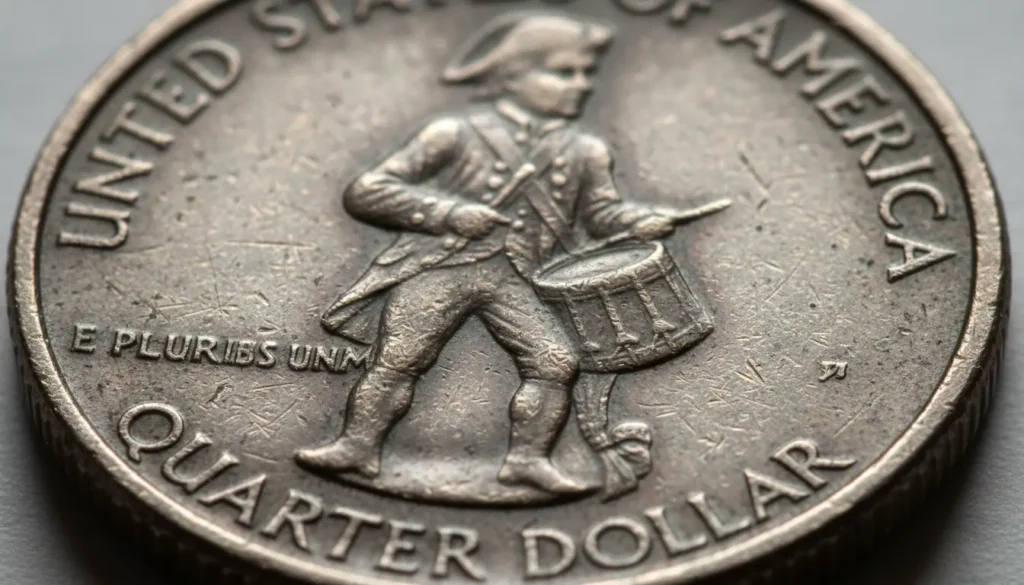
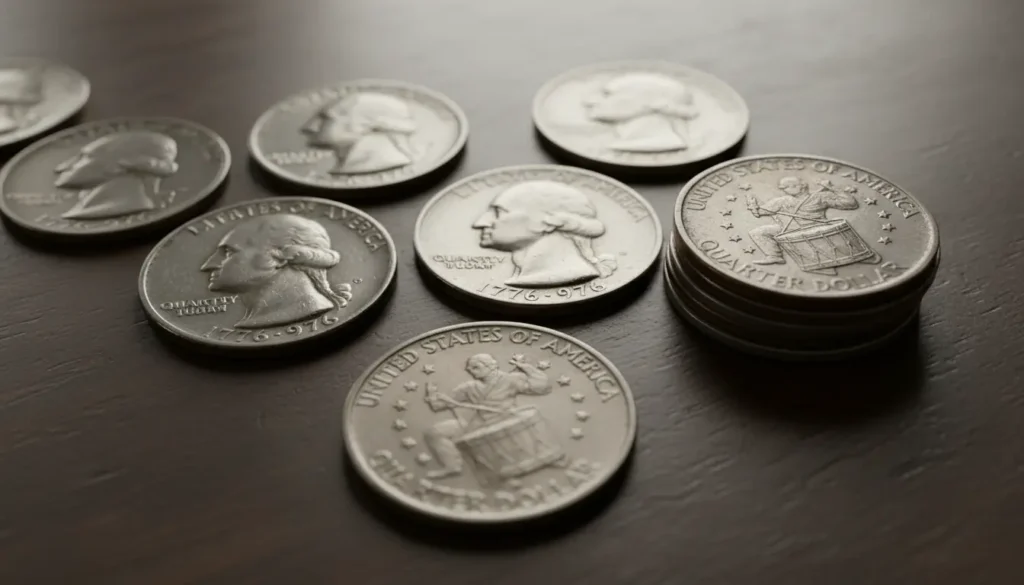
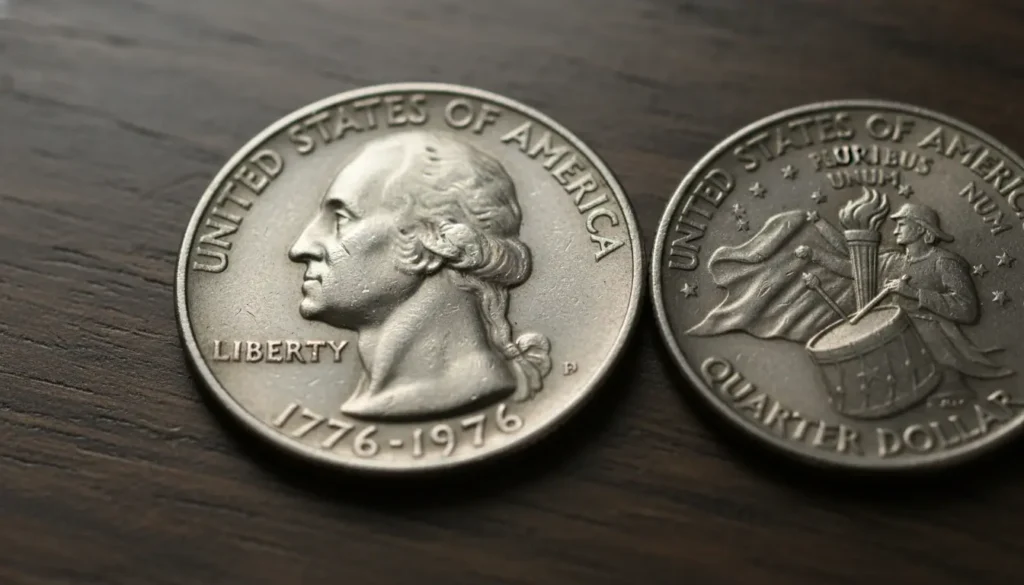
The Bicentennial quarter was issued with a special reverse design featuring a colonial drummer and dual date 1776–1976. The coin circulated widely and was also sold in special proof and silver sets.
Bottom line: is a $1 million Bicentennial quarter realistic?
Realistically, finding a Bicentennial quarter in your pocket that is worth one million dollars is extremely unlikely. Most Bicentennial quarters are common and trade at face value or modest premiums.
If you believe you do have something rare, the practical route is clear: document the coin, avoid cleaning or altering it, and submit it to a reputable grading service. Authentication is the only way to move from curiosity to marketable value.
Use reliable references, consult experienced dealers, and remember that patience and accurate documentation are key to realizing the true value of any potentially rare coin.