The 1976 Bicentennial quarter is a familiar coin in U.S. pocket change. Most are common and worth face value. However, certain errors, varieties, or unusually high grades can increase value substantially.
What Is the Bicentennial Quarter?
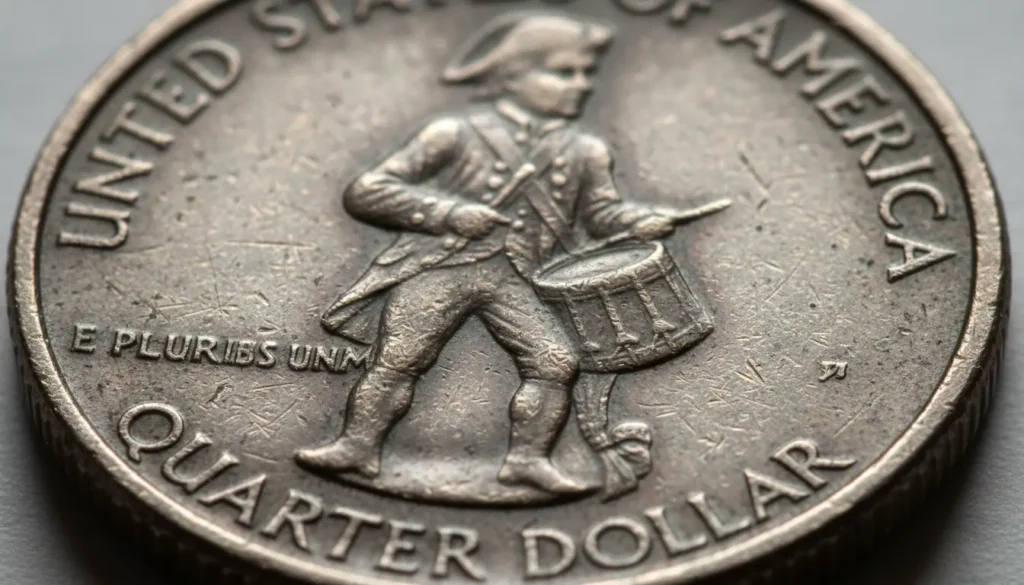
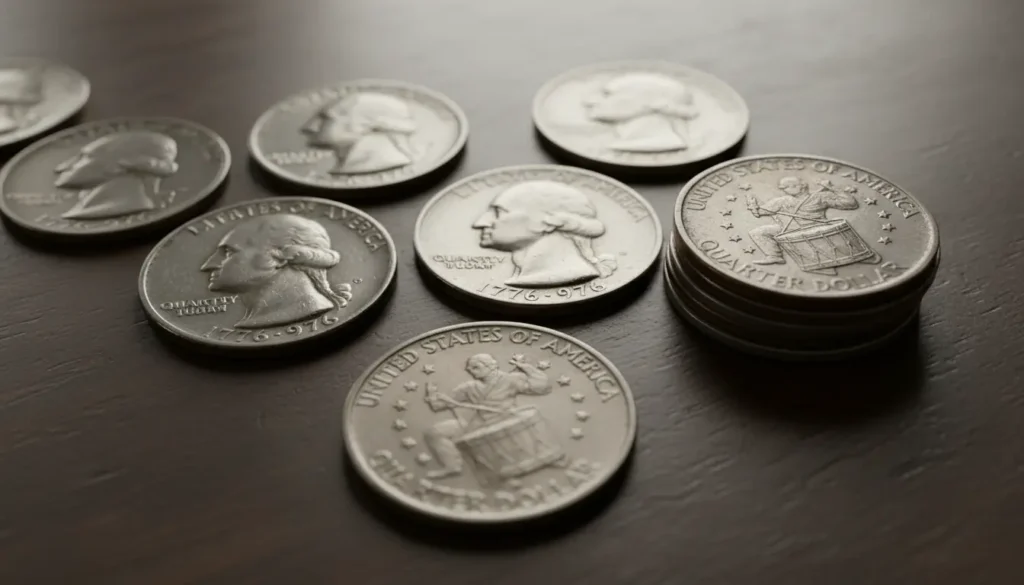
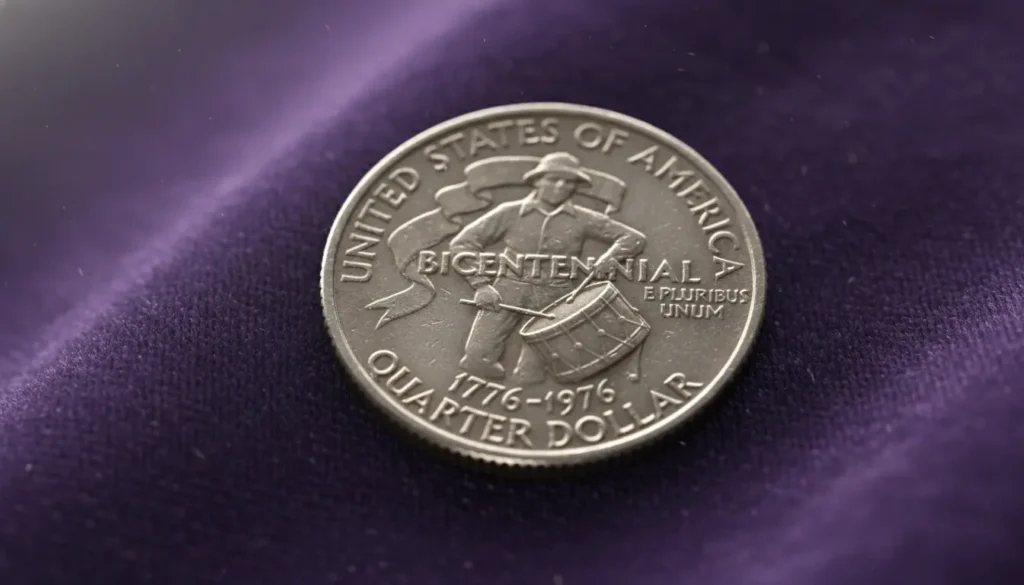
The Bicentennial quarter was issued in 1975–1976 to celebrate the United States’ 200th anniversary. It features a special reverse design showing a colonial drummer and the dual date “1776—1976.”
Millions were minted for circulation and collectors. That means the majority are plentiful and inexpensive. Still, collectors look for specific traits that make a coin rare or desirable.
How a Rare Bicentennial Quarter Could Be Valuable
Value depends on three main factors: rarity of the variety or error, the coin’s grade (condition), and market demand. All three must line up for a coin to reach very high prices.
Minting Errors and Varieties
Error coins attract collectors because they are unusual. Errors include doubled dies, repunched mint marks, die cracks, broadstrikes, and planchet flaws. Varieties mean deliberate design or die differences that were limited in production.
- Common errors: die scratches, minor die cracks — usually small premiums.
- Notable errors: doubled die obverse or major repunched mint marks — can be much more valuable.
- Proof vs business strikes: proof coins were made for collectors and are often in better condition.
Condition and Grading
Condition is critical. Coins are graded on a 70-point scale (MS for mint state). A high grade for a rare variety can multiply value many times over.
Certification by a reputable grading company (PCGS, NGC, ANACS) adds buyer confidence. Uncertified coins are harder to sell for top prices.
Signs to Check for a Rare Bicentennial Quarter
If you want to inspect pocket change, use a loupe (10x) and a good light. Look for anomalies that stand out from typical circulation wear.
- Clear doubles on obverse lettering or the drummer reverse.
- Odd mint marks or evidence of a repunched mint mark.
- Planchet errors: clipped planchets, wrong metal composition, or lamination flaws.
- Sharp, uncirculated surfaces with original luster — candidates for grading.
How to Verify and Value a Potentially Rare Bicentennial Quarter
Follow systematic steps to verify a find. Rushing into a sale can result in lost value.
- Document the coin with clear photos of both sides and close-ups of the anomaly.
- Compare with reputable references: coin guides, auction archives, and error coin databases.
- Ask a local coin dealer for a preliminary opinion. Choose a dealer with good reviews.
- If promising, submit the coin to a recognized grading service for certification.
Certification typically takes time and a fee. The certificate provides an objective grade and can significantly affect market value.
The Bicentennial quarter reverse with the drummer was designed by Jack A. L. Roberts Jr. and was produced only for the 1975–1976 coinage to mark the 200th anniversary.
Real-World Example: A Practical Case Study
A hobbyist found a 1976 quarter with an unusual doubling near the date. They photographed the coin and posted images on a numismatic forum for feedback. Collectors suggested it might be a doubled die.
The hobbyist then visited a reputable coin shop and received a careful evaluation. The dealer recommended grading because the coin’s features were consistent with known doubled die varieties. After certification, the coin sold to a specialty collector for a price well above face value.
This example shows the practical path: notice, document, seek expertise, certify, then sell. Each step increases the chance of realizing the coin’s full value.
Could a Bicentennial Quarter Be Worth 1 Million?
It is extremely unlikely. For any coin to approach seven figures, it must be both unique and in superb condition with strong market demand. Bicentennial quarters were made in huge quantities, so true uniqueness is rare.
Exceptional scenarios that might push value very high include an undiscovered unique error on a high-grade specimen with provenance. Even then, other rarer series are more likely to reach million-dollar prices.
Practical Tips for Collectors and Finders
- Keep a basic coin kit: loupe, scale, soft gloves, and storage flips.
- Learn common Bicentennial varieties so you can spot unusual features quickly.
- Use trusted grading and auction services; avoid quick, lowball offers from unknown buyers.
- Document provenance when possible; a clear history can increase trust and value.
Summary and Next Steps
Most Bicentennial quarters are common and worth face value. Some error coins and high-grade specimens have notable collector interest and can be worth hundreds or thousands of dollars.
To assess a coin: inspect carefully, document anomalies, seek expert input, and consider professional grading. This practical process gives you the best chance to discover if a coin is truly valuable.
If you think you found a rare Bicentennial quarter, start with clear photos and a visit to a trusted dealer or numismatic community. That measured approach protects both value and peace of mind.