The 1976 Bicentennial Quarter is common in pocket change, but a few examples are genuinely valuable. This guide explains what to look for, how coins are graded, and whether a Bicentennial Quarter could realistically be worth $1 million.
Why the Bicentennial Quarter is interesting
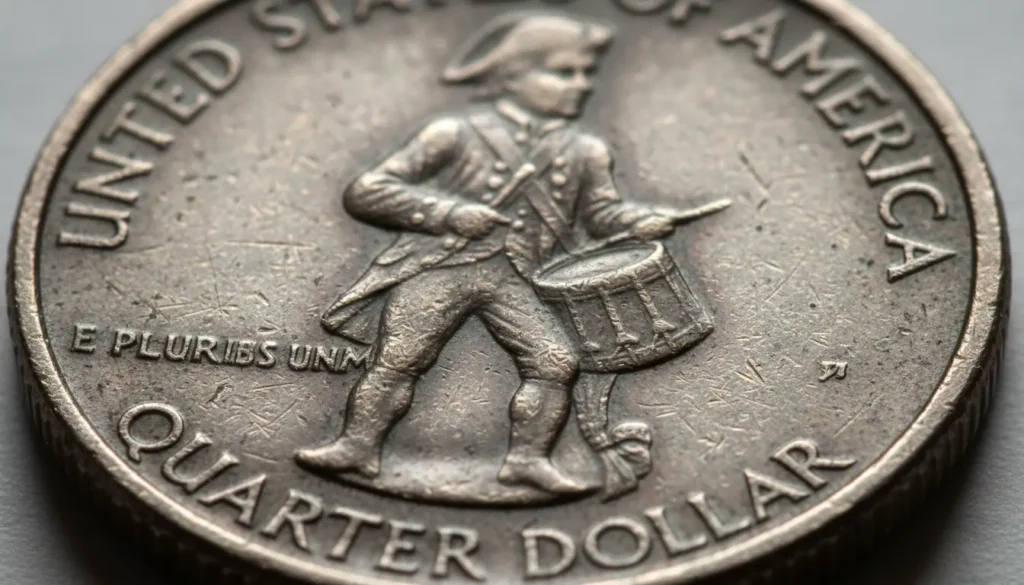
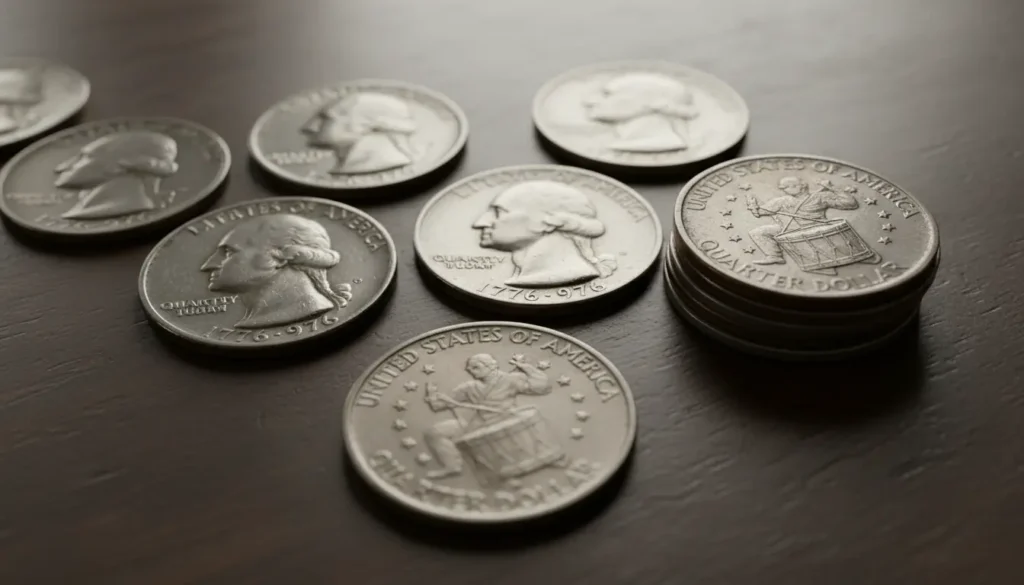
The Bicentennial Quarter was issued to mark the United States’ 200th anniversary. Every quarter produced in 1975 and 1976 carried the dual date 1776–1976 and a special reverse showing a colonial drummer.
Because millions were minted for circulation, most Bicentennial Quarters are common and worth face value or modest premiums. However, collectors pay attention to mistakes, mint proofs, and exceptionally high grades.
What makes a Bicentennial Quarter valuable
Several factors can raise the value of a Bicentennial Quarter. Rarity, condition, mint errors, and provenance are the main drivers for high prices.
Mint marks and types
Look for the mint mark and the finish. Circulation strikes came from Philadelphia (often no mint mark) and Denver (D). San Francisco (S) produced proof coins for collectors. Proof coins and mint sets are typically more valuable than circulated pieces.
Errors and varieties
Errors that can increase value include double dies, off-center strikes, clipped planchets, and broadstrikes. Some errors are dramatic and rare, while others are minor and common. The more dramatic and documented the error, the more collector interest.
Condition and grading
Coin grading companies assign numeric grades based on wear, luster, and strike. High mint state (MS) or proof (PR) grades—especially MS67+/PR69+—command much higher prices. A perfectly preserved coin with original luster can be worth hundreds or thousands more than a worn example.
How to inspect a Bicentennial Quarter
Use a magnifier, good light, and these practical steps to evaluate a quarter before assuming it’s valuable.
- Check the date and reverse: confirm 1776–1976 and the drummer design.
- Find the mint mark: look near the obverse or on the edge depending on the strike.
- Inspect for errors: off-center, double die, missing elements, or unusual planchet material.
- Assess wear: compare high points like Washington’s hair and the drummer’s detail for signs of circulation.
- Document and photograph both sides for records and any future grading submission.
When to suspect extreme value
Only a very small subset of Bicentennial Quarters might reach five- or six-figure values, and claims of a million-dollar coin require exceptional circumstances. Those include an absolutely rare mint error, a unique pattern strike, or an exceptional grade with strong provenance.
The Bicentennial Quarter was issued for two years (1975–1976) and includes the dual date 1776–1976 on the obverse. Despite the special design, most were intended for everyday use and remain common in circulation.
Steps to verify and value a rare Bicentennial Quarter
If you think you found a rare piece, follow a measured process to verify value. Rushing or relying on single online listings can lead to mistakes.
- Photograph both sides in clear light and note any unusual features.
- Compare to reputable guides and error directories focused on 1976 quarters.
- Ask for a second opinion from a local coin dealer or club—preferably someone with solid references.
- Consider professional grading (PCGS, NGC) if the coin appears uncirculated, proof, or shows a clear major error.
- Research auction records and completed sales rather than asking prices to gauge realistic value.
Realistic market expectations
Most circulated Bicentennial Quarters are worth face value or a small premium. Uncirculated or proof examples in high grades can be worth significantly more, but extreme valuations are rare.
Remember that condition and documented rarity drive prices. A coin micro-rare among millions can still be worth only a few hundred dollars unless it has an unusual, authenticated error or flawless proof-grade preservation.
Case study: a collector’s discovery
A hobbyist cleaning out a childhood coin jar found a 1976-S quarter in a mint plastic holder. The coin looked deeply proof-like with strong mirror fields and sharp devices, so the collector submitted it to a grading service. After professional grading, it returned as a high proof grade and sold at auction for several thousand dollars.
This example shows two points: proofs and high grades attract premium prices, and professional grading often unlocks market confidence and better sale results.
Could a Bicentennial Quarter be worth $1 million?
In practical terms, the odds are extremely low. For a Bicentennial Quarter to reach seven figures it would need to be uniquely scarce and verifiably important—think an unreported pattern or an error coin of previously unknown type with impeccable provenance.
Most collectors and professional coin graders will advise caution: expect modest premiums for high-grade or error Bicentennial Quarters, not lottery-level windfalls.
Final checklist before selling or grading
- Confirm the coin is a genuine 1776–1976 Bicentennial Quarter and note the mint mark.
- Look for clear, dramatic errors visible under magnification.
- Document the coin and get independent opinions before grading or selling.
- Research recent auction results for similar coins—focus on completed sales.
Finding a rare Bicentennial Quarter is exciting, but realistic expectations matter. Follow careful inspection, documentation, and trusted grading channels to determine true value. Most are modestly worth a little more than face value, while a tiny number will attract collector premiums—but a $1 million outcome would be extraordinary and requires exceptional proof.