Many people still carry or find 1776–1976 Bicentennial Quarters in jars, pockets, and drawers. The idea that a common commemorative coin could be worth $1 million makes for a great question. This article explains what to look for, realistic values, and how to protect and verify a potentially valuable Bicentennial Quarter.
What Is the Bicentennial Quarter?
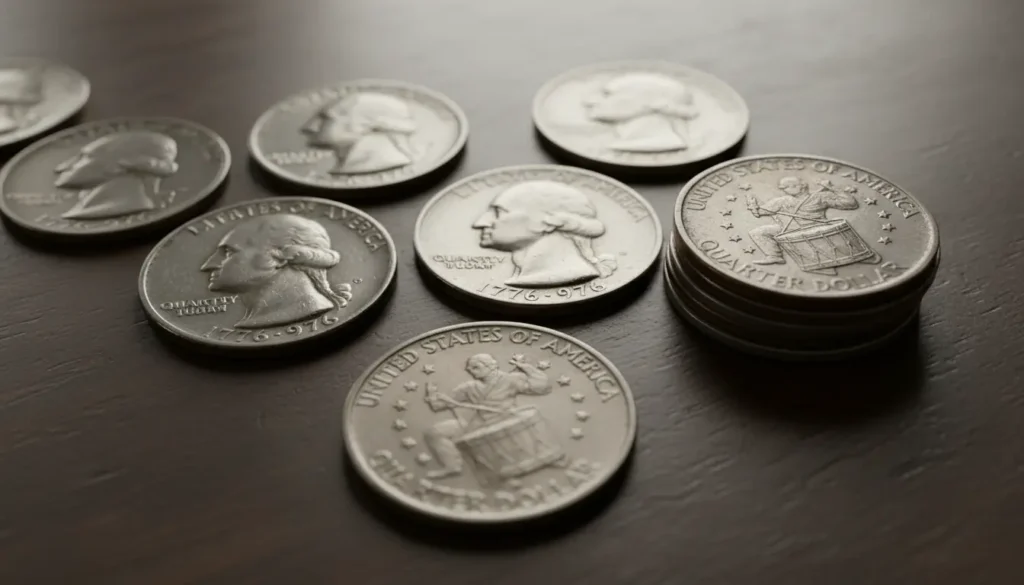
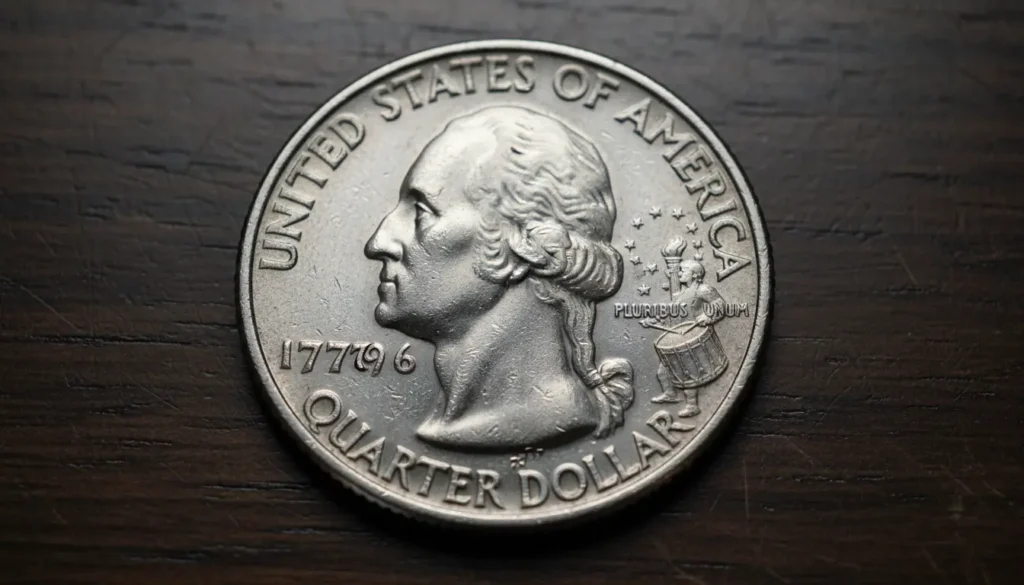
The Bicentennial Quarter was issued to mark the United States bicentennial and bears the dual date 1776–1976. It was produced for circulation and for collector sets during 1975–1976.
Design and minting details of the Bicentennial Quarter
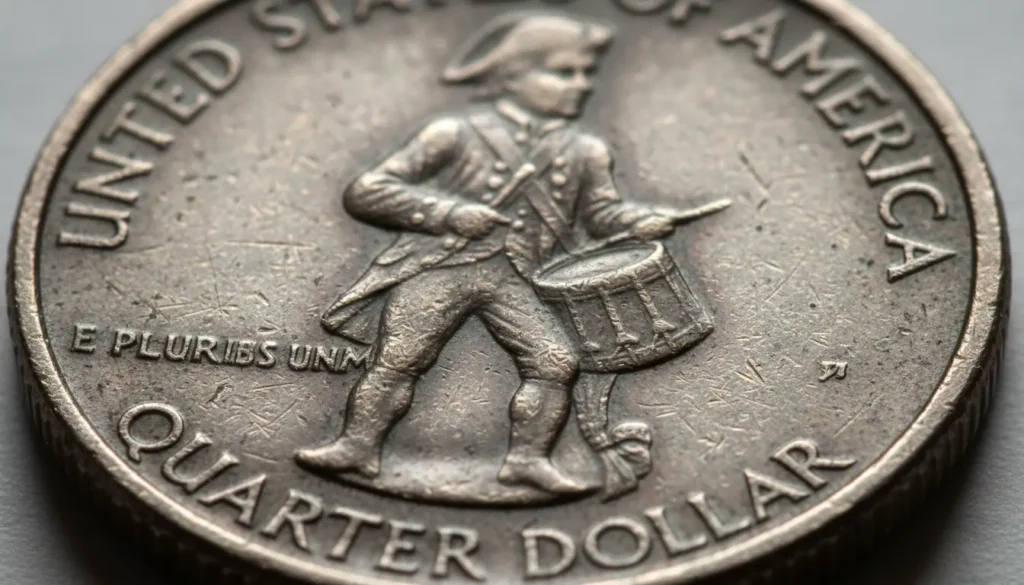
The obverse retains the Washington portrait, while the special bicentennial reverse was designed for the 200th anniversary. The U.S. Mint struck billions of circulation coins and also made special proof and silver-clad collector pieces.
Key production points to remember include mint marks (D, P, S) and the existence of 40% silver proof quarters from San Francisco for collectors.
Why Some Bicentennial Quarters Can Be Valuable
Most Bicentennial Quarters are common and worth only face value or modest premiums. A few, however, attract collector interest because of scarcity, condition, or striking errors.
Common value drivers for Bicentennial Quarters
- High grade (MS/PR 65+ or better) with original luster and no contact marks.
- Mint state 40% silver proof examples (San Francisco proof issues) in high grade.
- Striking errors, such as off-center strikes, clipped planchets, or significant die breaks.
- Varieties and anomalies confirmed by major grading services (PCGS, NGC).
While these factors can raise value, the step from a valuable coin to a million-dollar coin is a very large one. Extreme rarity plus collector demand are needed for truly astronomical prices.
Errors and Varieties to Watch For on a Bicentennial Quarter
If you suspect you have a special piece, look for visible and measurable anomalies. These are the error types that historically attract premiums.
- Off-center strikes — significant misalignment of the design.
- Clipped planchets — partial missing metal along the rim.
- Die cracks or die breaks — raised lines or blobs where the die failed.
- Double striking or doubled die features — repeated design impressions.
- Wrong planchet — evidence the coin was struck on a nonstandard metal blank.
Errors must be substantial and well-documented to command high prices. Minor imperfections are common and have limited value.
How to Check if Your Bicentennial Quarter Could Be Valuable
Follow these practical, step-by-step checks to assess a Bicentennial Quarter quickly at home. These steps are simple and reduce the chance of damaging the coin.
- Visual inspection: Use a bright light and 5x–10x magnifier. Look for strong doubling, die cracks, or planchet issues.
- Weight and dimension: Use a precision scale and calipers. Compare to expected specs for a clad quarter (5.67 g) and a 40% silver proof.
- Magnet test: U.S. quarters are not magnetic; a magnetic response indicates a modern altered or foreign planchet.
- Compare images: Check reputable coin databases and auction archives for similar error types.
- Document: Photograph both sides with a clear ruler or scale for reference.
If you find a convincing error or a coin in exceptional condition, consider professional grading. Grading and certification will materially affect market value and buyer confidence.
Real-World Example
Case study: A collector discovered a 1976-D quarter with a clear off-center strike while sorting change. After photographing it and submitting to a regional coin dealer, the coin was sent to a third-party grading service. The certified error coin sold at a specialist auction for several hundred to a few thousand dollars, depending on the degree of the off-center strike and market interest.
This example shows the practical path from discovery to sale: document, verify, grade, then offer to dealers or auction houses. Prices vary widely based on rarity and condition.
How to Preserve and Sell a Valuable Bicentennial Quarter
Handling and storage matter for preservation. Follow safe practices to avoid reducing a coin’s value.
Storage and handling tips
- Handle coins by the rim and avoid touching faces with bare fingers.
- Store in inert holders (Mylar flips, acid-free envelopes, or hard plastic slabs after grading).
- Avoid cleaning or polishing coins; cleaning usually destroys numismatic value.
Selling options and considerations
Decide whether to sell privately, via a dealer, or at auction. Each route has pros and cons in fees, speed, and final price. Graded and slabbed coins typically reach wider audiences and better prices at auction.
- Local coin dealers — convenient but may offer wholesale prices.
- Specialist auctions — best for unusual or high-value coins with collector interest.
- Online marketplaces — useful for low- to mid-range items but require good photos and descriptions.
The Bicentennial coins were produced with the dual date 1776–1976 and the Mint created special 40% silver proof quarters in San Francisco for collectors. Circulation quarters are copper-nickel clad.
Realistically, the chance of a pocket Bicentennial Quarter being worth $1 million is extremely small. However, significant striking errors, extremely high grading, and documented rarity can make a coin worth far more than face value.
Follow the steps in this guide to inspect, document, and protect any Bicentennial Quarter you think might be rare. If in doubt, consult a reputable dealer or a third-party grading service to get a professional opinion before selling or handling the coin further.