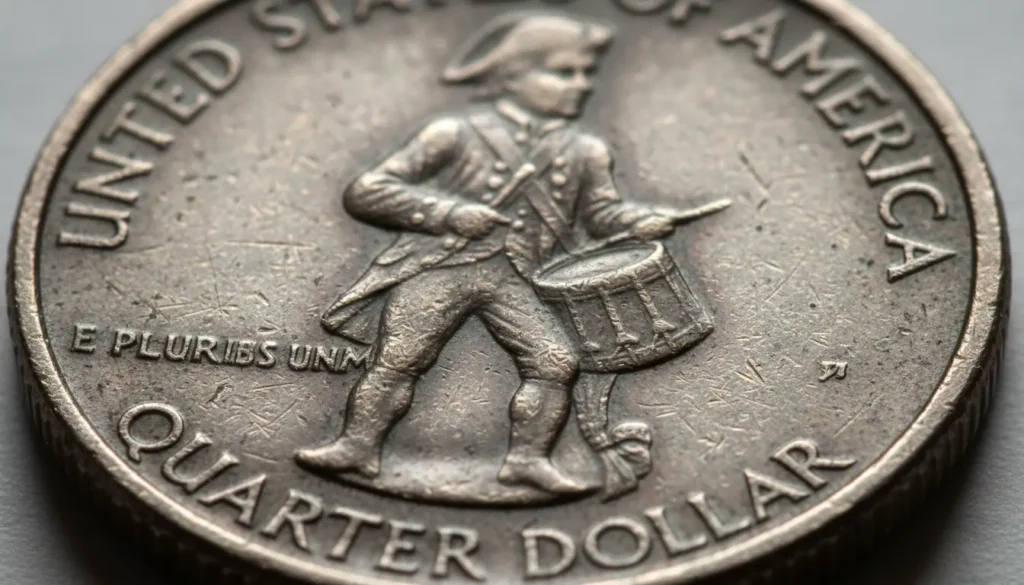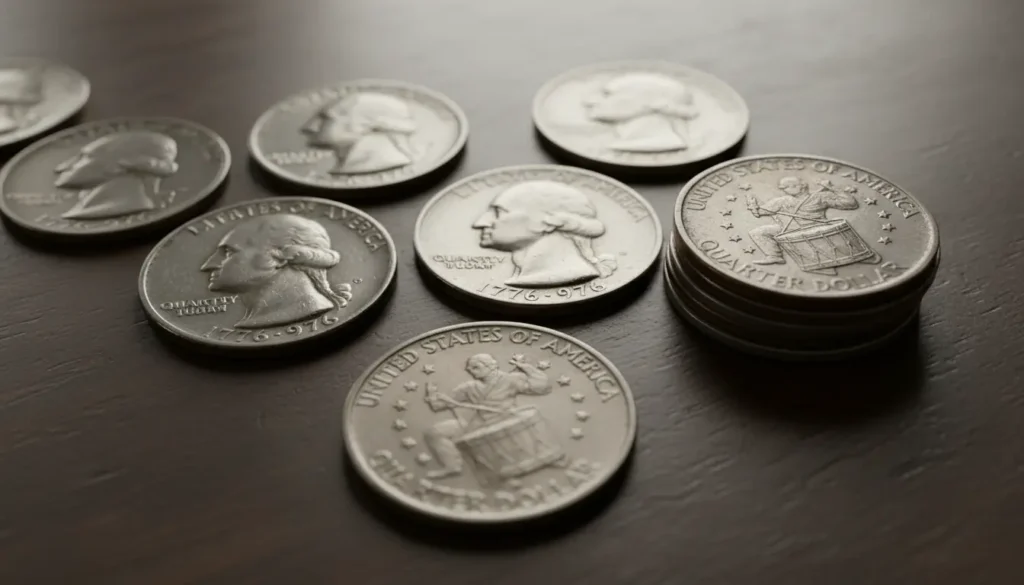
The 1976 Bicentennial quarter is familiar to most Americans. Millions were minted, and most remain common in circulation. Still, a few rare varieties and high-grade examples can be far more valuable than face value.
What is the Bicentennial Quarter?
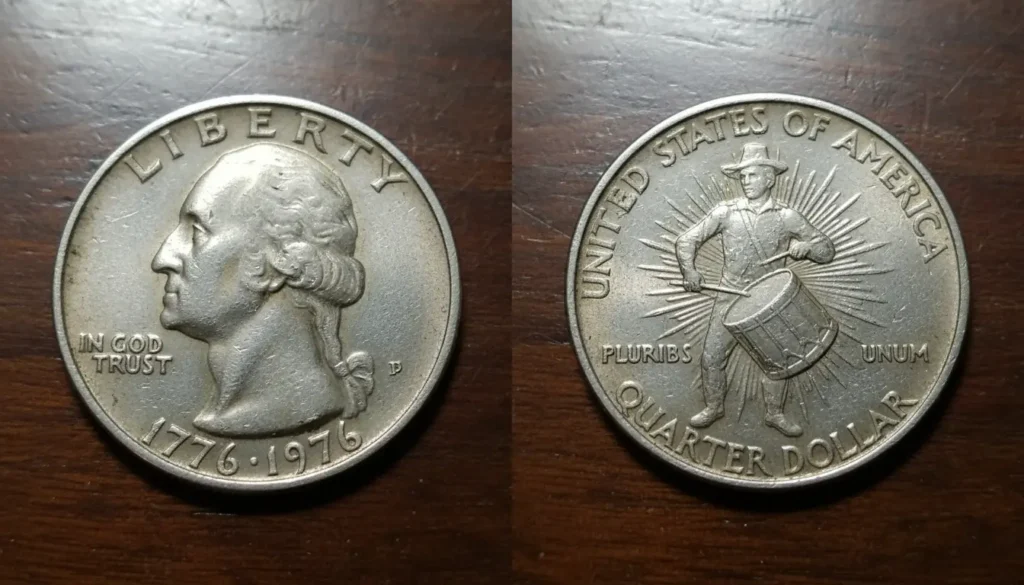
The Bicentennial quarter was issued for 1975 and 1976 with the dual date 1776-1976. The reverse design features a colonial drummer and was produced for general circulation and special mint sets.
There are three main minting types to know: standard copper-nickel clad circulation strikes, special 40 percent silver-clad proof issues from the San Francisco mint, and a handful of error or pattern pieces. Each type affects value differently.
Could Your Bicentennial Quarter Be Worth $1 Million?
Short answer: almost certainly not. To reach a seven-figure value, a coin would need an extraordinarily rare combination of features: a unique minting error, a flawless grade from a top grading service, strong provenance, and intense collector demand.
That said, some Bicentennial quarters can be worth hundreds or thousands of dollars. High-grade silver proofs and major mint errors are the most likely candidates for significant value above common market prices.
Key factors that increase value for a Bicentennial Quarter
- Composition: 40% silver-clad proof coins (1976-S special sets) are worth more than standard clad coins.
- Condition: Coins graded MS67/MS68 or PR67/PR69 by PCGS or NGC command higher prices.
- Errors and Varieties: Off-center strikes, double die obverse/reverse, wrong planchet strikes, and broadstrikes can add value.
- Rarity and Population: How many examples are known and how many have been graded at top levels.
- Provenance: Coins with documented auction history or celebrity ownership can fetch premiums.
Realistic value ranges
Most circulated Bicentennial quarters are worth face value to a few dollars. Silver-clad proofs and early special mint strikes typically sell for $10 to several hundred dollars depending on grade.
Major, clearly documented errors in high grade may sell for thousands. Reaching six or seven figures would require an unprecedented, museum-quality rarity with verified uniqueness.
The Bicentennial quarter design was used on coins struck in 1975 and 1976 and includes the dual date 1776-1976. Some San Francisco proof quarters were produced in 40 percent silver for collectors.
How to inspect a Bicentennial Quarter yourself
Start with a simple visual inspection under good light and a loupe or magnifier. Look for errors, unusual edges, or evidence of silver content like tone or weight differences.
Follow these steps:
- Check the date area for the dual date 1776-1976 and note any doubling or anomalies.
- Look at the rim and edge for broadstrikes or clipped planchets.
- Compare weight: standard clad quarter weighs about 5.67 grams; a 40 percent silver-clad proof will weigh slightly different depending on composition.
- Inspect the mint mark. San Francisco silver proofs use an S mint mark and may be more valuable.
When to seek a professional opinion
If you think your coin has an error, unusually high grade, or silver content, get a professional opinion before cleaning or altering it. Cleaning can destroy value.
Professional grading services such as PCGS and NGC authenticate and grade coins. A high grade from these services provides market confidence and usually improves sale price.
Small real-world example
A collector found a Bicentennial quarter in a mixed lot and noticed it had a clear off-center strike covering about 25 percent of the design. The collector avoided cleaning and took photos, then consulted a local coin dealer.
The dealer advised grading. After submission to a grading service, the coin was authenticated as an off-center error and sold at auction to a specialist error collector. The sale price was significantly higher than face value, though far below the million-dollar mark. The case shows that proper documentation and grading can unlock extra value.
Where and how to sell a rare Bicentennial Quarter
Choose the selling route carefully. Options include local coin dealers, online auction platforms, specialist auction houses, and direct sales to collectors. Each route has pros and cons around fees, reach, and buyer expertise.
Tips for selling:
- Get at least two independent appraisals before selling.
- Use professional grading for high-value or disputed coins.
- Keep detailed photos and provenance notes to support your listing.
- Compare sale fees and guarantee policies among auction houses and dealers.
Final checklist before you act
- Do not clean or polish the coin.
- Take high-quality photos from multiple angles under good light.
- Record where and when you found the coin and any chain of custody.
- Consult a dealer or submit to PCGS/NGC only if the coin shows potential error, silver composition, or exceptional condition.
The notion that a common Bicentennial quarter in your pocket could be worth $1 million is extremely unlikely. However, knowing what to look for, avoiding common mistakes, and using reputable grading and sales channels can help you determine if your coin has real collectible value.