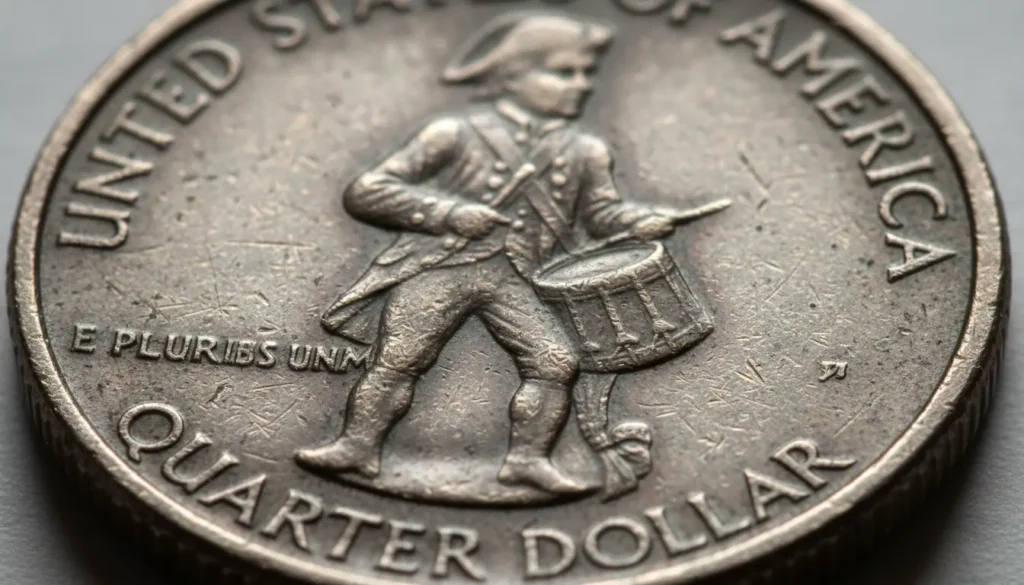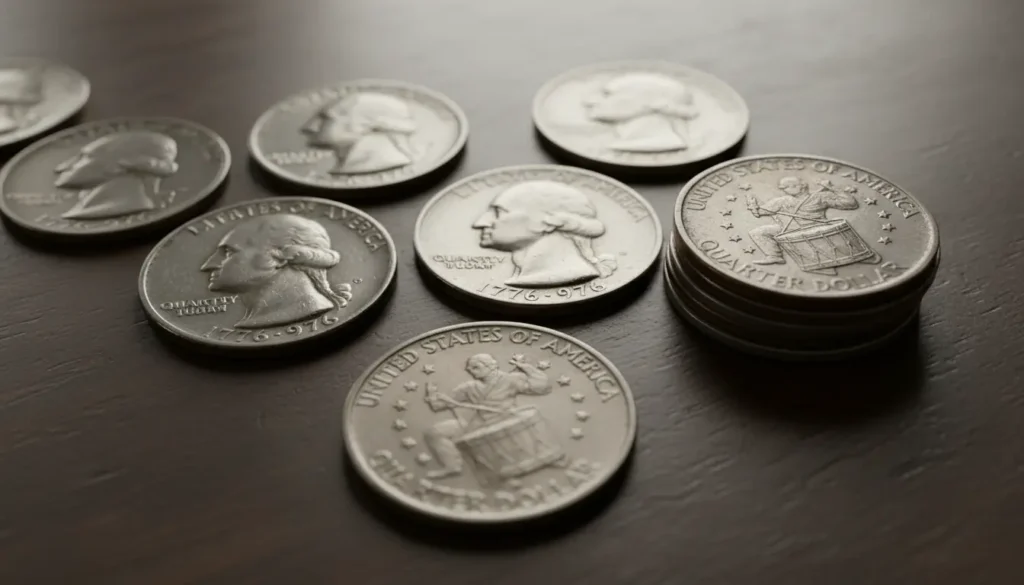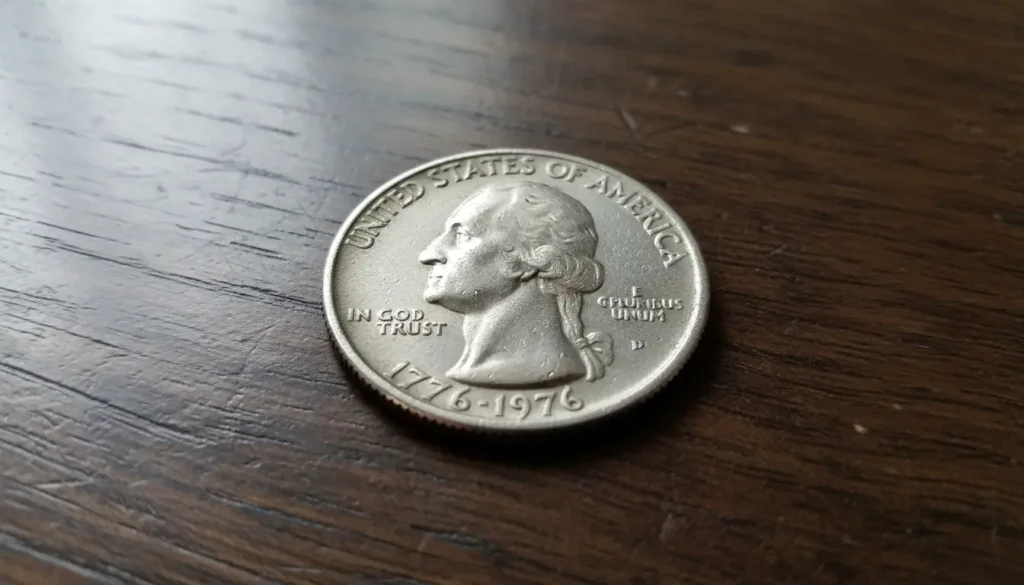
The 1976 Bicentennial quarter is familiar to many Americans. Its reverse shows a colonial drummer and the dual date 1776-1976. Most of these quarters were produced in large numbers, so typical pieces are worth face value or a small premium.
What is the Bicentennial Quarter?
The United States Mint issued the Bicentennial quarter in 1975–1976 to mark the 200th anniversary of American independence. The design replaced the eagle on the reverse with a Colonial drummer and the dates 1776–1976. Coins were struck for circulation and in special proof and uncirculated sets.
Common features of the Bicentennial Quarter
- Obverse: Washington portrait as usual for quarters.
- Reverse: Colonial drummer with dual date 1776–1976.
- Mint marks: D for Denver, S for San Francisco (proofs), and no mint mark for Philadelphia on circulation pieces.
- Most circulation coins are copper-nickel clad; many proofs were struck in silver-clad for special sets.
Could your pocket change be worth $1 million?
In short, it is possible in theory but extremely unlikely in practice. For a Bicentennial quarter to approach seven figures it would almost always need one of three things: an extremely rare minting error that is unique or nearly unique, a coin with impeccable provenance or celebrity ownership, or a major grading anomaly that makes it one of a kind to collectors.
Most Bicentennial quarters, even in perfect condition, sell for modest premiums. Circulated pieces typically fetch face value up to a few dollars. High-grade uncirculated or proof silver examples may reach into the low hundreds, not hundreds of thousands.
Types of Bicentennial quarters that can be valuable
- Silver-clad proofs (1976-S) from special sets — higher than face value when well preserved.
- Minting errors — off-center strikes, clipped planchets, double dies, and wrong planchet strikes can be worth significantly more.
- Extremely high grades — coins graded MS67 or better by a major service can command collector attention.
How to evaluate a Bicentennial quarter
Follow these practical, step-by-step checks before assuming a big value.
- Inspect the coin visually under good light and a magnifier. Look for obvious errors or unusual features like doubled devices or missing elements.
- Check the reverse for the dual date 1776–1976 and the presence of a mint mark. Proofs will often show a mirror-like field and frosted devices.
- Weigh and measure if you have precise tools. Unusual planchets or weights could indicate a non-standard strike.
- Compare to reference images from trusted sources (numismatic guides, PCGS, NGC) to spot known varieties.
- Consider professional grading if the coin looks exceptional. Grading companies will authenticate and give a numerical grade that affects market value.
Red flags that increase value
- Large off-center strikes or major planchet errors.
- Clear doubled die on obverse or reverse.
- Non-clad or incorrect metal composition on a circulation strike.
- Extremely high uncirculated grade from a major grading service.
Many 1976 Bicentennial proofs were issued in 40% silver for collectors. These silver-clad proofs are more desirable than the common copper-nickel circulation strikes.
Case study: A realistic example
A local collector once found a 1976 quarter with a very pronounced off-center strike. The coin showed about 30% of the normal design and heavy doubling around the rim. After authentication by a professional numismatist, the coin was slabbed and sold at auction for several thousand dollars.
This case illustrates the pattern: unusual minting errors attract collectors and can lead to prices well above typical retail, but most finds do not reach extreme values.
When to seek professional help
If you believe your coin is a major error or is in exceptional condition, consult a reputable grading service or experienced dealer. Professional authentication adds credibility and usually increases sale value.
Steps to take:
- Document your coin with clear photos and notes about where you found it.
- Avoid cleaning or altering the coin — doing so can damage value.
- Contact a recognized grading service (PCGS, NGC) or a well-reviewed local coin dealer for an appraisal.
Realistic value expectations
Realistically, expect modest values for most Bicentennial quarters. Common price ranges are:
- Circulated: face value to a few dollars.
- Uncirculated or Proof (common): $5–$50 depending on grade.
- Proof silver and high MS grades: $50–$500 typically.
- Major errors and unique varieties: can reach thousands, occasionally tens of thousands in auctions with strong demand.
Reaching $1 million would be an extraordinary outlier and would require either a truly unique error of great historical interest or exceptional provenance that captures collector imagination.
Summary: What you should do now
Don’t assume a Bicentennial quarter in your pocket is worth a fortune. Inspect it carefully and use the checklist above. If the coin shows major errors or appears unusually well preserved, get professional authentication. That step is essential before pursuing auction or sale.
With careful evaluation and the right guidance, you can identify valuable pieces and avoid overestimating common coins.