The 1976 Bicentennial quarter is a common collectible but myths about million‑dollar values still circulate. This article explains what makes a Bicentennial quarter rare, how to check yours, and whether a seven‑figure sale is realistic.
Why Bicentennial Quarters Are Common
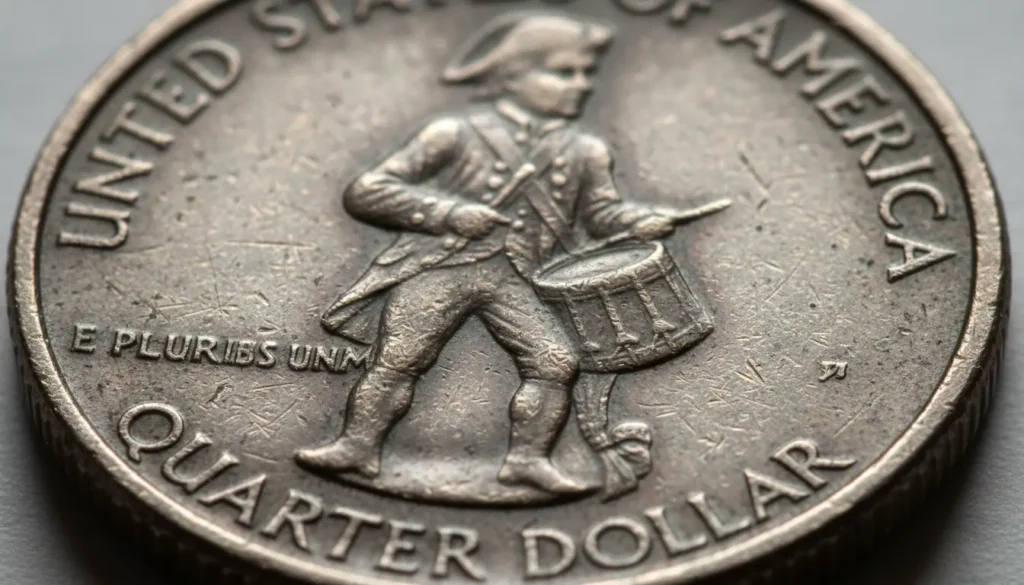
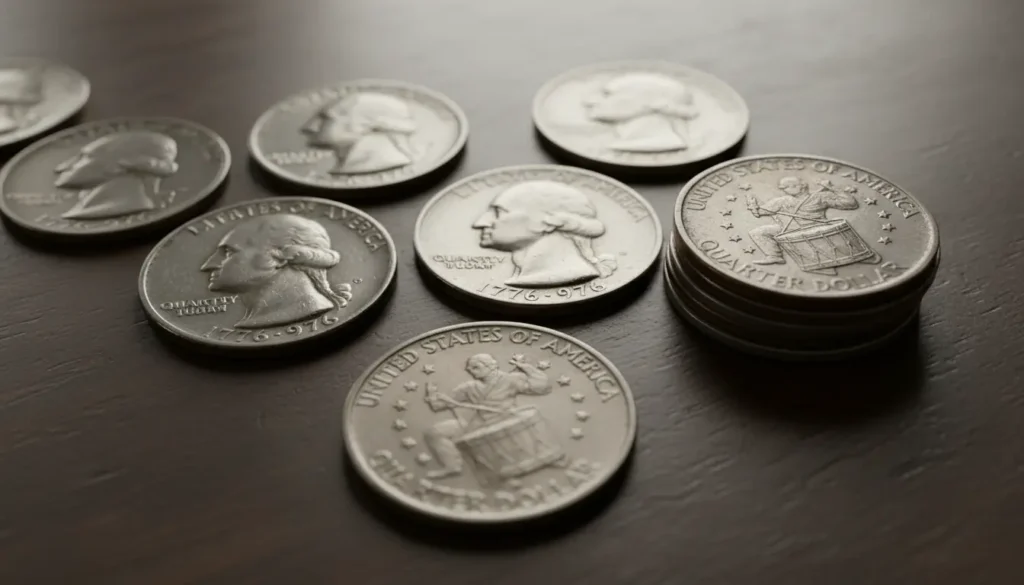
The U.S. Mint produced Bicentennial quarters in large numbers to mark the 200th anniversary of American independence. Their distinctive reverse shows a colonial drummer with the dual date 1776–1976.
High mintage and many surviving examples mean most Bicentennial quarters are worth face value or a small premium to collectors.
Types of Bicentennial Quarters and Which Matter
You can find three main types in circulation and collections: regular copper‑nickel clad strikes, special proof strikes, and 40% silver collector pieces. Each has different appeal to buyers.
- Circulation clad quarters: common and usually worth face value to a few dollars.
- Proof coins: struck for collectors, often in proof sets and sometimes carry small premiums.
- 40% silver collector quarters: sold in special sets and typically worth the melt value plus a premium.
Mintmarks and Why They Matter
Check the mintmark near the rim—D for Denver, S for San Francisco, or no mintmark for Philadelphia. San Francisco proof and silver pieces are handled differently by collectors and graders.
Mintmark alone rarely creates million‑dollar value, but it helps classify the coin for grading and market comparisons.
How to Spot a Rare Bicentennial Quarter
Very few Bicentennial quarters are truly rare. Look for genuine mint errors, unusual die varieties, or exceptional condition to raise interest from collectors.
Key things to inspect include the obverse and reverse for doubling, unusual strikes, clipped planchets, or off‑center strikes. Edge irregularities and composition differences are also clues.
Checklist for Initial Inspection
- Compare design details to reference photos from trusted numismatic sites.
- Look for doubled dies or die cracks with a loupe at 10x magnification.
- Check the edge for seam breaks or unusual reeding.
- Weigh the coin and compare to expected specifications if you have a precise scale.
The Bicentennial quarter reverse was designed by Jack L. Ahr. The dual date 1776–1976 appears on all Bicentennial quarters regardless of mint location.
Authentication and Grading Steps
If you suspect a rare error or an unusually high grade, get professional authentication. Reputable services such as PCGS and NGC provide grading and encapsulation that increase buyer confidence.
Do not clean the coin or attempt repairs. Cleaning can destroy collector value and void eligibility for third‑party grading.
How to Submit a Coin for Grading
- Document provenance and take clear photos from multiple angles.
- Choose a recognized grading service and read their submission guidelines.
- Insure the shipment and use tracked courier service.
- Expect turnaround times and fees; weigh the likely value against the grading cost.
Could a Bicentennial Quarter Be Worth One Million?
Realistically, a Bicentennial quarter reaching one million dollars is extraordinarily unlikely. Most high‑value sales in modern U.S. coins involve extremely low mintage errors, unique patterns, or historically significant provenance.
For Bicentennial quarters, the most valuable examples are rare errors or specimens with exceptional provenance and grades. Even those typically sell for far less than seven figures.
What Would It Take to Approach High Values?
A coin would need to be a one‑of‑a‑kind error or a pattern coin with verified history, top grading (near perfect), and significant collector demand. Even then, the market for Bicentennial quarters is not as strong as for older or rarer U.S. issues.
Real‑World Example
Example process: A collector finds a Bicentennial quarter with an obvious die crack and discoloration. They photograph the coin, consult online reference sites, and contact a reputable dealer for an opinion.
The dealer recommends third‑party grading. After encapsulation, the coin receives a high grade and a verified error attribution. The coin is then consigned to a specialist auction house and sells above typical market value—often in the hundreds to low thousands of dollars depending on rarity and grade.
Practical Steps If You Find a Bicentennial Quarter
Follow a clear process to protect value and avoid scams. Use evidence and trusted services rather than private speculation.
- Do not clean or alter the coin.
- Take high‑resolution photos and note where you found it.
- Compare to trusted reference guides and error databases.
- Seek opinions from reputable dealers or local coin clubs.
- Consider professional grading if the coin appears unusual or high grade.
Bottom Line
Bicentennial quarters are mostly common and unlikely to be worth one million dollars. However, genuine rare errors and top‑graded specimens can be worth significant sums to collectors.
If you think you have something special, document it, avoid cleaning, get expert input, and consider professional grading before selling. That process gives you the best chance of realizing fair market value.