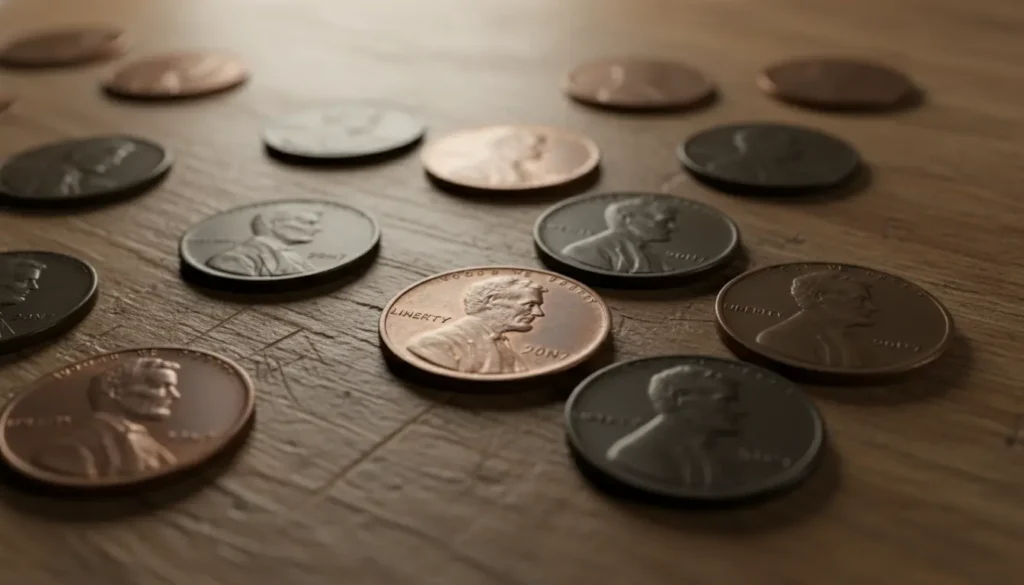
Lincoln cents were first issued in 1909 and some dates and varieties are worth far more than face value. This guide explains the key years, how to identify valuable Lincoln pennies by year, grading basics, and practical steps to confirm and sell a rare piece.
How to Identify Valuable Lincoln Pennies By Year
Start by checking the date and mint mark on the obverse (front) under Lincoln’s bust. Mint marks include P (rare on older cents), D (Denver), and S (San Francisco). No mint mark usually means Philadelphia.
Look for known error types and varieties that make a date valuable. Common value drivers are low mintage, mint errors, doubled dies, and unusual metal composition.
Common Signs of Valuable Lincoln Pennies
- Clear date and mint mark with unusual features (missing mint mark, repunched mint mark).
- Doubling on letters or numerals (doubled die obverse).
- Wrong metal composition (1943 bronze or 1944 steel, 1943 copper).
- Missing details or die cracks that produce distinct patterns.
- Exceptional condition (high grade with strong luster).
Key Years: Valuable Lincoln Pennies By Year
Below are the most collectible Lincoln pennies by year and why they matter. This list focuses on dates a non-specialist is likely to encounter.
1909 S VDB and 1909 S
The 1909-S VDB (with designer Victor D. Brenner’s initials on the reverse) is one of the most famous rare Lincoln cents. The VDB initials were quickly removed, making the 1909-S VDB scarce in all grades.
The 1909-S without VDB and the 1909-S in high grade are also valuable because of low mintage at the San Francisco mint.
1914-D Lincoln Cent
The 1914-D is scarce, particularly in higher grades. Look for a small D under the date. Circulated examples can be expensive if the strike and detail are strong.
1922 Plain (No D)
In 1922 most Denver cents were weakly struck and often show no mint mark. A 1922 without a D that is well struck can be rare and collectible.
1931-S Lincoln Cent
1931-S cents had low production and are scarce today. Good-condition examples command a premium.
1943 Bronze and 1943 D Copper Errors
During World War II, most cents were made in steel coated with zinc. A 1943 bronze or copper cent is a major error and extremely valuable. These are very rare and should always be authenticated by a grading service.
1955 Doubled Die Obverse
The 1955 doubled die obverse shows strong doubling of the date and lettering on the obverse. It’s a classic and popular variety that can be worth hundreds to thousands depending on condition.
Other Notable Varieties
- 1969-S Doubled Die (obverse) — uncommon in high grades.
- 1972 Doubled Die and late 20th-century doubled dies — collectors still seek strong doubling.
- Proof and mint sets — coins from proof sets or low-mintage years often have higher collector value.
How Grading Affects Value
Grading is a major factor in value. Services like PCGS and NGC grade coins on a scale from 1 to 70. A rare date in low grade may be worth modestly more than face, while the same date in high mint state (MS) can be worth thousands.
Look for luster, strike quality, and absence of post-mint damage. Even slight scratches or cleaning reduce value substantially.
Practical Grading Tips
- Use a 10x loupe to inspect doubling and die marks.
- Compare to reference photos from reliable coin guides or auction houses.
- When in doubt, get a third-party grading service to authenticate valuable finds.
Where to Buy, Sell, and Authenticate
For buying and selling, use reputable coin dealers, established auction houses, or certified online marketplaces. Avoid private sales without documentation for high-value coins.
Authentication is critical for high-value error coins, especially bronze 1943 cents or major doubled dies. Submit candidates to PCGS or NGC for grading and encapsulation.
Storage and Handling
- Handle coins by the edges and avoid touching the faces.
- Store in inert holders like Mylar flips or hard plastic slabs once graded.
- Keep coins in a stable environment: low humidity, no direct sunlight.
During 1943 most U.S. cents were struck in zinc-coated steel to conserve copper for World War II. A 1943 bronze cent is one of the most valuable Lincoln penny errors because it was accidentally struck on the pre-war copper planchet.
Real-World Example: A Local Find
A small-town coin dealer recently reported a customer who brought in a bulk bank roll of cents. Among common coins they found a 1955 doubled die obverse in EF (extremely fine). After authentication and grading, the coin sold at auction for several hundred dollars.
This case shows the importance of inspecting common change and consulting a pro for any strong doubling or unusual metal color. Even modest-condition examples of known varieties can be valuable.
Quick Checklist Before You Sell
- Confirm the date and mint mark with a loupe.
- Look for doubling, wrong metal, or missing mint marks.
- Take clear photographs and compare to reference images.
- Get high-value coins authenticated by PCGS or NGC.
- Choose a reputable dealer or auction house for selling.
Knowing which Lincoln pennies by year are valuable helps you spot potential finds in loose change or at estate sales. Use careful inspection, reference tools, and professional grading when needed to maximize value and avoid mistakes.