The idea that a Bicentennial quarter in your pocket could be worth one million dollars sounds exciting. In reality, such a discovery would be extraordinarily rare. This guide explains what to look for, how value is determined, and what steps to take if you suspect you own a highly valuable Bicentennial quarter.
What Is a Bicentennial Quarter?
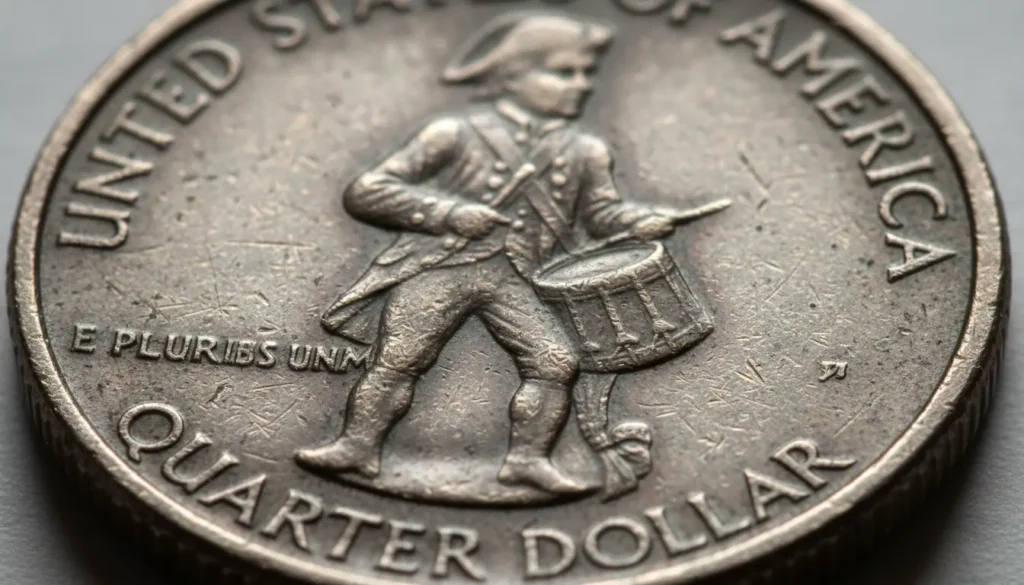
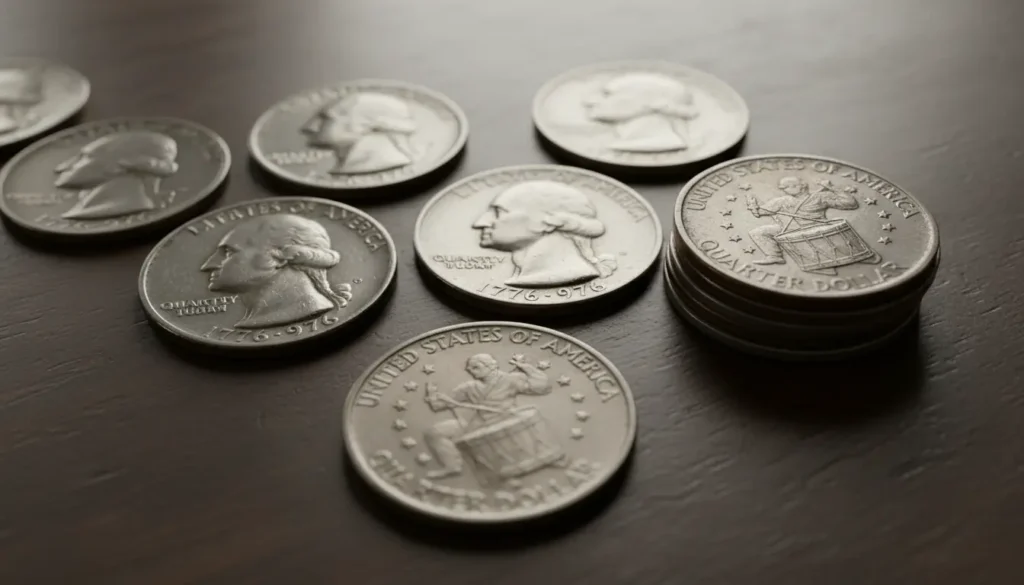
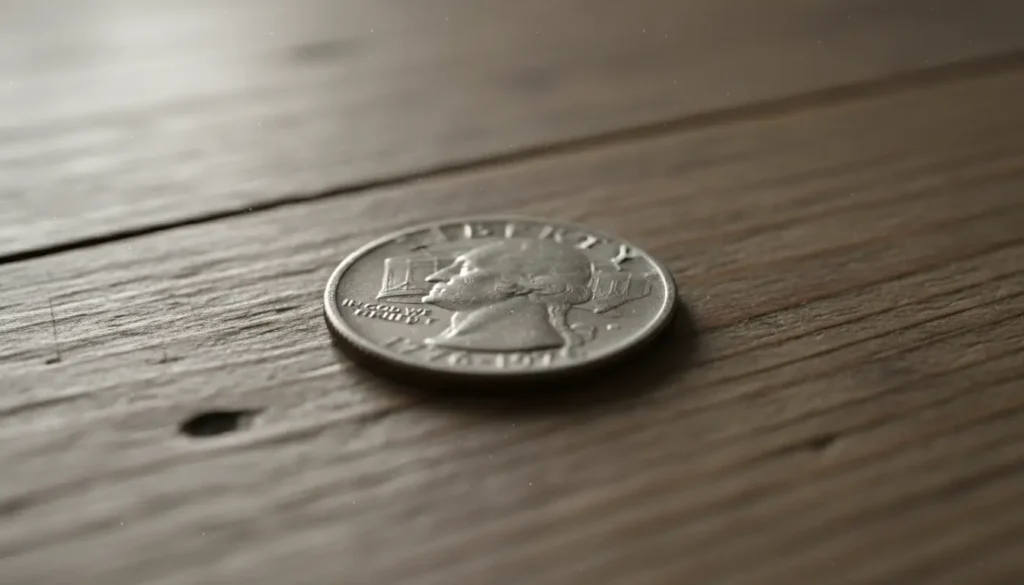
The Bicentennial quarter was issued for the United States 200th anniversary of independence and carries the dual date 1776-1976. Most were common circulation strikes and are plentiful in collections. A few special mintings and errors are collectible and can command higher prices.
Why Some Bicentennial Quarters Are Valuable
Value comes from rarity, demand, condition, and whether the coin has unusual characteristics. For Bicentennial quarters, high value usually depends on one or more of the following:
- Minting errors (off-center, double die, wrong planchet)
- Proof or special silver mint sets
- Extremely high grade specimens (MS67 and above for circulation strikes)
Common error types to know
- Off-center strikes where the design is noticeably displaced
- Double-die obverse or reverse showing clear doubling in letters or design
- Struck on wrong planchet (e.g., silver planchet instead of copper-nickel clad)
- Broadstrikes, clipped planchets, or major die cracks
How Likely Is a Million-Dollar Coin?
A million-dollar valuation for a Bicentennial quarter is extremely unlikely. Most high-value coins that reach six or seven-figure prices are unique, historically significant, or have provenance tied to famous hoards. Error Bicentennial quarters have sold for thousands to tens of thousands in rare cases, but not commonly for millions.
Still, in coin collecting anything is possible if a piece is unique and a buyer places extreme value on it. That makes careful identification essential.
Practical Steps to Check Your Bicentennial Quarter
Follow these steps before assuming major value. They are practical and protect the coin’s potential worth.
- Do not clean the coin. Cleaning can destroy surface details and lower value.
- Examine under magnification. Use a 10x loupe and look for die doubling, off-center strike, or unusual surfaces.
- Weigh and measure. Compare to a standard quarter (approximately 5.67 grams and 24.3 mm). Large deviations can indicate wrong planchet or different metal.
- Check for mint marks. San Francisco proof coins often have an S; some special proofs are in silver and are more collectible.
- Photograph both sides under consistent light. Clear photos help with online research and dealer consultations.
How to Get a Professional Opinion
If you suspect something unusual, get a second opinion from professionals. Steps to follow:
- Consult local coin dealers or a reputable coin shop for an initial look.
- Use online resources — auction archives, coin forums, and price guides — to find comparables.
- Consider third-party grading services (PCGS or NGC). Grading gives authentication and a standardized condition rating that helps with resale.
When to pursue grading
Submit to a grading service when the coin shows a clear error, appears unusually well preserved, or has a metal mismatch. Grading has fees, so weigh that cost against potential value indicated by preliminary research.
The Bicentennial quarter design was used on all U.S. quarters minted in 1975 and 1976. Millions were produced, which explains why most are common today. True high-value pieces are almost always defined by serious mint errors or exceptional proof conditions.
Real-World Example
Case: A collector found a circulation Bicentennial quarter with a dramatic off-center strike and brought it to a local auction house. After authentication and documentation, the coin sold for several thousand dollars rather than a modest face-value trade. The sale shows how significant errors change outcomes, though the result was far below the sensational one-million-dollar idea.
Selling and Insurance Tips
If you confirm a high-value coin, follow these steps to sell or insure it safely:
- Get it certified by PCGS or NGC to maximize buyer confidence.
- Use established auction houses experienced with rare coins for high-end sales.
- Obtain insurance appraisals that reflect current market values and documented provenance.
- Keep clear records of photos, receipts, and grading reports to support authenticity.
Summary: Realistic Expectations
While it is possible for a Bicentennial quarter with a major, unique error to reach very high prices, a one-million-dollar outcome is extremely unlikely. Most collectors will encounter common Bicentennial quarters worth modestly above face value or typical collector prices.
Use the checklist above to evaluate any suspect coin, consult professionals, and avoid actions (like cleaning) that reduce value. A careful, evidence-based approach will give you the best chance to discover and protect a genuinely rare Bicentennial quarter.