The 1976 Bicentennial Quarter is a familiar coin for many collectors and casual holders. Most examples are common and worth face value or small premiums. However, a few rare varieties and error pieces can be worth far more.
What Is a Bicentennial Quarter?
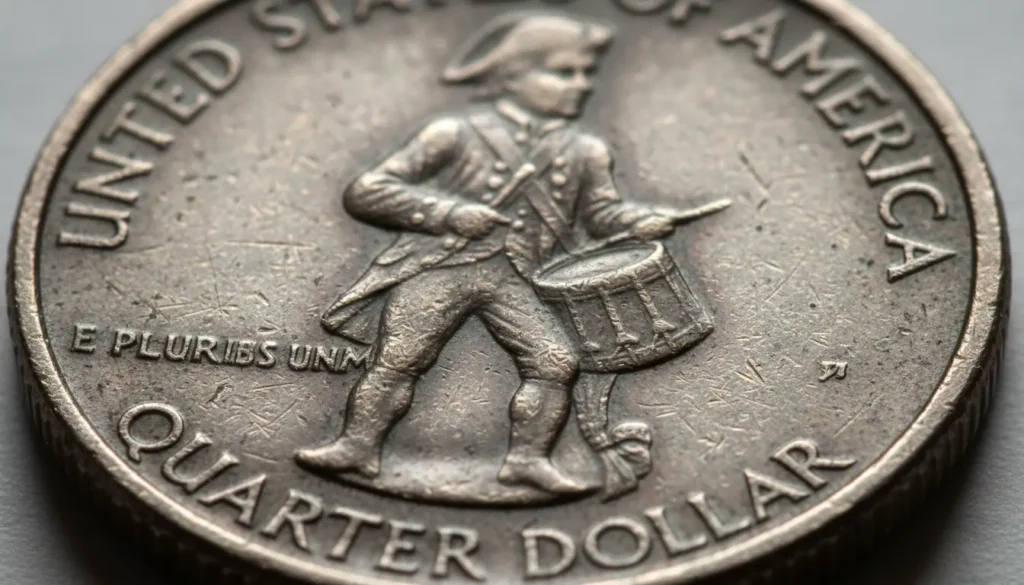
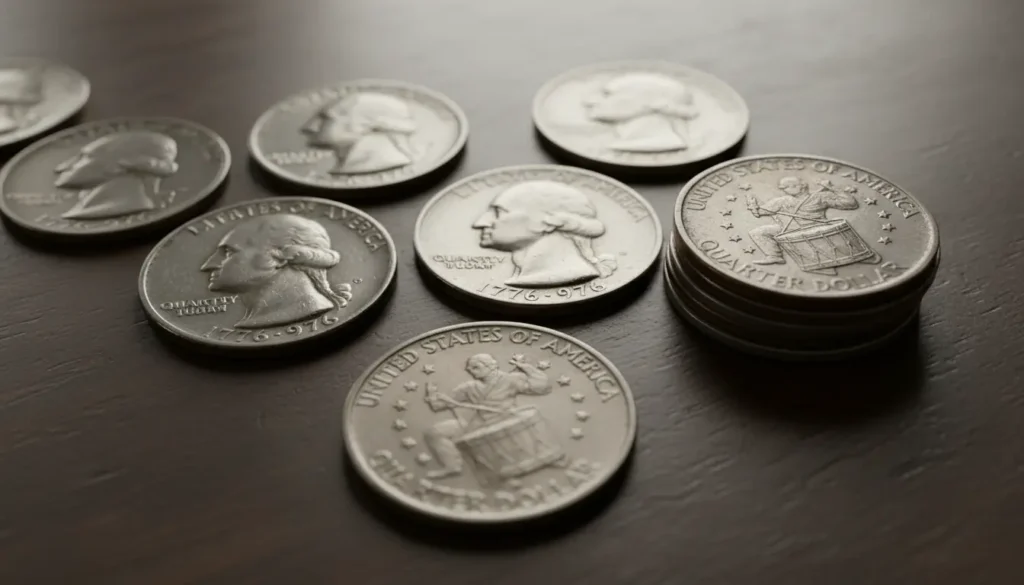
The Bicentennial Quarter was issued to celebrate the 200th anniversary of the United States. It carries the dual date 1776–1976 and a special reverse design depicting a colonial drummer and a victory torch.
These quarters circulated widely, which makes most ordinary specimens plentiful. Collectors focus on mint marks, proof versus business strikes, silver-clad proofs, and mint or die errors to find value.
How to Identify a Bicentennial Quarter
Start by checking the obverse and reverse for date, mint mark, and design details. Look for the dual date 1776–1976 and the drummer reverse designed by Jack L. Ahr.
Key identification points:
- Mint mark: D (Denver), no mark (Philadelphia for many business strikes), or S (San Francisco proofs).
- Surface type: Business strike copper-nickel clad or 40% silver-clad proofs from San Francisco.
- Condition: Coins in higher grades (uncirculated MS60+) are more valuable.
Why Some Bicentennial Quarters Are Valuable
Value rises when a coin is rare, in exceptional condition, or has a recognized error or variety. Most Bicentennial Quarters are common, but a handful of factors can increase value substantially.
Value drivers include:
- High grade (MS67 and above) from a trusted grading service.
- Proof coins, especially silver-clad proofs, if preserved well.
- Documented mint errors: misstrikes, die cracks, off-center strikes, or doubled dies.
- Provenance and certification by PCGS, NGC, or similar graders.
Bicentennial Quarter Errors and Varieties
Error coins tend to attract collector interest. Common error types that can boost value are doubled dies, broadstrikes, and significant die breaks.
Not all errors are valuable. The market cares about how dramatic and collectible the error is, plus demand among collectors for that specific variety.
Some Bicentennial Quarters were made as 40% silver-clad proofs for collectors. These silver-clad proofs have a different composition and often carry higher premiums than regular business strikes.
Could a Bicentennial Quarter Be Worth $1 Million?
It is extremely unlikely that an ordinary Bicentennial Quarter—whether circulated or uncirculated—would be worth $1 million. Most high-grade or proof Bicentennial Quarters sell for hundreds to a few thousand dollars at auction.
For a single Bicentennial Quarter to approach seven figures, it would need an extraordinary combination of attributes: a previously unknown and highly dramatic error, perfect grading (e.g., MS70 or PR70), and strong buyer competition with definitive provenance.
Realistic High-Value Scenarios
Realistic scenarios that push value well above typical ranges include:
- Unique, dramatic mint errors verified by major grading services.
- Coins with historical provenance linked to notable collections or events.
- Specimens certified at the highest grades with impeccable eye appeal.
How to Authenticate and Grade a Bicentennial Quarter
If you suspect you have a valuable Bicentennial Quarter, take careful steps before selling. Authentication and professional grading are essential to realize true market value.
Steps to follow:
- Inspect the coin under good light and a 10x loupe for errors and toning.
- Compare to reference images and variety guides from reputable sources.
- Submit the coin to a recognized grading service like PCGS or NGC for authentication and grading.
- Obtain written provenance or receipt if the coin came from a notable source.
Where to Sell or Get an Opinion
After grading, you can sell through reputable auction houses, coin dealers, or online marketplaces that specialize in certified coins. Avoid informal sales until authentication is complete.
Good options include:
- Certified coin auctions operated by major auction houses.
- Trusted coin dealers who provide consignment services.
- Online auction platforms that accept graded coins and reach collector audiences.
Case Study: How an Error Raised Value
Illustrative example: A collector found a Bicentennial Quarter with a clear die crack and unusual doubling on the obverse. They submitted the coin to a grading service and received a certified grade that noted the error.
After listing the certified coin at auction, it drew interest from specialist collectors and sold for several thousand dollars—far above face value but short of six figures. The sale shows the importance of certification and targeted auction placement.
Practical Advice for Pocket Change Hunters
If you want to search for a valuable Bicentennial Quarter, focus on condition and unusual features. High-grade uncirculated specimens and dramatic errors are the most promising targets.
Tips for searching:
- Check circulated rolls and change for well-preserved coins with full luster.
- Use a loupe to inspect for doubling, die cracks, and off-center strikes.
- Keep a catalog or photo record of finds and get questionable coins certified.
In summary, while the idea of a Bicentennial Quarter being worth $1 million makes for a great headline, reality is far more measured. Exceptional coins with rare errors and top grades can command high prices, but a seven-figure sale would be extraordinary and requires solid authentication, provenance, and collector demand.