What is the Bicentennial Quarter?
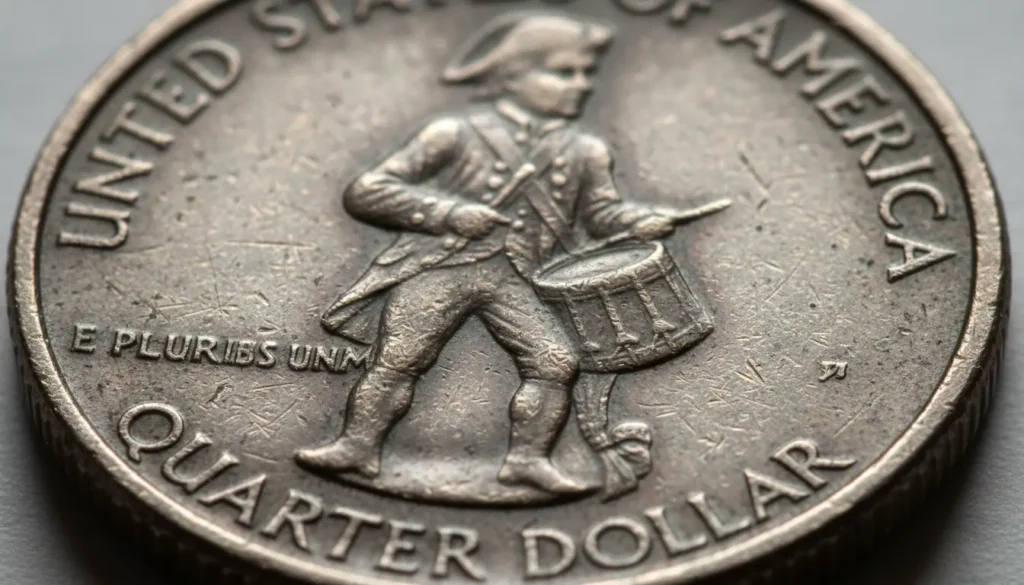
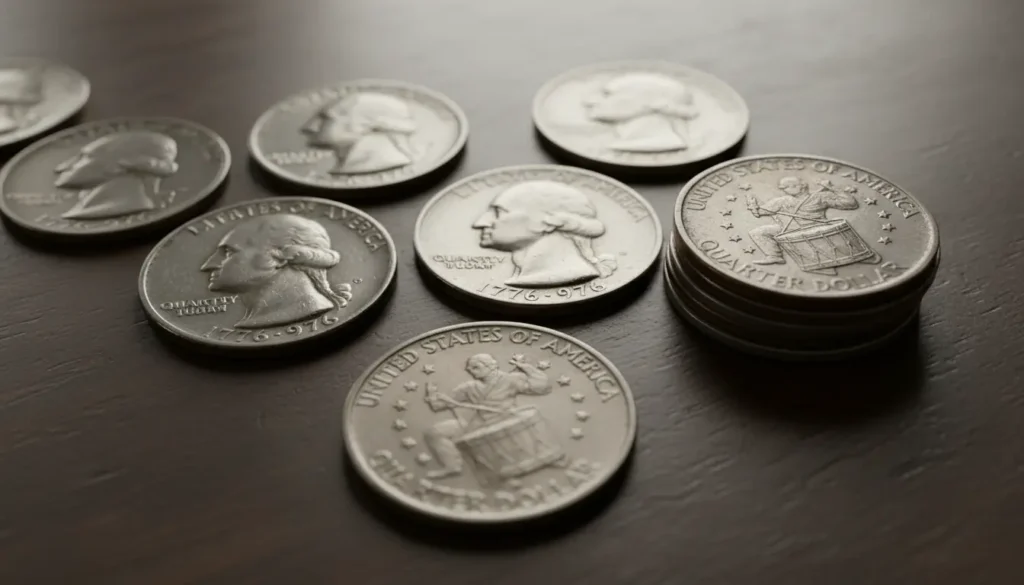
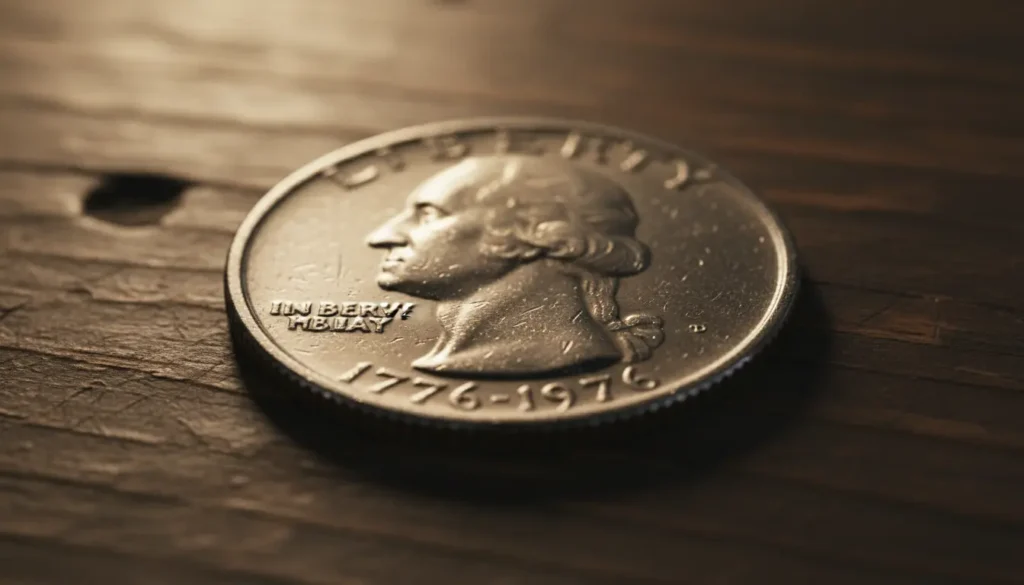
The Bicentennial quarter was issued in 1975–1976 to mark the United States Bicentennial. It has a dual date on the obverse, 1776–1976, and a special reverse showing a colonial drummer. Most were struck for circulation in copper-nickel clad, while special proof sets contain 40% silver versions.
How rare is the Bicentennial Quarter?
Most Bicentennial quarters are common because hundreds of millions were produced. Common circulated examples are worth only face value or a small premium. Rarity comes from specific factors like mint errors, unusual planchets, special mint marks, and exceptionally high grades.
Key rarity factors for the Bicentennial Quarter
- Mint mark and mint location (Philadelphia, Denver, San Francisco).
- Silver proofs from San Francisco (40% silver proof sets) are scarcer than clad circulation pieces.
- Errors such as off-center strikes, double dies, or wrong planchets.
- High professional grades (MS67–MS70 or PR69–PR70).
- Provenance and documentation from reputable grading services like PCGS or NGC.
Could your Bicentennial Quarter be worth $1 million?
In short, it is extremely unlikely. For a Bicentennial quarter to reach seven figures it would need an extraordinary combination of traits: a genuine, extremely rare error or unique pedigree plus a flawless, top-tier grade and strong collector demand.
Most high-end Bicentennial quarters sell for hundreds to a few thousand dollars. Even rare errors usually fetch low five-figure prices, not $1 million. The $1 million threshold is typically reserved for coins with historic scarcity or famous provenance—examples that the Bicentennial quarter rarely meets.
What would increase the chance of a very high value?
- Truly unique error (for example, struck on an incorrect metal blank that is verifiably unique).
- Paper trail showing a coin’s history in important collections or museums.
- Absolute top grade by major grading services (PR70 / MS70) with compelling photographic evidence.
- Strong market interest at the time of sale from multiple well-funded collectors.
How to check and verify a potentially rare Bicentennial quarter
Start with a careful visual inspection at home. Use a magnifying glass or jeweler’s loupe to look for:
- Mint mark (D, S, or none for Philadelphia).
- Unusual planchet color or metal composition.
- Clear die doubling, misalignment, or off-center strike.
- Full, sharp details and no signs of cleaning or damage.
If you see something unusual, document the coin with high-resolution photos from multiple angles. Record any packaging or provenance you have, such as original proof set holders.
When to consult professionals
- If the coin appears to be an error or unusually well-preserved.
- If you believe it might be silver (proof sets) or struck on the wrong planchet.
- When you intend to sell for a high value and need authentication and grading.
Submit coins to a trusted grading service like PCGS or NGC. Authentication and a high grade are essential for top prices and buyer confidence.
Selling a rare Bicentennial quarter: Practical tips
Choose the right sales channel based on expected value. For modest values, online marketplaces or local coin dealers work. For high-value pieces, consider specialized auction houses or consignment with numismatic auctioneers.
Prepare clear photos, a verified grade if possible, and a concise provenance summary. Be realistic about reserve pricing and fees charged by auction houses or grading services.
- Get an expert appraisal before listing.
- Use graded slabs for high-value auctions.
- Compare recent auction results for similar coins.
Most circulating Bicentennial quarters were issued in 1976 and are common today. However, proof quarters struck in 40% silver for the San Francisco proof sets are a different market and typically command higher collector interest.
Real-world example: What collectors typically see
Example: Online auction records and dealer price guides show that high-grade 40% silver proof Bicentennial quarters and verified error coins often sell for hundreds to a few thousand dollars. Exceptional pieces with clear, documented uniqueness may fetch more, but these are rare exceptions.
This example reflects typical market behavior: rarity plus verified quality tends to create higher prices, but they remain far below the million-dollar mark in most Bicentennial quarter cases.
Final checklist if you found a Bicentennial quarter you think is valuable
- Examine carefully with magnification and good light.
- Compare to verified images and variety guides online.
- Document photos, packaging, and any provenance.
- Consult a reputable coin dealer for an initial opinion.
- Consider third-party grading if the coin appears genuinely rare or uncirculated.
- Choose an appropriate selling channel based on appraised value.
Conclusion: Should you expect to find a $1 million coin?
While the idea is exciting, a Bicentennial quarter in your pocket being worth $1 million is extremely unlikely. Focus on identifying real rarity: mint errors, silver proofs, and superb grading. Those factors will determine actual market value and whether professional authentication is worth the cost.
If you have a Bicentennial quarter you suspect is rare, document it and seek evaluation from a trusted numismatic expert. That is the practical first step toward understanding whether your coin has real monetary or collector value.