What Is a Bicentennial Quarter?
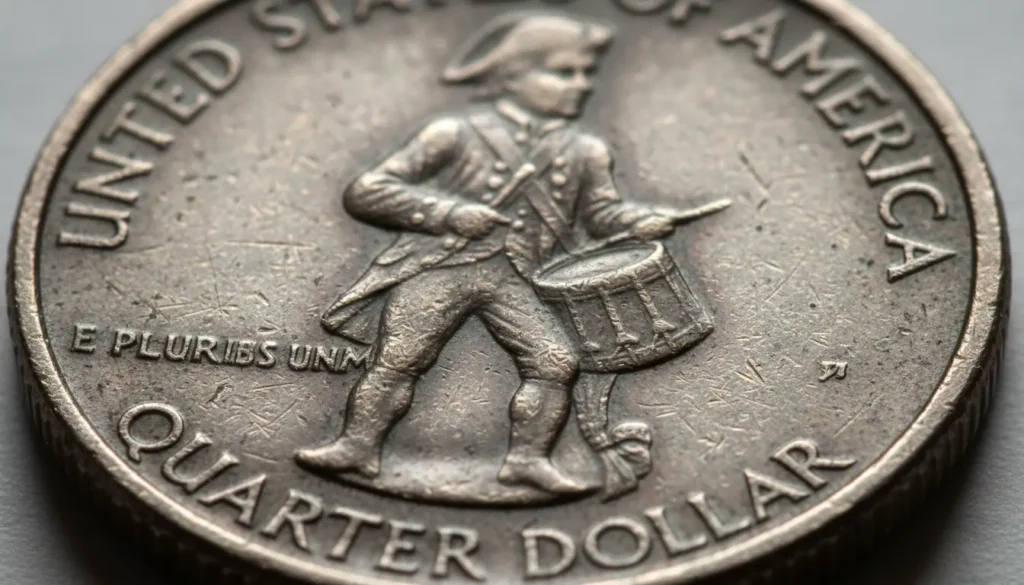
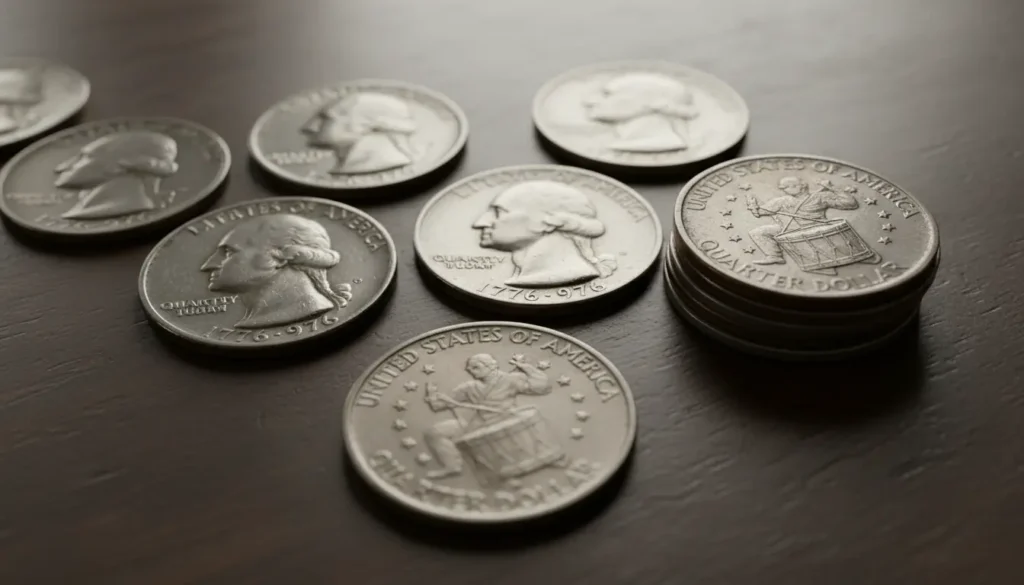
The Bicentennial quarter was issued to mark the 200th anniversary of the United States. Its reverse shows a colonial drummer and the dual date 1776–1976. These coins were produced for circulation as well as in proof and special silver sets.
Many Bicentennial quarters were made, so most are common in change. However, specific mint marks, compositions, and minting errors can make some examples more valuable to collectors.
How to Identify a Bicentennial Quarter
Check the Design and Date
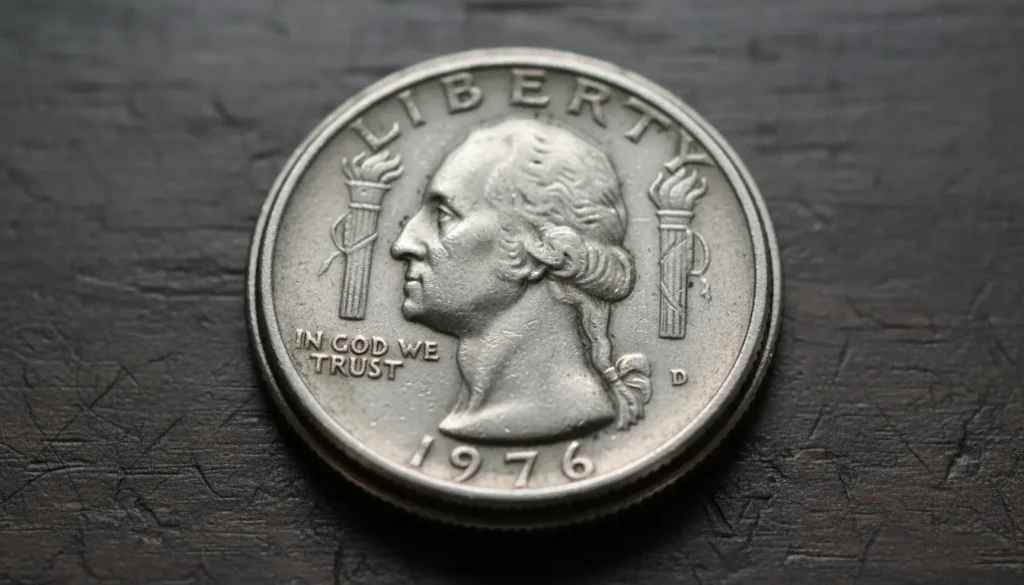
Look at the reverse of the coin. The Bicentennial reverse features a drummer and the dates 1776–1976. The obverse keeps the Washington portrait.
Note the mint mark location (on the obverse for proof coins or on the reverse rim for some issues). Common mint marks are D (Denver), S (San Francisco), and none (Philadelphia at that time).
Confirm Composition: Clad vs Silver
Bicentennial quarters were issued in regular clad (copper-nickel) and in 40% silver for special proof and collector sets. Silver quarters are heavier and may have a different sound when gently dropped on a cloth.
If you suspect silver, check for a reeded edge and compare weight to an authenticated quarter; do not scratch or test destructively.
Look for Errors and Varieties
Error coins can be more valuable. Common valuable varieties include off-center strikes, broadstrikes, die breaks, doubled dies, and clipped planchets.
Keep in mind genuine mint errors are distinct from post-mint damage. Cleaned or damaged coins usually lose value.
Could a Rare Bicentennial Quarter Be Worth 1 Million Dollars?
Short answer: It is extremely unlikely. Most Bicentennial quarters are worth face value or modest premiums in uncirculated condition.
For a Bicentennial quarter to reach seven figures, it would need to be a previously unknown, one-of-a-kind pattern or an error with unquestionable provenance and extreme collector demand. No widely documented sale of a standard-issue Bicentennial quarter has reached that level.
Realistic Value Ranges
- Circulated common Bicentennial quarter: face value to a few dollars
- Uncirculated (MS60–MS65): a few dollars to $50
- Certified proof silver or high-grade proof: typically under $100–$200
- Significant, well-documented error coins: can reach hundreds to low thousands of dollars
These ranges are general. Exceptional auction results happen, but they are rare and usually involve unique circumstances.
Steps to Verify and Appraise a Potentially Valuable Bicentennial Quarter
Follow a careful, documented process before assuming a coin is worth a fortune. Rushed claims can lead to mistakes or scams.
1. Do Not Clean or Alter the Coin
Cleaning can dramatically reduce value. Leave the coin as you found it and handle it by the edges.
2. Photograph the Coin
Take clear photos of both sides under good light. Include close-ups of any unusual marks, mint marks, or errors.
3. Compare Known Varieties
Use reputable coin guides and forums to compare your coin to known error types and varieties. Look for consistent features like die breaks or off-center bands.
4. Get an Expert Opinion
Contact a reputable coin dealer or submit the coin to a third-party grading service such as PCGS or NGC for authentication and grading. A certified grade can increase buyer confidence and the eventual selling price.
5. Choose the Right Selling Venue
Significant or rare coins sell best at specialty auctions or through established dealers who handle error coins. For modest values, online marketplaces and local dealers may be appropriate.
Practical Checklist Before You Sell or Insure
- Identify mint mark and composition (clad vs silver)
- Document condition with photos
- Check for known error types
- Obtain third-party certification for rare claims
- Get multiple appraisals if you expect high value
The Bicentennial quarter design with the colonial drummer was produced only for the 1975–1976 period to celebrate the 200th anniversary. That makes the design historically specific, but not automatically rare.
Case Study: Finding an Unusual Error in Pocket Change
A collector once found a Bicentennial quarter in change with a clear off-center strike. Curious, the finder photographed the coin and posted images to a numismatic forum. An experienced dealer recommended third-party grading.
After authentication and grading, the coin sold at a regional auction to a specialist collector for several thousand dollars. The sale shows how proper documentation and certification can convert an oddity in pocket change into a collectible sale.
Final Advice
If you find a Bicentennial quarter that looks different, remain cautious and methodical. Most examples are common, but documented errors and high-grade specimens can be worth significantly more than face value.
For any claim of huge value—like 1 million dollars—demand solid provenance, independent certification, and an expert appraisal before accepting the claim. That protects you from mistakes and scams while ensuring you get a fair price if your coin is genuinely rare.