Understanding the Bicentennial quarter
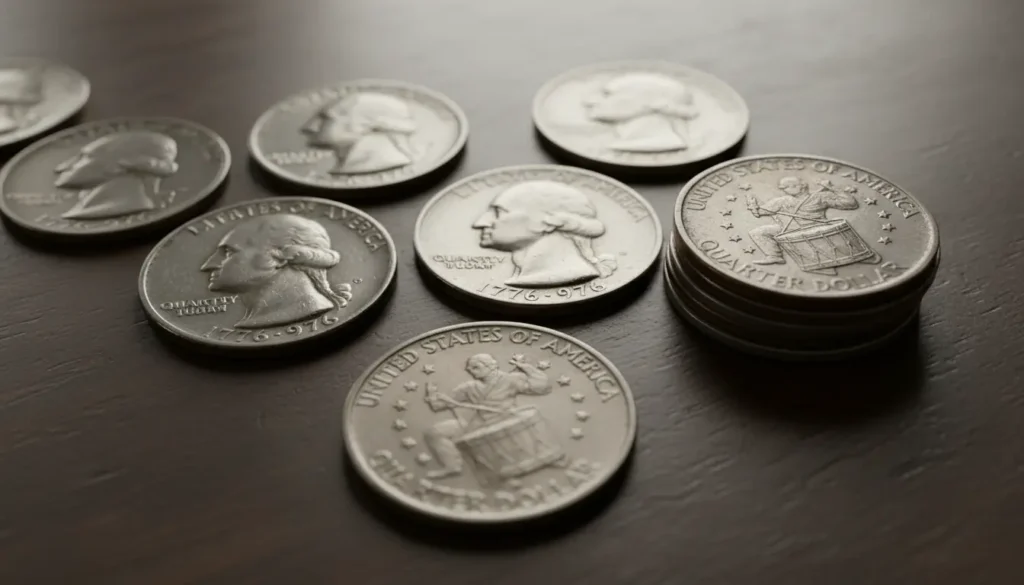
The Bicentennial quarter was issued in 1975–1976 to mark the United States’ 200th anniversary. Millions were produced and most ended up in general circulation. For most people these coins are worth face value or modest collector premiums.
Could a Bicentennial quarter be worth $1 million?
In practical terms, a $1 million price tag for a Bicentennial quarter is extremely unlikely. Only coins with unique, documented qualities and perfect authentication ever reach very high prices. Even then, values in the hundreds of thousands are rare for modern circulation coins.
What would justify a seven-figure value?
There are a few theoretical scenarios where a Bicentennial quarter could approach very high valuations. These include unique, verifiable factors combined with market interest. Each factor must be independently proven by experts.
- One-of-a-kind minting error with strong documentation and provenance.
- Specimen in an absolute top grade (perfect proof or MS70) with unique attributes.
- Historical significance linking the coin to a famous event or person.
Rare varieties and mint errors on the Bicentennial quarter
Collectors look for distinct error types and varieties. These cause value increases because they are scarce or visually striking. Common error categories include die breaks, doubled dies, off-center strikes, and planchet anomalies.
Examples of error types to watch for
- Doubled die obverse or reverse — clear doubling on letters or design elements.
- Off-center strikes — part of the design is missing due to misalignment.
- Clipped planchets — part of the coin blank was missing before striking.
- Die cracks or cuds — raised lines or blobs where the die failed.
Condition and grading of a Bicentennial quarter
Coin condition is crucial. Grading services like PCGS and NGC give standardized grades that buyers trust. A certified MS70 or PR70 coin commands much higher prices than an ungraded or worn example.
Even high-grade Bicentennial quarters typically sell for modest sums compared with rarer vintage coins. Condition alone rarely produces a seven-figure sale without additional rarity or historical importance.
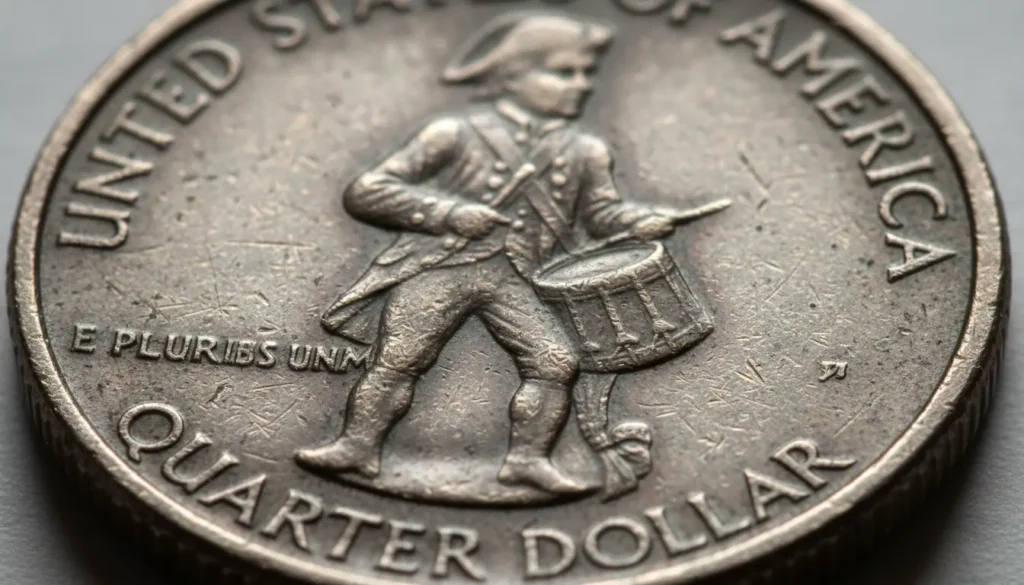
The Bicentennial quarter design was used only for a limited period. It features a drummer boy and a colonial drummer, which replaced the eagle on the reverse for the commemoration.
How to check your Bicentennial quarter
Use a clear inspection routine to spot potential value. Start with visual cues, then move to authentication if you suspect something rare. Treat any suspected error or top-grade coin as potentially valuable until proven otherwise.
Step-by-step checklist
- Inspect the date and mint mark (if present) with a magnifying loupe.
- Look for doubling, unusual lines, or off-center strikes.
- Compare with reference photos from trusted numismatic sources.
- If unusual, photograph both sides and seek a professional opinion.
- Consider third-party grading for coins that appear exceptional.
Where to get an expert opinion
Contact local coin dealers, regional coin clubs, or use online forums run by reputable numismatists. For high-value assessments, a recognized grading service provides authentication and a permanent grade. This helps in serious sales and auctions.
Real-world example
A collector once found a Bicentennial quarter in change that appeared to have doubling on the obverse. After careful comparison with references and submitting the coin to a grading company, it was authenticated as an uncommon doubled-die variety. The coin later sold at auction for a five-figure amount to an error coin collector.
This example shows that meaningful value gains are possible, but they usually reach thousands, not millions. Provenance, rarity, and perfect grading drive the final price.
Practical tips for collectors
- Keep coins in folders or Mylar flips to avoid damage.
- Avoid harsh cleaning — cleaning often destroys collector value.
- Document where and when a coin was found if it seems unusual.
- Get a second opinion before paying for third-party grading.
Quick valuation realities
Most Bicentennial quarters remain common. Typical values are low unless the coin is an authenticated error, proof in perfect condition, or part of a rare minting batch. High auction prices are exceptional and involve strong collector interest.
Final thoughts
If you find a Bicentennial quarter that looks unusual, document it and seek expert help. The chance it is worth $1 million is remote. Still, careful checking can uncover genuinely valuable pieces worth thousands or more. Proper authentication and grading are the key steps to realizing any real value.
Use the checklist above and consult reputable numismatic resources to learn more. A cautious, evidence-based approach will protect your coins and your wallet.