How rare is the Bicentennial Quarter?
The Bicentennial quarter (bearing the dual date 1776–1976) was produced in very large numbers for general circulation. Most examples you find in pocket change are common and worth face value or only modest premiums to collectors.
That said, a few specific varieties, high-grade proofs, silver-clad examples, and notable error coins can be worth substantially more than face value. A realistic assessment is needed before imagining seven-figure prices.
What makes a Bicentennial Quarter valuable?
Value depends on a combination of factors. Each factor increases demand or rarity and influences collector interest.
- Mint mark and year: 1975 and 1976 strikes all carry 1776–1976; look for P, D, or S mint marks.
- Composition: Most are copper-nickel clad. Special 40% silver-clad quarters were produced for collector sets.
- Strike quality: Proofs and high MS (mint state) grades are more valuable.
- Errors and varieties: Off-center strikes, clipped planchets, broadstrikes, and doubling can be worth a premium.
- Grading and certification: Third-party grading from NGC or PCGS can dramatically affect price.
Common vs. collector issues
Circulation-strike Bicentennial quarters are common in grades up to MS65. Collector-targeted strikes — such as 40% silver-clad proofs from the San Francisco mint — have higher value but are still not extremely rare.
Truly rare pieces are usually error coins with dramatic defects or unique provenance. Even then, seven-figure values are exceptionally unlikely for this series.
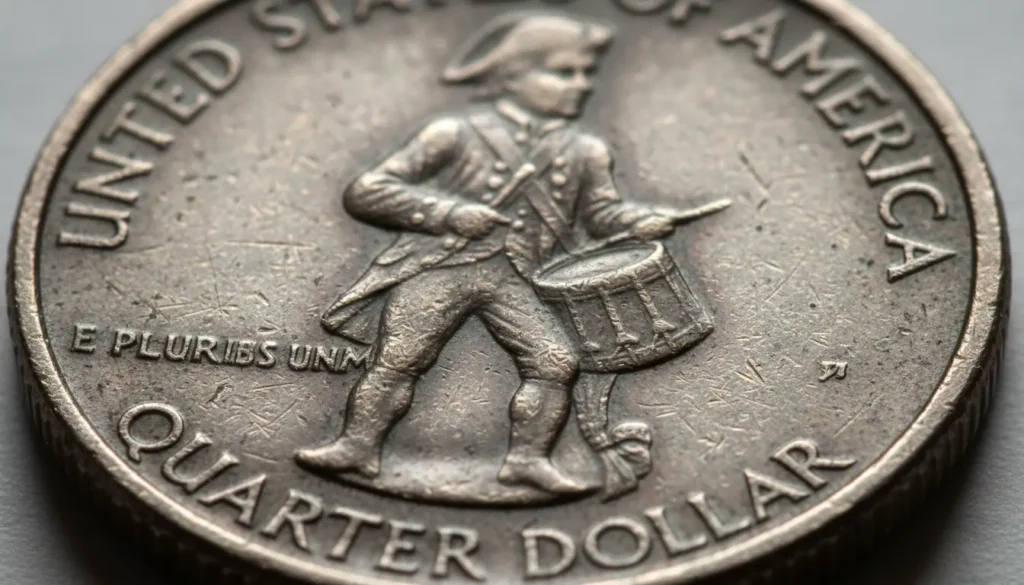
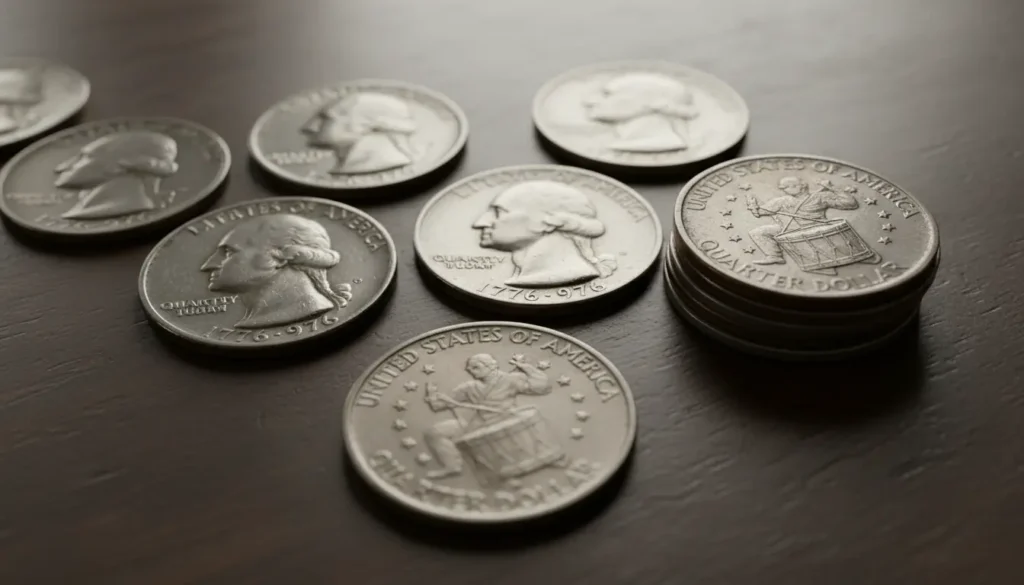
The Bicentennial quarter was produced for circulation in 1975 and 1976 and carries the dual date 1776–1976. Special 40% silver-clad versions were made for collector sets and can be identified by their silver tone and mint mark.
Could a Bicentennial Quarter be worth $1 million?
Short answer: Almost certainly not. There are no widely documented, verifiable sales of a standard Bicentennial quarter reaching $1 million. Coins that fetch seven-figure prices are typically unique early U.S. silver dollars, patterns, or coins with extreme rarity and historical significance.
That does not mean you should ignore unusual coins. Some error or unique varieties can sell for thousands or even tens of thousands of dollars when they attract specialist collectors.
Realistic high-value scenarios
- Top-graded proof 1976-S 40% silver-clad quarters certified PR70 may sell for a few hundred to a few thousand dollars.
- Major errors (for example, a dramatic broadstrike combined with other anomalies) could sell in the low thousands to tens of thousands depending on demand.
- Unique provenance (linked to a famous hoard or discovery) can push values higher, but seven figures remain extremely unlikely for this coin type.
Case study: A practical example
A collector examined a mint set inherited from a relative and found a 1976-S quarter with a strong silver tone and exceptionally sharp details. After professional grading it as a proof strike with deep cameo contrast, the coin sold at an online auction for a price well above face value but within the typical collector range for top-quality silver proofs.
This example shows how provenance, composition, and grade combine to affect price — but it also illustrates that most high-value sales for Bicentennial quarters stay far below astronomical figures.
How to check your pocket change for valuable Bicentennial quarters
Use a simple, step-by-step approach. You don’t need advanced equipment to find candidates worth further attention.
Step-by-step checklist
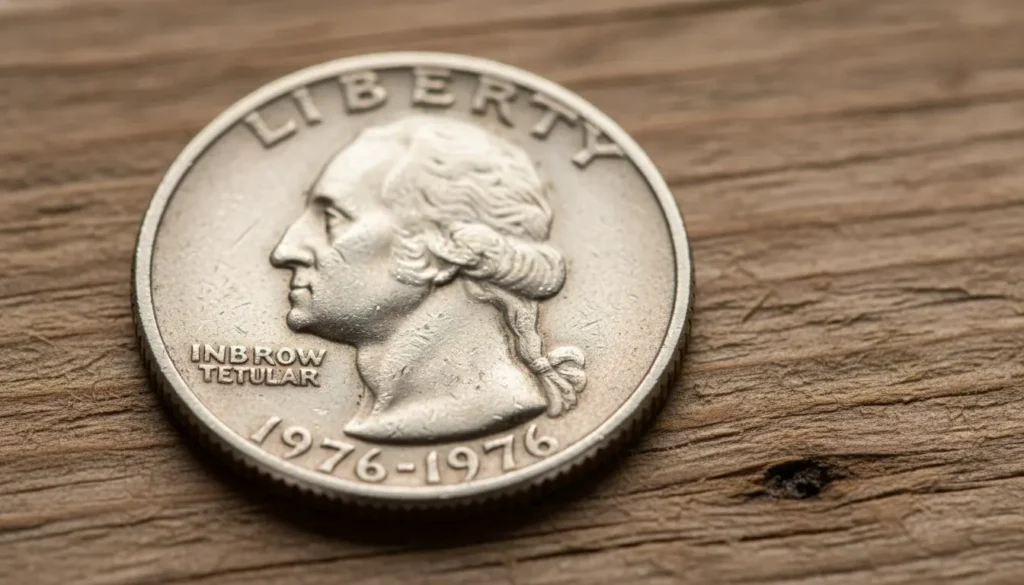
- Look for the dual date 1776–1976 on the obverse. That identifies a Bicentennial quarter.
- Check the mint mark (below the wreath on the reverse or on obverse depending on mint). ‘S’ marks often indicate proofs or silver-clad issues.
- Examine composition: silver-clad pieces have a different luster and edge color compared to copper-nickel clad coins.
- Inspect for errors: off-center strikes, clipped planchets, doubling, or missing devices are worth photographing.
- Compare to reference images online or in price guides to spot unusual varieties.
When to get a coin graded
If a coin appears to be a high-grade proof, silver-clad, or shows a dramatic error, consider professional grading. Certification provides authentication and standardized grading that establishes trust with buyers.
Use reputable services like NGC or PCGS and compare expected grading costs to estimated market value before submitting.
What collectors pay for Bicentennial Quarter types
Approximate market guidance helps set expectations. Values fluctuate with market demand and coin condition.
- Common circulation strike (worn to uncirculated): face value to a few dollars.
- High MS uncirculated (MS65+): $5–$50 depending on eye appeal.
- 1976-S 40% silver proof and uncirculated sets: $10–$300 for typical offerings; top-graded rarer pieces can command higher amounts.
- Major error coins: low hundreds to low tens of thousands, very dependent on error type and collector interest.
Final practical tips
Don't assume a million-dollar payoff. Treat unusual finds with curiosity and verify value with multiple sources.
If you believe you have a valuable Bicentennial quarter, photograph it, compare it to reference resources, and consult a reputable dealer or grading service for an appraisal.
Doing a careful check is low effort and occasionally rewarding. Keep expectations realistic, and you may find a neat collectible — even if not a million-dollar miracle.