The 1976 Bicentennial quarter is familiar to many Americans. Most were made for circulation and remain common. But hobbyists sometimes wonder whether a single quarter in a pocket or jar might be a million-dollar rarity.
What Is the Bicentennial Quarter and Why People Notice It
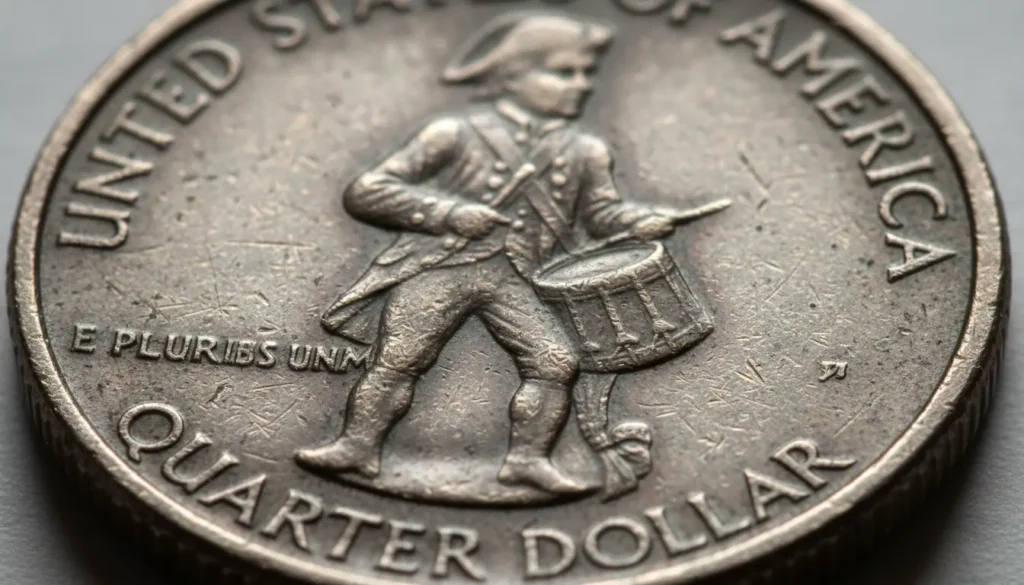
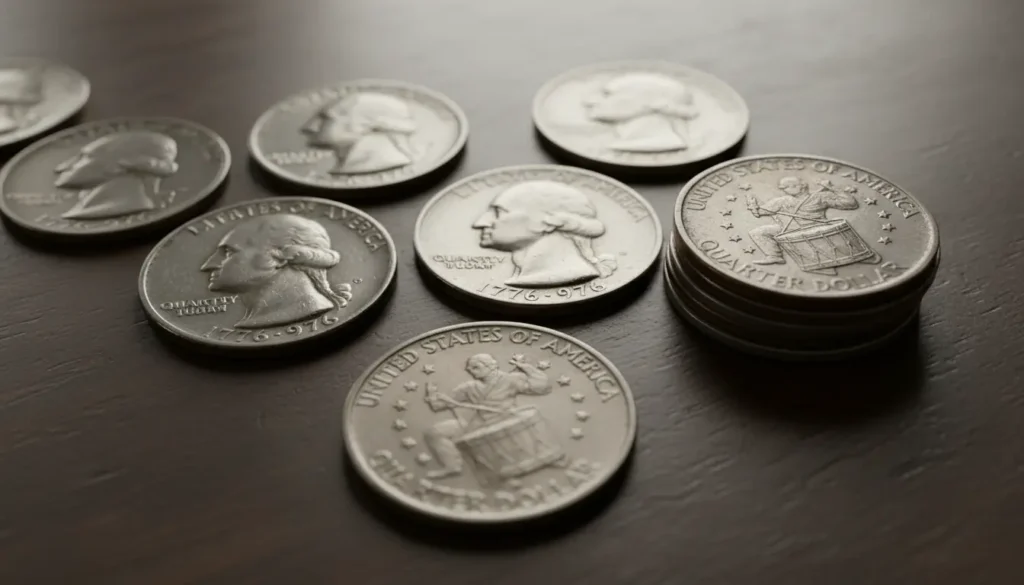
The Bicentennial quarter was issued to celebrate the United States’ 200th anniversary. Instead of the regular eagle reverse, the coin features a colonial drummer and the dual date 1776–1976.
Millions of these quarters were produced in copper-nickel clad and in special collector versions. Because of that high mintage, most Bicentennial quarters are worth face value or only modest premiums.
What Makes a Bicentennial Quarter Rare?
Rarity comes from a combination of low supply, collector demand, and unique qualities. For Bicentennial quarters, a few factors can raise value:
- Mint errors (striking mistakes or planchet flaws)
- Special mint issues (silver-clad collector coins struck at San Francisco for proof sets)
- Exceptionally high grade condition (near-perfect, certified by major grading services)
- Documented provenance or famous ownership
Common vs. Truly Rare Varieties
Most circulation strikes are common. Collector pieces in proof or deep cameo finishes are scarcer, and a small number of error coins or unique survivors can attract strong interest.
However, a million-dollar sale for a Bicentennial quarter is extremely unlikely. Auction records and expert guides show high-grade Bicentennial quarters sell for small premiums compared with genuinely scarce U.S. coins.
How to Inspect Your Bicentennial Quarter
Follow practical steps to determine whether your coin has value beyond face value. These are quick checks you can do at home.
- Look for a mint mark: The S mark indicates San Francisco and may be associated with proof or silver-clad issues.
- Check the edge: Proof and silver-clad pieces have different appearances. Silver-clad coins are part of special sets.
- Examine the reverse and obverse for doubling, missing design elements, or off-center strikes.
- Use a 10x loupe to assess surface condition and luster; heavy wear lowers value dramatically.
- Note color and toning: attractive, natural toning can increase interest, while harsh spots may hurt value.
Errors to Watch For
Errors that can raise value include:
- Double die obverse or reverse
- Off-center strikes
- Clipped planchets or broadstrikes
- Wrong planchet (e.g., a coin struck on a foreign planchet)
Most error coins are worth a few hundred to a few thousand dollars depending on rarity and condition.
Some Bicentennial quarters were struck as 40% silver proof coins for collector sets. These silver proofs have different market behavior than common circulation quarters.
When Is a Bicentennial Quarter Worth Substantial Money?
A Bicentennial quarter might be worth substantially more than face value if it meets at least one of these realistic conditions:
- It is a verified, rare mint error with strong collector demand.
- It is a certified high-grade proof or silver-clad specimen in near-perfect condition.
- It has a clear, documented provenance tying it to a notable collection or event.
Even under those conditions, reaching a seven-figure price is exceptionally rare for this issue. Serious million-dollar prices are typically reserved for low-mintage 19th-century coins, unique pattern coins, or historically significant rarities.
How to Get a Professional Opinion
If your coin looks unusual, take methodical steps to verify and monetize the find. Avoid quick online guesses that promise huge sums.
- Take clear, well-lit photos of both sides of the coin.
- Bring the coin to a reputable coin dealer for an initial inspection.
- If the dealer agrees it may be valuable, submit the coin to a major grading service (PCGS or NGC) for authentication and grading.
- Use auction results from reputable houses as benchmarks for pricing.
Selling Channels
If authenticated, you can sell through coin dealers, specialist auctions, or established online auction platforms. Each channel has fees and varying buyer reach.
Small Real-World Case Study
A collector found a 1976-S Bicentennial quarter in a box of old proofs. The coin had strong cameo contrast and was submitted to a grading service. After certification as a high-grade proof, it sold for a premium over face value, but the final price stayed in the hundreds to low thousands range, not millions.
This case illustrates the realistic outcome: proper grading and provenance will increase value, but expectations should remain grounded in market history.
Practical Tips If You Think You Found a Rare Bicentennial Quarter
- Don’t clean the coin. Cleaning can destroy value.
- Handle by the edges to avoid fingerprints.
- Record where and how you found the coin—context can matter.
- Seek multiple opinions if an initial estimate seems unusually high.
In short, while it is possible for a Bicentennial quarter to be worth more than face value, the odds that a random quarter is a million-dollar rarity are extremely low. Use clear inspection methods, get professional grading for unusual finds, and set realistic expectations based on market records.