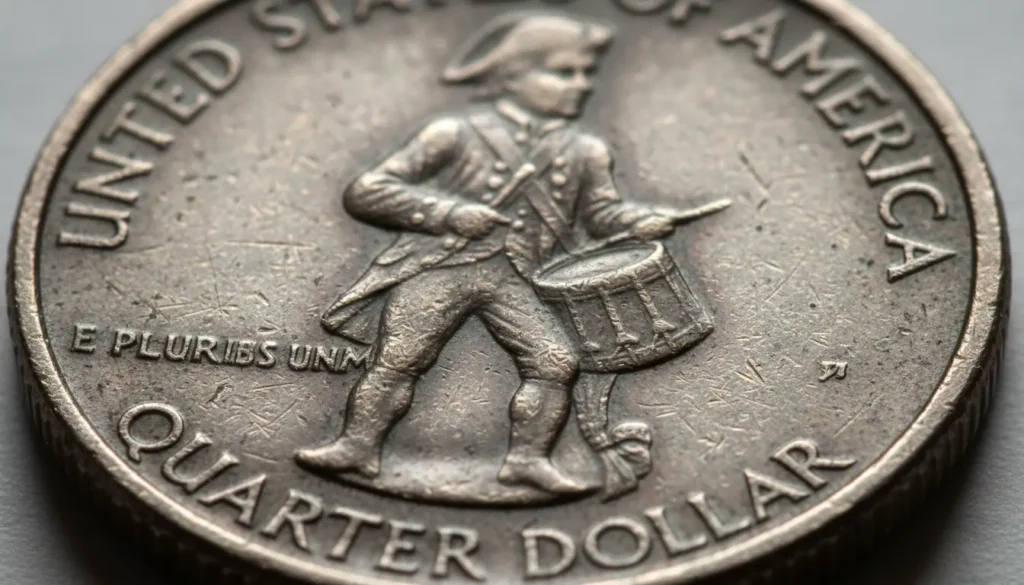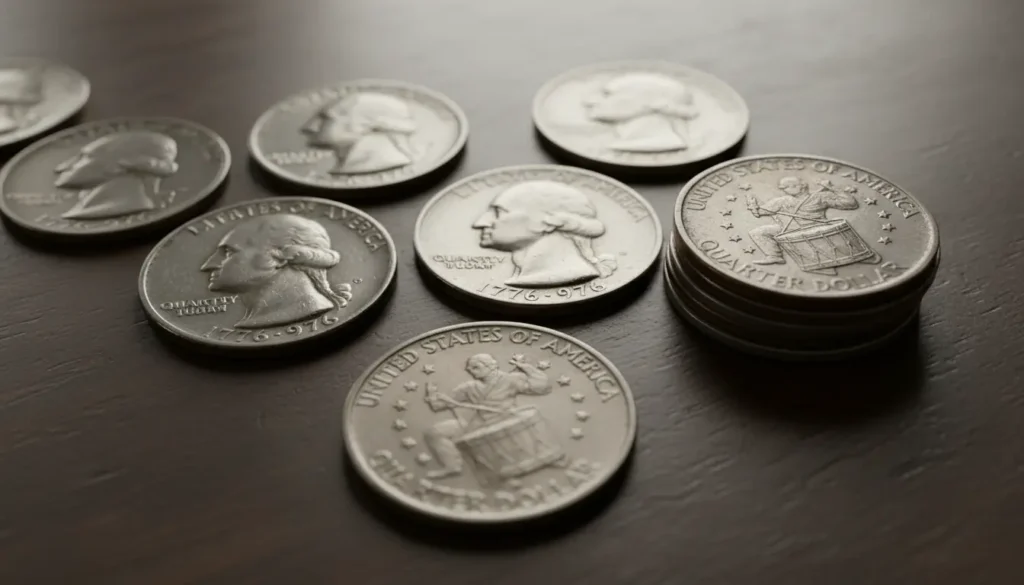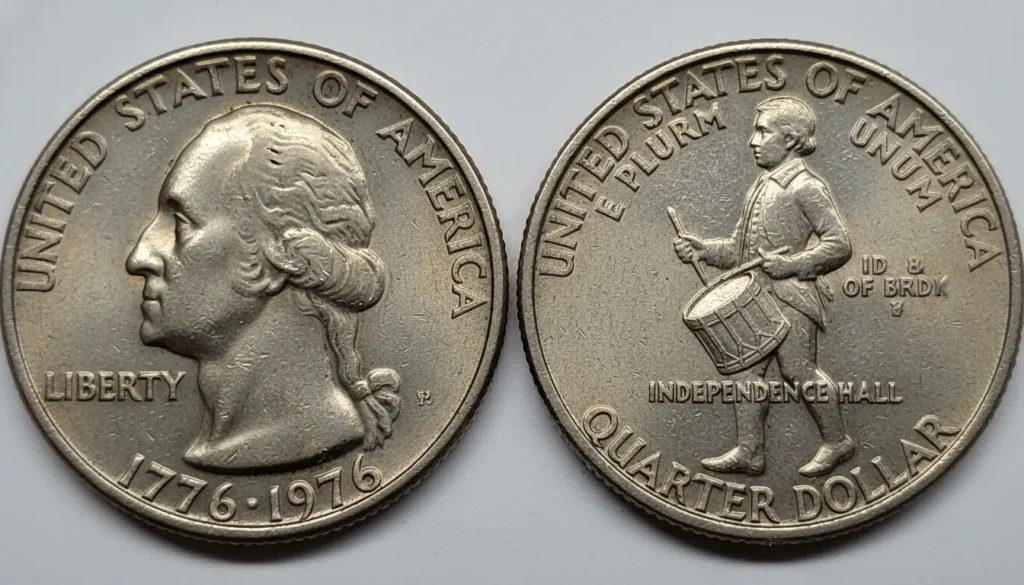
The 1976 Bicentennial quarter is familiar to many Americans. It shows the dual date 1776–1976 and a colonial drummer on the reverse. That familiarity leads some people to hope a coin tucked in a drawer could be worth a small fortune.
How rare is the Bicentennial Quarter?
The Bicentennial quarter was produced in large numbers for circulation and for collector sets. Most are common and have modest value over face value. Rarity depends on specific factors like mint mark, minting errors, composition, and condition.
Common circulation pieces are plentiful. High value items are usually:
- Error coins (off-center, double-struck, wrong planchet)
- High-grade proofs or business strikes with exceptional surfaces
- Specimens with unique provenance or verified minting anomalies
Could Your Bicentennial Quarter Be Worth $1 Million?
Realistically, a Bicentennial quarter reaching $1 million is extremely unlikely. Most coins—even those graded highly—sell for far less. Million-dollar coins typically are unique from early U.S. issues, pattern coins, or extremely rare errors with strong provenance.
However, extraordinary error coins or an absolutely unique piece could command very high prices. The value depends on three main things:
- Authenticity and rarity of the error or variety
- Grade and surface preservation from an independent grading service
- Collector interest and provenance documented at auction
Why $1 million is unlikely for a Bicentennial Quarter
Bicentennial quarters were made in the millions and many examples exist in every grade. To reach seven figures, a coin would need to be one-of-a-kind or tied to a major historical event with verified documentation. Most Bicentennial varieties do not meet that threshold.
Common valuable Bicentennial Quarter types to watch for
You don’t need a million-dollar coin to have something valuable. Look for these types that increase value:
- Strong mint errors: large off-center strikes, dramatic double strikes, clipped planchets
- Proof errors: proofs struck on wrong planchets or with striking problems
- High-grade pieces: coins graded MS67+ or PR70 with pristine surfaces
- Special composition examples: proofs or mint sets that may have been struck in silver or special cladding
How to check your Bicentennial quarter
Follow a simple process to evaluate a coin’s potential value. These steps reduce the risk of missing something important.
- Inspect the coin under good light and a loupe for obvious errors and condition issues.
- Note the mint mark, visible on many coins as D (Denver), S (San Francisco), or no mint mark from Philadelphia.
- Compare to reliable price guides and auction records for similar errors and grades.
- If you find a possible error or an extremely high-grade coin, submit it to a reputable third-party grading service for authentication and grading.
- If authenticated, consider offering the coin to specialized auction houses rather than selling locally for the best return.
What grading services do
Grading services authenticate the coin, assign a grade, and encapsulate it. This creates market confidence and can increase sale price. Well-known services include PCGS and NGC. Use sealed, certified coins when checking auction results and price guides.
The Bicentennial quarter was struck with the dual date 1776–1976. Special collector sets and proof options were offered by the U.S. Mint at the time, making many variations available to collectors and the public.
Real-world example: a valuable error, not a million-dollar find
A private collector once found a dramatic off-center Bicentennial quarter in change and suspected it was an error. They documented the coin with photos, researched similar errors, and submitted it to a grading service. After authentication, the coin sold at auction for several thousand dollars—significantly more than face value, but far from a seven-figure price.
This example illustrates realistic outcomes: interesting coins can bring meaningful returns, but they rarely reach astronomical amounts unless they are truly unique.
Practical tips for sellers and collectors
Follow these practical guidelines if you think you own a rare Bicentennial quarter:
- Do not clean or alter the coin; cleaning reduces value.
- Photograph the coin clearly from both sides and note any unusual features.
- Use reputable grading services to authenticate significant finds.
- Consult specialized auction houses for high-end or unusual pieces.
- Compare recent auction results for similar errors and grades to set expectations.
Final assessment
A Bicentennial quarter in your pocket could be worth more than 25 cents, especially if it has a clear error or exceptional grade. But expecting $1 million from a typical Bicentennial quarter is unrealistic. Value comes from rarity, verified error type, condition, and market demand.
If you think you have a rare example, document it carefully and seek professional authentication. Even if it falls short of a million dollars, a verified rare coin can still be a welcome surprise for any collector.