Many people ask whether a Bicentennial quarter in their pocket could be worth a fortune. The short answer is: almost never a million dollars, but under the right conditions some Bicentennial quarters can be worth hundreds or thousands.
What Is a Bicentennial Quarter?
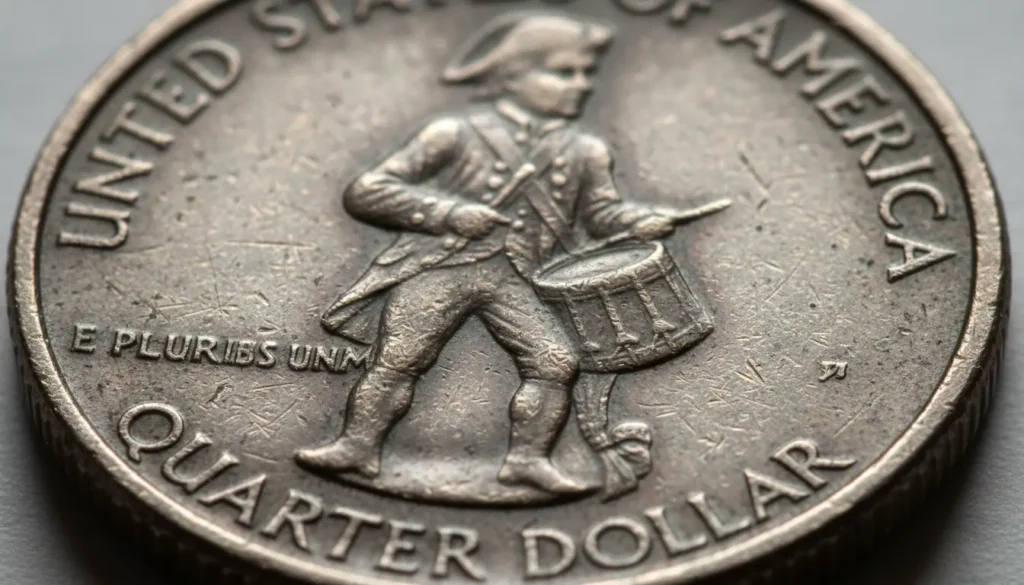
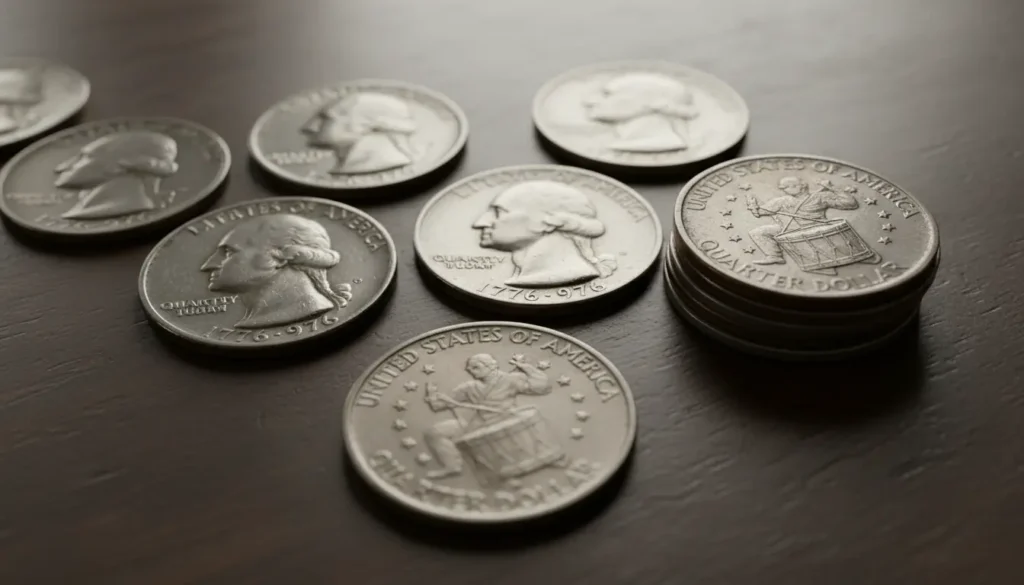
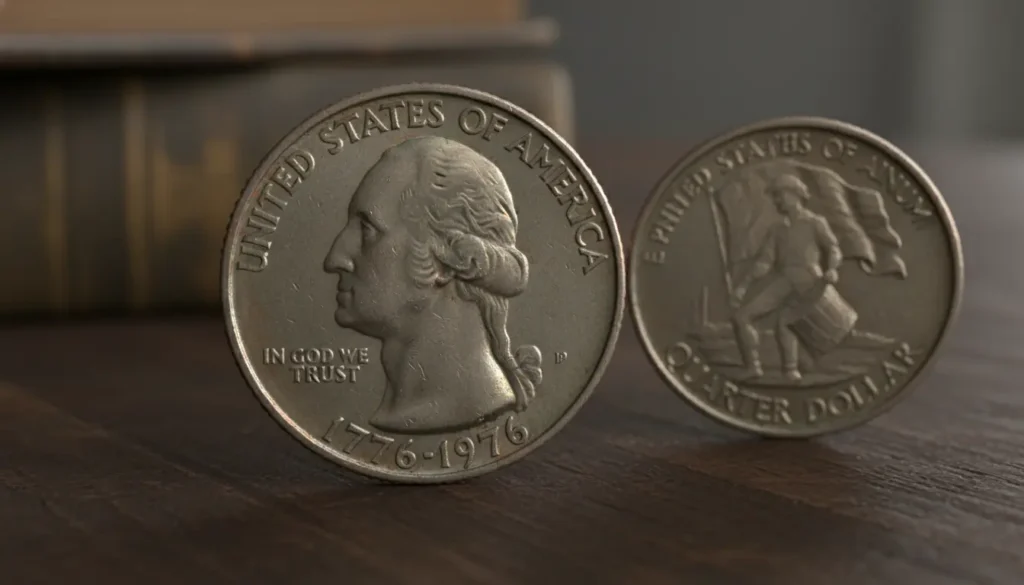
The Bicentennial quarter was issued in 1975–1976 to celebrate the 200th anniversary of the United States. It features a special reverse showing a drummer and a colonial victory design instead of the regular eagle.
Millions were produced and circulated, so most Bicentennial quarters are common and inexpensive. Rarity depends on mint, finish, errors, and condition.
Key Factors That Determine a Bicentennial Quarter’s Value
Understanding value requires checking several features. Collectors pay for scarcity, condition, and unusual characteristics.
- Mint mark and mintage: Philadelphia (no mint mark), Denver (D), and San Francisco (S) produced these coins. Proofs came from San Francisco.
- Condition and grade: Uncirculated and high-grade coins (MS65 and above) are worth more. Professional grading can significantly raise market value.
- Errors and varieties: Double dies, off-center strikes, and die breaks can increase value sharply if genuine and dramatic.
- Demand: Even rare errors are only worth much if collectors currently want them. Market trends matter.
Common vs. Rare Varieties
Most Bicentennial quarters are common with modest value. Rare varieties include:
- 1976-S Proof with exceptionally deep cameo contrast
- High-grade uncirculated 1976-S or 1976-D specimens
- Notable minting errors like large off-center strikes or significant doubling
Could a Bicentennial Quarter Be Worth $1 Million?
A million-dollar value would require an extreme combination of factors: an ultra-rare die variety, a flawless grade from a top-tier grading service, and strong collector demand. For Bicentennial quarters, that scenario is effectively hypothetical.
Most documented high-value Bicentennial quarters sell in the low thousands, not millions. The coin market does occasionally produce surprises, but those are rare and typically involve much older or historically significant coins.
How to Check If Your Bicentennial Quarter Is Valuable
Follow a practical checklist to evaluate a quarter quickly before spending money on grading or appraisal.
- Look for mint mark: Check the obverse near Washington’s neck for no mark (Philadelphia), D, or S.
- Inspect condition: Is the surface shiny with no wear, or worn and dull?
- Search for errors: Tilt the coin and use a magnifier to spot doubling, off-center strikes, or extra metal.
- Weigh and measure: A dramatically off-weight coin or unusual thickness can indicate an error.
If you find a coin that looks exceptional, document it with high-resolution photos from multiple angles and record where you found it.
When to Send a Quarter for Professional Grading
Professional grading is worthwhile if you suspect a high-grade uncirculated coin or a genuine, dramatic error. Grading costs money, so reserve it for promising candidates.
- Grade a suspected MS65 or higher uncirculated coin
- Grade a clear mint error like a large off-center strike
- Avoid grading routine circulated coins, which rarely recover grading fees
The Bicentennial quarter’s reverse design was chosen by competition and replaced the eagle for two years. Millions were minted, making most Bicentennial quarters common in circulation today.
Real-World Example: How a Find Can Turn Into Cash
Case study (illustrative): A hobbyist searching rolls found an uncirculated 1976-S Bicentennial quarter with unusual doubling on the reverse. They took high-quality photos, compared them to known varieties online, and consulted a reputable coin dealer.
The dealer suggested professional grading because the piece looked like a strong candidate for a high MS grade with a clear die variety. After grading and a small auction listing, the coin sold for several times the dealer’s initial offer. The key steps were documentation, expert consultation, and targeted marketing to collectors.
Practical Tips for Sellers and Finders
Follow these practical steps to maximize value and avoid common pitfalls.
- Document the coin: Photos, notes on how and where it was found, and any provenance help buyers trust authenticity.
- Get an opinion: Start with a reputable local dealer or numismatic forum before paying for grading.
- Use professional grading selectively: Reserve it for coins with clear potential.
- Compare recent sales: Look for completed auction results rather than listing prices to see realistic values.
Conclusion: Be Realistic but Curious
While a Bicentennial quarter is extremely unlikely to be worth a million dollars, some can still be worth substantial sums if they show rare errors or pristine condition. Use a methodical approach: inspect, document, consult, and only grade when the potential reward exceeds the cost.
With patience and careful sorting, you might turn pocket change into profit — but treat million-dollar dreams with healthy skepticism and focus on practical steps to find real value.