Most 1976 Bicentennial quarters you find in change are ordinary and worth face value or a little more to collectors. But a small number of variations and errors can make specific examples collectible and valuable. This guide explains what to look for and how realistic a seven‑figure value is.
What is the Bicentennial Quarter?
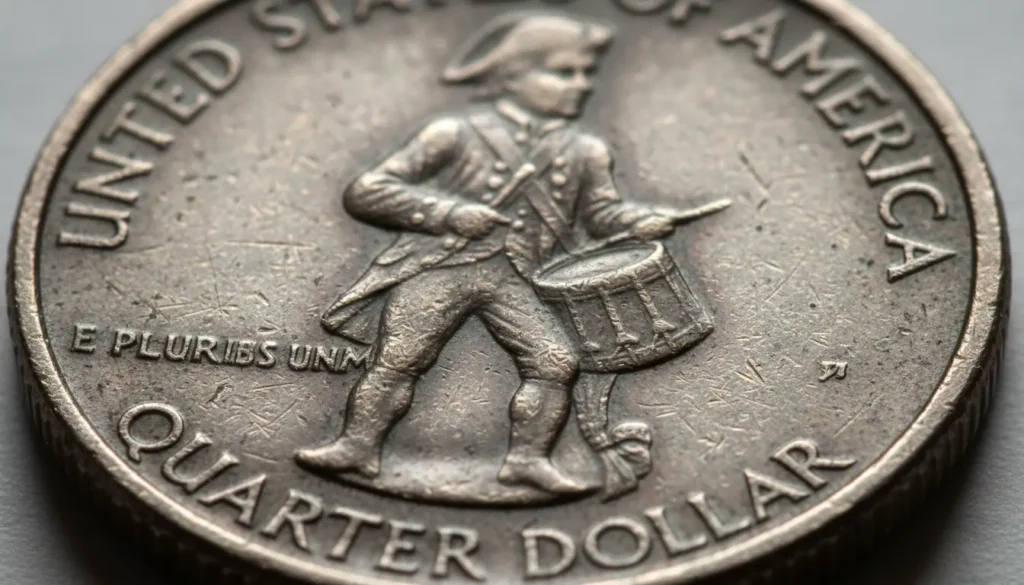
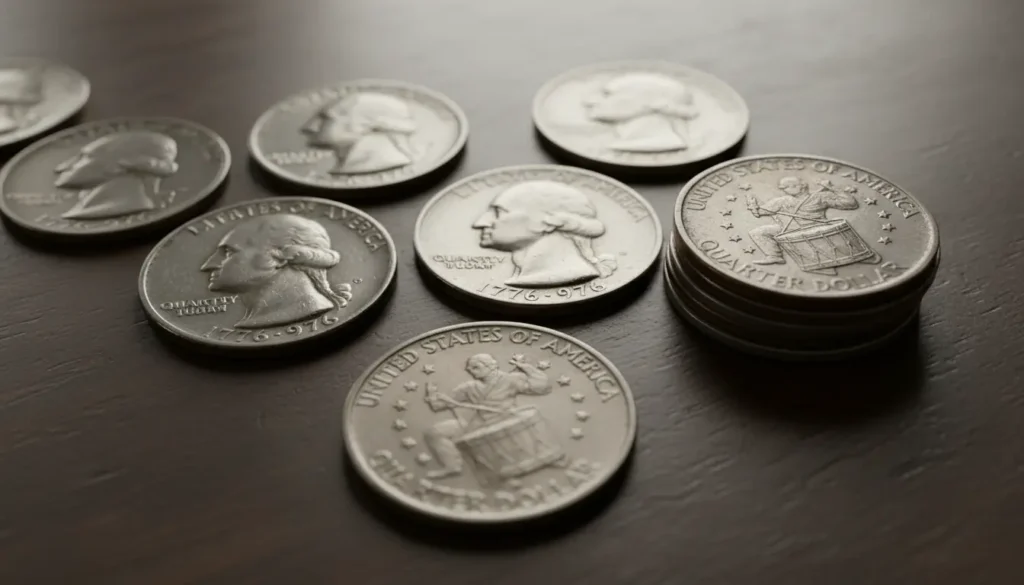
The Bicentennial Quarter was issued to mark the 200th anniversary of the United States. It bears the dual date 1776–1976 on the obverse and a special reverse showing a colonial drummer and 13 stars. Millions were produced for circulation and for proof and mint sets.
Why some Bicentennial Quarters are more valuable
Value comes from rarity, condition, and collector demand. Most Bicentennial quarters were minted in large numbers, so condition and unusual features drive premium prices.
Key value factors for Bicentennial Quarter
- Mint mark and mint facility (D, S, or no mint mark).
- Strike quality and grade (MS/PR grades matter for collectors).
- Metal composition (most are copper‑nickel clad; proofs exist in 40% silver).
- Errors and varieties (off‑center strikes, doubled dies, tooling errors).
Common valuable variations of the Bicentennial Quarter
Understand which types collectors watch for. Most high value examples come from very specific, authenticated errors or exceptionally high grades from proof sets.
Proof vs circulation vs silver proofs
Proof Bicentennial quarters (especially those from the San Francisco Mint) were struck in 40% silver for some sets. Silver proofs carry intrinsic metal value plus collector premiums. Circulated pieces rarely exceed melt value unless they show a clear error.
Error types that can increase value
- Off‑center strikes — dramatic misalignments can be collectible.
- Doubled die varieties — rare and often visually distinct.
- Clipped planchet or broadstrike errors — depend on severity and appeal.
- Die chips or repunched mint marks — frequently inexpensive but sometimes sought after.
How to evaluate a Bicentennial Quarter in your pocket
Start with a simple inspection under good light and a jeweler’s loupe or smartphone macro lens. Look for mint marks, the dual date, and any oddities on the rim or devices.
Step-by-step quick check
- Confirm date and design: dual date 1776–1976 and colonial drummer reverse.
- Locate mint mark: small letter near the date on the obverse for some issues.
- Inspect for errors: off‑center, doubled dies, missing devices, or unusual edges.
- Assess condition: note scratches, wear, luster, and strike sharpness.
Grading and professional authentication
High value claims require professional grading from a reputable service (PCGS, NGC, ANACS). Grading certifies a coin’s authenticity and condition and often unlocks access to major auction markets.
When to get a coin graded
- If an unusual error is visible to the naked eye.
- If the coin appears to be in pristine, uncirculated condition with strong luster.
- If you plan to sell through an auction house or to serious collectors.
The Bicentennial Quarter was produced in 1975 and 1976 but all bear the dual date 1776 1976. The reverse, showing a colonial drummer, was designed specifically for the bicentennial celebration.
Is a Bicentennial Quarter likely to be worth $1 million?
Practically speaking, it is extremely unlikely a Bicentennial quarter will reach a seven‑figure value. Most high sales for modern U.S. quarters rely on extreme rarity, historical significance, or unique provenance — situations uncommon for a 1976 commemorative mass‑issue coin.
Realistic value expectations
- Common circulated Bicentennial quarter: face value to a few dollars.
- High grade uncirculated (MS63–MS65): tens to a few hundred dollars depending on market conditions.
- Certified proof silver examples: can fetch higher premiums, typically hundreds to low thousands.
- Documented, dramatic error coins: potentially several hundred to several thousand dollars if authenticated.
Small real‑world case study
Case study: A collector found an unusually lustrous Bicentennial quarter in a coin roll purchase. The coin showed unusually sharp detail and no wear, so the owner sent it to a grading service. The coin was certified MS66 and sold through a dealer for several hundred dollars. The sale paid the grading fee and generated a modest profit, but it was far from a seven‑figure outcome.
Where to sell a rare Bicentennial Quarter
If you believe you have a rare piece, choose reputable channels to sell. Options include coin dealers, online auctions, specialist coin shows, and certified auction houses. Always obtain a professional grade or a written appraisal for high value pieces.
Tips when selling
- Get at least two independent opinions or appraisals.
- Use certified grading to improve buyer confidence.
- Document provenance and any unique characteristics with photos and notes.
Final practical steps
Check your pocket change carefully and handle suspect coins with clean hands or gloves. If a Bicentennial quarter looks unusual, photograph it, note the mint mark, inspect for errors, and consider professional grading. Most finds will be modestly profitable at best, but proper authentication is the only way to know.
Finding a truly rare Bicentennial Quarter that sells for $1 million is extraordinarily unlikely. Still, well‑documented errors and high‑grade examples can be worth far more than face value, and careful evaluation can help you realize any hidden value.