Most 1976 Bicentennial quarters are common and worth face value to small premiums. Still, collectors chase rare varieties and dramatic error coins, and those can be worth hundreds to tens of thousands of dollars. This guide explains what makes a Rare Bicentennial Quarter valuable and how realistic the $1 million idea is.
What Is the Bicentennial Quarter?
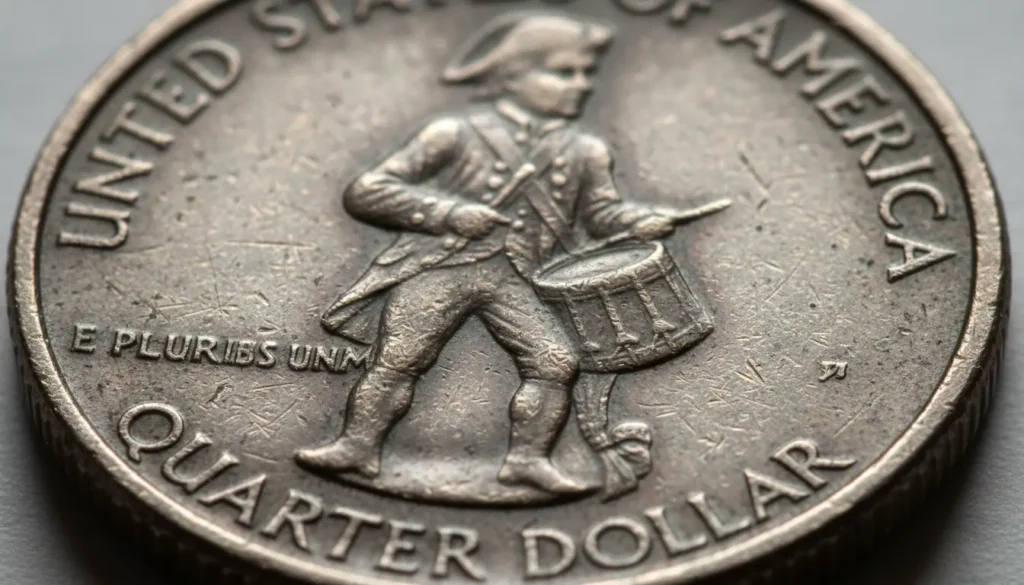
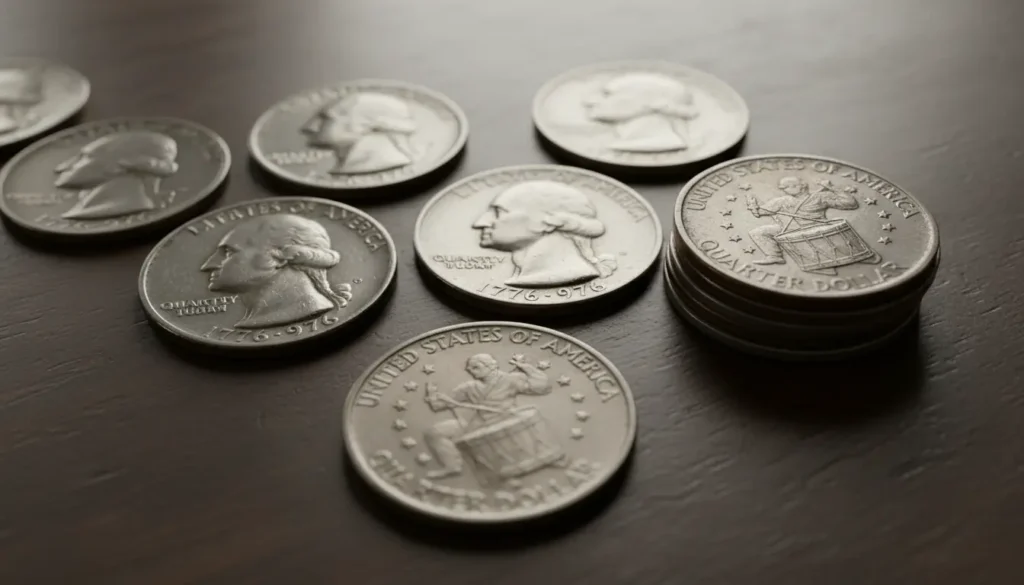
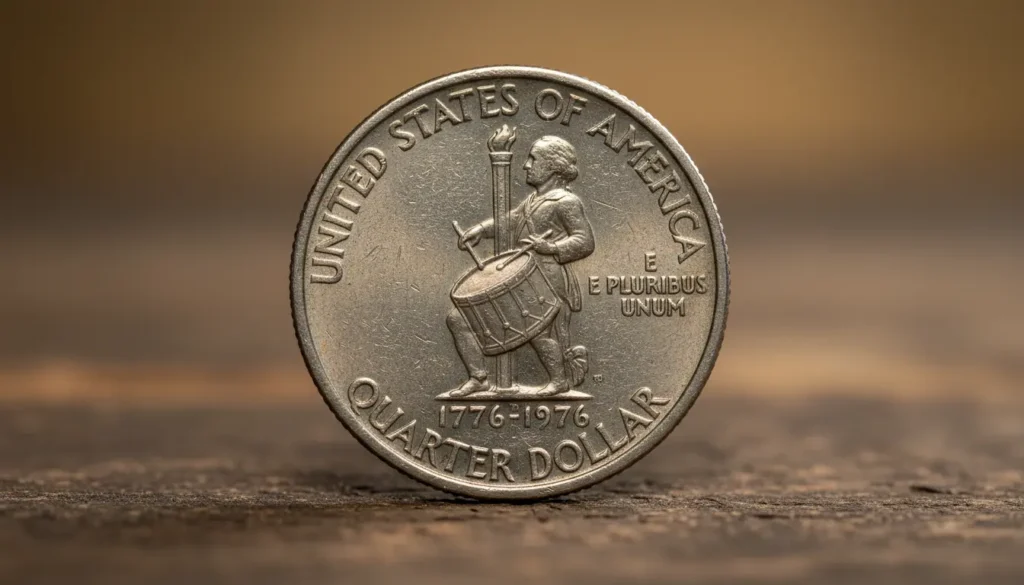
The Bicentennial Quarter was issued for the United States 200th anniversary. It carries the dual date “1776–1976” and a special reverse designed by Jack L. Ahr showing a colonial drummer.
Millions of these quarters were minted for circulation and as special proof and silver-clad issues, making genuinely common examples abundant.
Why Most Bicentennial Quarters Aren’t Rare
High mintage numbers and wide distribution reduce scarcity. Most circulated pieces sell for face value or small premiums to collectors.
Even many uncirculated pieces are inexpensive because the modern coin market produced vast numbers of mint-state examples.
Key reasons for low value
- High production totals at Philadelphia, Denver, and San Francisco.
- Large runs of proof and special sets sold to collectors.
- Common wear and minimal collector demand for average pieces.
What Can Make a Bicentennial Quarter Valuable?
Only a few features reliably increase value: scarce minting varieties, unusual composition, dramatic errors, and presentation-grade condition.
Valuable types to watch for
- Silver-clad proof quarters (40% silver) from special sets.
- Error coins: off-center strikes, clipped planchets, and wrong planchet types.
- High-grade uncirculated or proof coins graded by PCGS or NGC.
- Documented provenance or coins in museum-quality condition.
Common Error Types and Why They Matter
Error coins can command significant premiums because they are visually distinct and limited. The rarity and appeal depend on the type and degree of error.
- Off-center strikes: The more off-center, the rarer and more collectible.
- Wrong planchet: A quarter struck on a dime or cent planchet can attract strong interest.
- Doubled die: Clear doubled devices on obverse or reverse are desirable.
- Clipped planchet or broadstrike errors: Eye-catching and collectible when large.
How Grading and Authentication Affect Value
Professional grading gives buyers confidence. A certified coin from PCGS or NGC typically sells for higher prices than an uncertified example.
Grading considers strike, luster, and any damage. Error coins are often graded differently, and special error grading services can provide additional verification.
Real-World Example: A Collector Finds an Off-Center Bicentennial Quarter
Case study: A collector in a Midwestern town bought a roll of change from a bank and found a noticeably off-center 1976 quarter. After submitting it to a major grading service, it was authenticated as an off-center business strike with roughly a 30% displacement.
The coin sold at a regional auction. Comparable off-center Bicentennial quarters typically sell in the several-hundred to low-thousands range depending on visual appeal and grade. This sale illustrates how unusual errors attract collector attention even when the base coin is common.
Could a Bicentennial Quarter Be Worth $1 Million?
In practical terms, a $1 million Bicentennial quarter is extremely unlikely. Coins that reach seven-figure prices are typically unique early U.S. issues, ultra-rare patterns, or historically significant specimens with perfect provenance.
To reach $1 million, a Bicentennial quarter would need a near-unique combination: dramatic, previously unknown error or pattern, impeccable authentication, elite grading, and intense collector demand tied to a compelling story.
Realistic high-end scenarios
- An absolutely unique minting error of museum interest could approach high five- or six-figure values.
- A perfect 40% silver proof in an unheard-of state of preservation could be worth several thousand to low tens of thousands.
- An authenticated wrong-metal pattern with documented provenance might push higher but still falls far short of $1 million in most markets.
How to Check and Protect a Potentially Valuable Quarter
Follow practical steps if you think you have a rare Bicentennial Quarter. Start with visual inspection and careful handling.
- Check for mint mark, dual date, and obvious errors under good light and magnification.
- Compare to reference photos from reputable numismatic guides and auction catalogs.
- Keep the coin in a protective holder and avoid cleaning it.
- Consider submitting the coin to a reputable grading service (PCGS, NGC) for authentication.
- Consult experienced dealers or auction houses for valuation and sale options.
The Bicentennial quarter was issued with the dates 1776–1976 on both obverse and reverse. Special silver-clad proof sets were sold to collectors, and these silver variants are more valuable than common copper-nickel circulation quarters.
Final Practical Advice
Keep expectations realistic. Most Bicentennial quarters are worth little more than face value. However, unusual errors, high-grade silver proofs, and carefully authenticated pieces can be valuable to collectors.
If you believe you have a rare find, document it, avoid cleaning, get professional authentication, and consult experienced numismatists before selling.
With the right error, provenance, and market conditions, unusual Bicentennial quarters can be worth significant sums. But a single pocket quarter becoming a $1 million coin is a near-impossible outcome without extraordinary circumstances.