The 1976 Bicentennial quarter is a familiar coin, but a few examples can be much more valuable than pocket change. This guide explains how to spot rare Bicentennial quarters, what drives value, and whether a $1 million coin is realistic.
The Rare Bicentennial Quarter: Why some are worth more
Most Bicentennial quarters were struck in massive quantities. That makes common pieces quite low in value. A few factors can still push a coin into a higher price tier.
Key value drivers include mint state (grade), mint errors, and silver content for certain proof issues. Knowing these factors helps you decide whether to get a coin professionally graded or sell it to a dealer.
What to look for on a Bicentennial Quarter
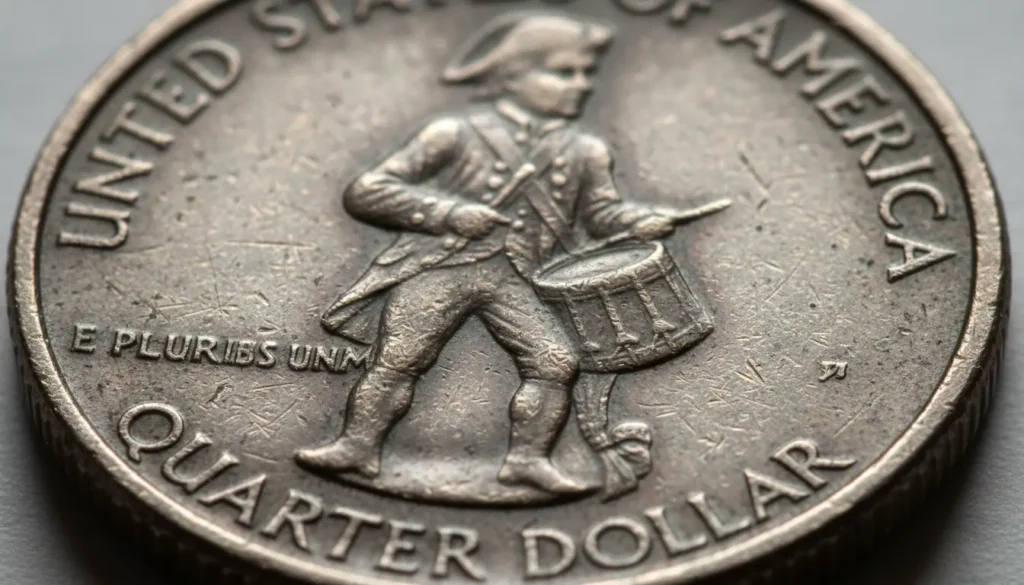
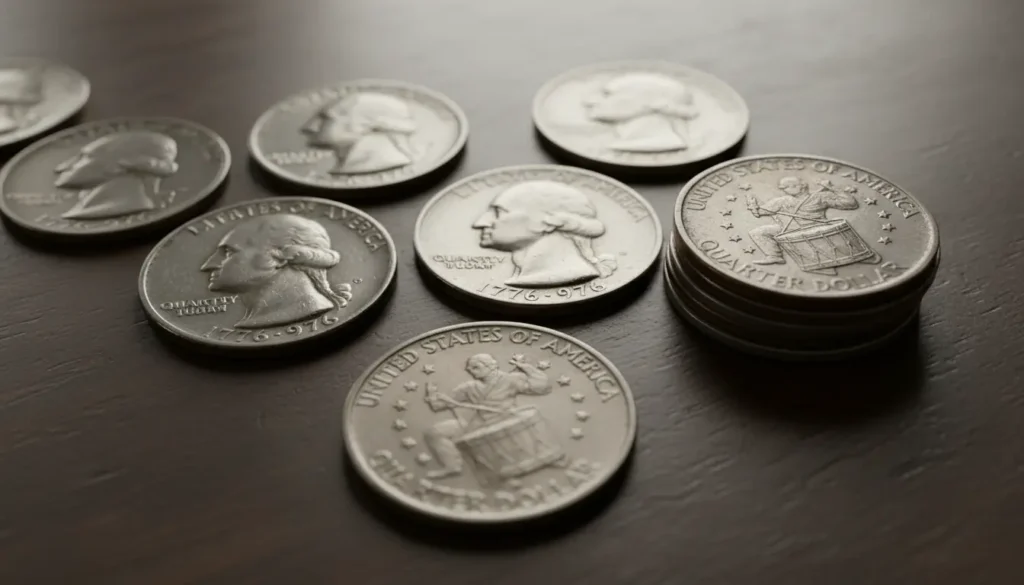
- Obverse and reverse detail: Look for sharpness in the hair, lettering, and Eagle (or Colonial drummer on the reverse).
- Mint mark and minting type: 1976 quarters were struck at Philadelphia (no mint mark), Denver (D), and San Francisco (S for proofs).
- Proof vs. circulation strikes: Proof coins (often from San Francisco) have mirror fields and frosted devices and can command higher prices.
- Errors and varieties: Off-center strikes, double dies, clipped planchets, and wrong-metal strikes are the kinds of errors that attract collectors.
Could a Bicentennial Quarter be worth $1 million?
Short answer: it is extremely unlikely. The majority of 1976 quarters were minted in the hundreds of millions, which works strongly against a seven-figure valuation. However, certain rare error coins and absolute top-condition proof or specimen coins can command very high prices in specialist markets.
To reach $1 million, a coin typically needs a unique combination of rarity, historical significance, and a perfect or near-perfect grade from a major grading service (PCGS or NGC). Few Bicentennial quarters meet those conditions.
Realistic value ranges
- Common circulated Bicentennial quarter: face value to a few dollars
- High-grade uncirculated (MS60–MS65): tens to a few hundred dollars
- Top uncirculated (MS66–MS68) or notable errors: hundreds to several thousand dollars
- Extremely rare errors or unique proofs with provenance: potentially five-figure or low six-figure prices in exceptional cases
How to verify and increase value
If you think you have a rare Bicentennial quarter, follow these steps. Each step helps establish or enhance a coin’s market value.
- Examine the coin under magnification and good light for errors, doubling, or unusual metal.
- Compare the coin to reference photos or coin guides for known varieties.
- Take high-resolution photos and get a preliminary opinion from a trusted coin dealer or specialist forum.
- Consider professional grading with PCGS or NGC if the coin appears to be a high-grade specimen or major error.
- Gather provenance and documentation when possible; auction history and prior sales help build value.
Tips for safe grading and selling
- Use reputable grading services and understand their submission costs and policies.
- Get multiple opinions before committing to grading if fees are high relative to expected value.
- Sell through established auction houses or reputable dealers for high-value coins to reach serious buyers.
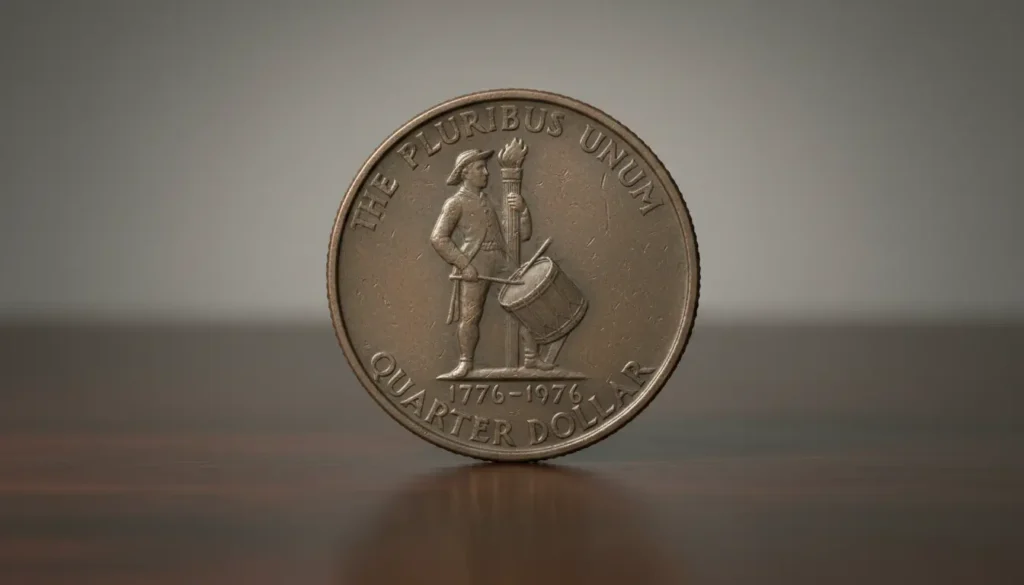
The 1976 Bicentennial design replaced the usual reverse with a Colonial drummer. That design was used on quarters, half dollars, and dollars dated 1776–1976.
Common myths about Bicentennial quarters and million-dollar coins
Online lists sometimes claim that certain circulated Bicentennial quarters are worth hundreds of thousands or more. Many of these claims are exaggerated or refer to coins that must meet near-impossible grading and error conditions.
Always cross-check auction records and consult experts before accepting big valuations. Real auction records and grading certificates are the best evidence of high prices.
What truly rare Bicentennial quarters look like
- Deep, full detail on both sides with minimal wear (MS68+ range).
- Documented and authenticated mint errors such as off-center strikes over 30% or major planchet mistakes.
- Proof coins with perfect mirror fields and exceptional eye appeal, preferably with a high proof grade.
Case study: A realistic find and outcome
Scenario: A hobbyist finds a nicely preserved 1976 quarter in a roll from a bank. It appears unusually sharp and is sent to a reputable dealer for inspection. The dealer identifies it as an uncirculated coin with exceptional strike and recommends professional grading.
Result: After grading, the coin receives a high Mint State grade and sells through a specialty auction. The sale price is several thousand dollars — well above face value, but far short of seven figures. The key takeaway is that grading and proper sale channels can turn a roll find into a meaningful profit, though not typically a life-changing one.
Final checklist if you think you found a rare Bicentennial Quarter
- Keep the coin safe and avoid cleaning it.
- Document the find with clear photos and notes.
- Get opinions from multiple credible sources before spending on grading.
- Use auction houses or specialist dealers for high-value sales.
Most Bicentennial quarters will remain common and affordable to collectors. Still, with careful inspection, knowledge of error types, and the right sale strategy, a single coin can be worth significantly more than its face value. Expect realistic returns, and rely on grading and market evidence before assuming a $1 million outcome.