Many people keep old coins in jars or pockets and wonder whether a common-looking Bicentennial quarter could secretly be worth one million dollars. This article explains how Bicentennial quarter values are determined, what true rarities look like, and what steps to take if you think you have something special.
How rare is the Bicentennial quarter?
The Bicentennial quarter was produced in very large numbers for general circulation and for collector sets. Most examples are common and trade close to face value or modest premiums when uncirculated.
Rarity is not impossible, but it requires an unusual combination of factors: extreme grade, a unique striking error or pattern, and documented provenance. Those conditions are very uncommon for Bicentennial quarters.
Bicentennial quarter mintage and varieties
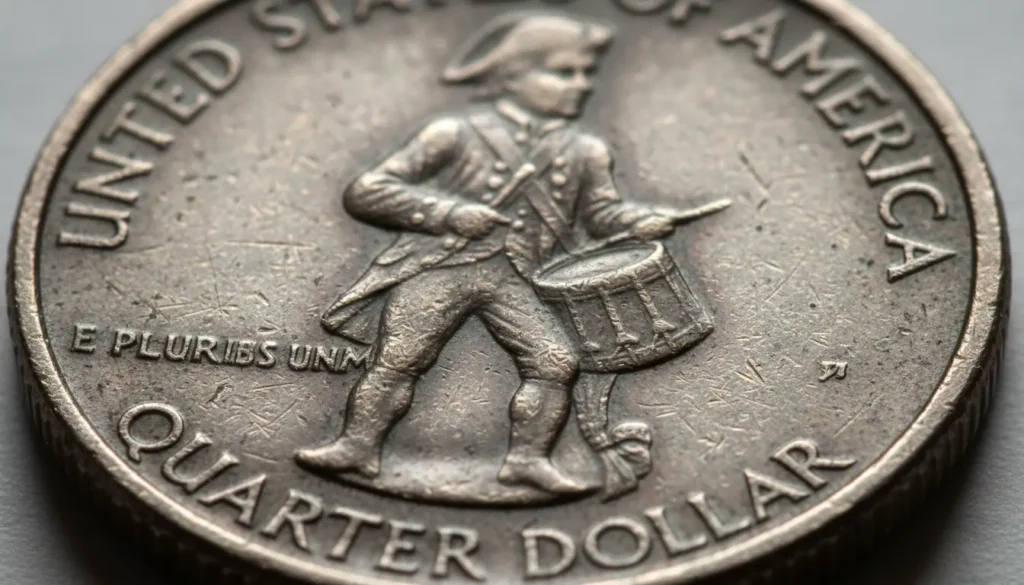
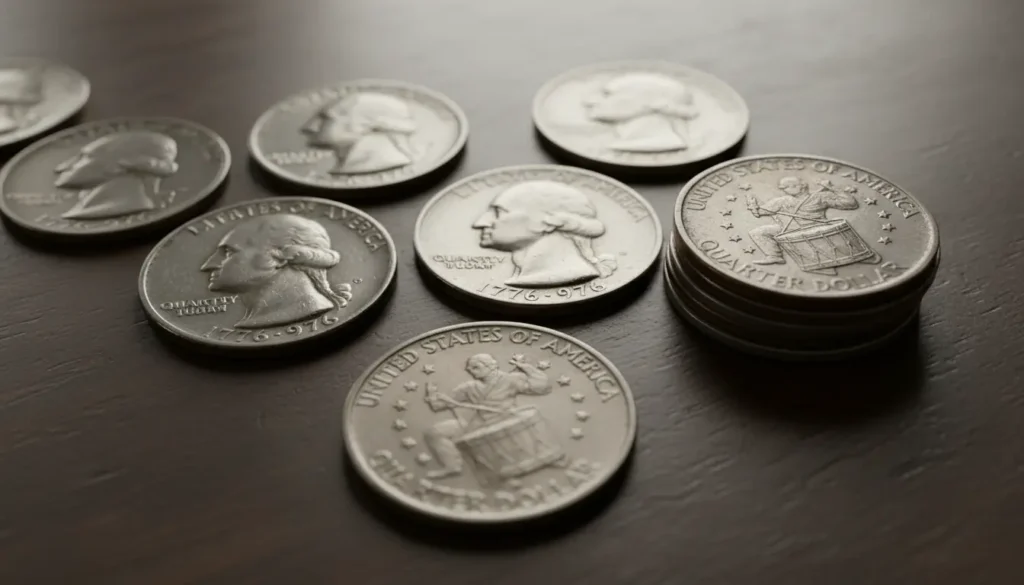
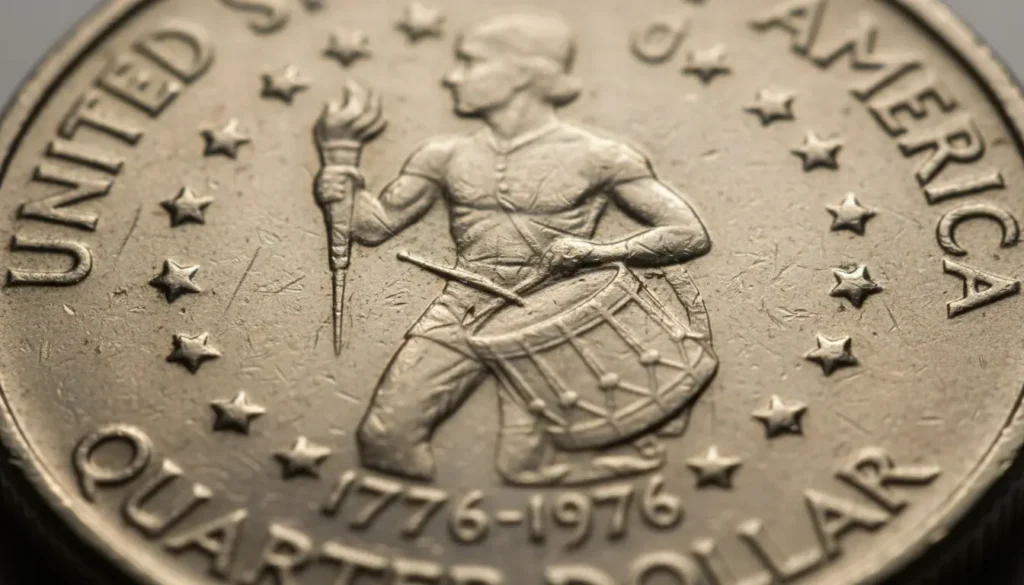
The Bicentennial design (dual date 1776–1976 with a colonial drummer on the reverse) was struck at multiple mints and in different formats. Circulating strikes, proof strikes, and special collector pieces were all produced.
Collector formats included proof and special silver-clad issues. These variants are more valuable than typical circulated examples, but they are still far from the extreme rarity needed to reach seven-figure prices.
What makes a Bicentennial quarter valuable?
Value comes mainly from a few specific factors. Alone, none guarantees a huge price, but together they can increase desirability.
- Grade: Coins graded MS67 or higher by major services like PCGS or NGC are scarce and more valuable.
- Minting error: Off-center strikes, die breaks, double dies, and wrong-metal strikes can raise value substantially.
- Proofs and silver-clad issues: Proof coins in high grade and silver-clad presentation pieces command premiums.
- Unique pattern or specimen: Official patterns or trial pieces with clear documentation are extremely rare and collectable.
- Provenance: Coins tied to famous collections or historical events can fetch higher prices.
Which errors are worth watching for?
Common errors that increase value include double die obverse/reverse, significant off-center strikes, and broadstrikes. Small surface marks or minor die chips rarely move the price much.
Keep in mind: many so-called “errors” offered online are minor and do not translate into large auction results.
The Bicentennial quarter design was used only for 1975–1976 coinage and displays the dual date 1776–1976 on the obverse. Special silver-clad proof sets were issued for collectors.
Could a Bicentennial quarter be worth one million dollars?
In practical terms, the chance that a typical Bicentennial quarter in circulation is worth one million dollars is effectively zero. Most collectors and dealers expect values in the range from face value up to several hundred dollars for high-grade or silver examples.
To reach a seven-figure price, a Bicentennial quarter would almost certainly need to be a previously unknown pattern, an unique mint error with flawless grade, or a coin with extraordinary historical provenance. Even then, buyers for such an item would be very rare.
Realistic value ranges
Typical market levels you can expect for Bicentennial quarters:
- Circulated common pieces: 25 cents to a few dollars.
- High-grade uncirculated (MS60–MS66): $5 to $200, depending on eye appeal.
- Proof and silver-clad proofs: $10 to several hundred dollars for quality pieces.
- Verified major errors or unique patterns: hundreds to thousands of dollars. Extreme outliers are very rare.
What to do if you think you have a valuable Bicentennial quarter
Follow careful steps to protect value and avoid common mistakes. Immediate cleaning or rough handling can destroy value.
- Do not clean the coin. Cleaning can reduce collector value dramatically.
- Take clear, close-up photos of both sides in natural light.
- Store the coin in a soft flip or archival holder to prevent damage.
- Ask a reputable coin dealer for an initial opinion—preferably someone accredited by a national association.
- If the coin appears unusual, consider grading by a major third-party service like PCGS or NGC. Authentication and grading often increase buyer confidence and final sale price.
How grading and auction work
Third-party grading assigns a numeric grade and verifies authenticity. Auction houses and specialist dealers rely on these grades when pricing rare or error coins.
Keep documentation of every step—photos, dealer opinions, and grading receipts—to help establish provenance if you sell or consign the coin.
Case study: Finding value in an unexpected error
A collector once discovered a Bicentennial quarter with an obvious off-center strike. They did not clean it and immediately photographed the coin. After a specialist dealer examined it, the coin was submitted for grading and authenticated as a significant striking error.
The coin sold for several thousand dollars at auction—an outcome far above face value but still several orders of magnitude below one million. This example shows how an error can transform a common coin into a notable sale, but also how rare the top-end outcomes are.
Bottom line: Keep expectations realistic
While it is fun to imagine finding a million-dollar coin in a pocket, realistic outcomes for Bicentennial quarters are far more modest. Most are common, and even the better examples generally sell for hundreds or thousands—not millions.
If you think you have something unusual, protect it, document it, and seek professional advice. That is the best way to realize any real value your coin may have.