Understanding the Bicentennial Quarter and its value
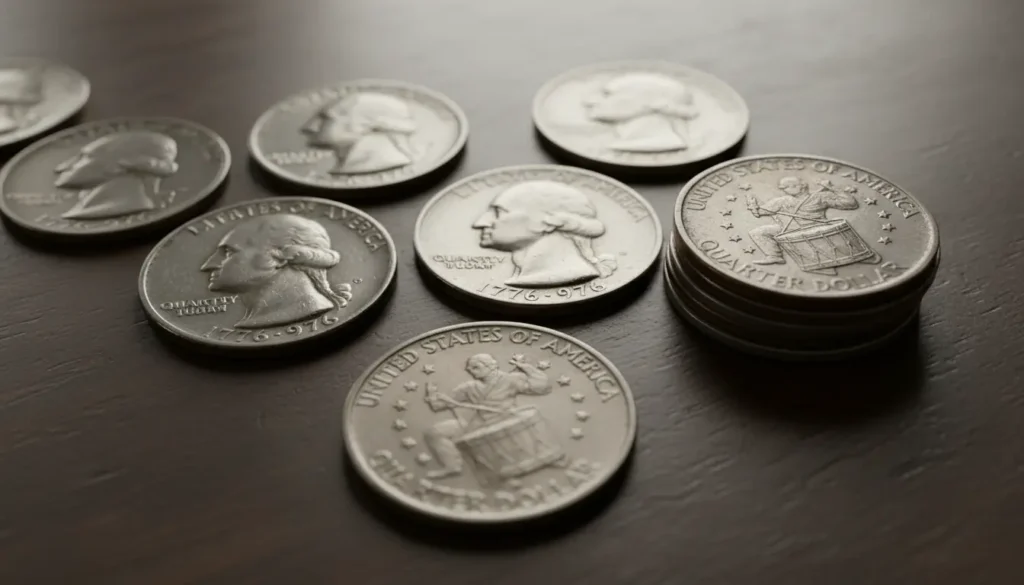
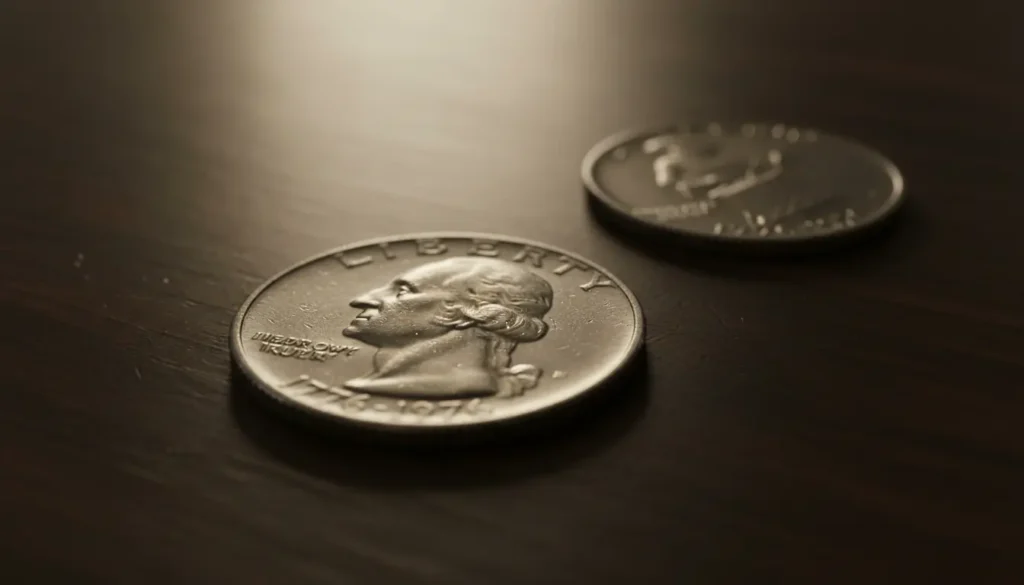
The Bicentennial quarter, dated 1776-1976, was produced for the U.S. Bicentennial celebration and is a common coin in circulation. Most Bicentennial quarters are worth face value or a small premium if in excellent condition.
Collectors do pay more for specific varieties, proof examples, and striking errors. However, the idea that a random Bicentennial quarter in your pocket could be worth $1 million is extremely unlikely.
What makes a Bicentennial Quarter rare?
Rare value typically comes from one or more of these factors. You should check each to see whether a coin you own is noteworthy.
- Unusual minting errors (double die, off-center strikes, planchet flaws)
- High professional grade (MS67 and above for circulation strikes)
- Proof strikes from the San Francisco “S” mint that are 40% silver
- Unique provenance or documented history linking the coin to a famous collection
Common Bicentennial Quarter varieties
The main circulation pieces were struck in copper-nickel clad, while collector sets included special 40% silver proof quarters marked with an S. Both types can be collectible, but silver proofs are generally more desirable than worn circulation pieces.
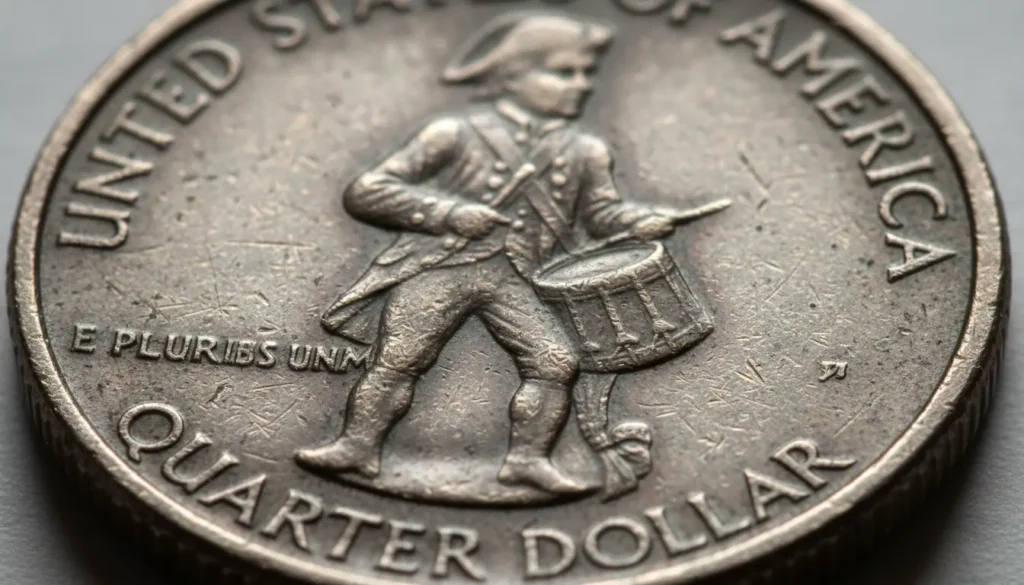
The 1976 Bicentennial quarter reverse features a colonial drummer design by Jack L. Ahr. The coin uses a dual date, 1776-1976, on the obverse.
How to tell if you have a potentially valuable Bicentennial Quarter
Follow these practical steps to evaluate your coin. This process helps avoid false hopes and guides you toward professional help when needed.
1. Inspect date and mint mark
Look for the dual date 1776-1976 and a mint mark near Washington’s portrait. Mint marks used were D (Denver), S (San Francisco), or none (Philadelphia). The S proofs came in silver sets, which are often more valuable than clad circulation strikes.
2. Check for errors and unusual features
Use a magnifier to look for doubled dies, off-center strikes, missing devices, or unusual metal exposures. Error coins can be valuable, but value depends on rarity and severity of the error.
3. Assess condition
Coins are graded on condition. A well-preserved uncirculated coin (MS65 and above) is worth more than a heavily worn example. Professional grading from PCGS, NGC, or ANACS can significantly affect market value.
Typical value ranges for Bicentennial Quarters
Values vary widely by condition and type. These ranges are general guidelines to help set expectations.
- Circulated common quarter: face value to a few dollars
- Uncirculated MS60–MS65: $3 to $50 depending on grade and eye appeal
- High MS66–MS69 graded coins: $50 to several hundred
- 1976-S silver proof (nice grade): often $10 to $100+ depending on grade and market
- Significant error coins: from low hundreds to several thousand, depending on rarity and documentation
Reaching six-figure or million-dollar prices would require a unique, heavily documented pattern, experimental piece, or an extraordinary error tied to strong collector provenance. Those items are almost never Bicentennial quarters.
What to do if you think you have a rare Bicentennial Quarter
If you suspect a coin is valuable, follow a cautious, step-by-step approach to avoid damaging it and to confirm authenticity.
- Do not clean the coin. Cleaning can destroy value.
- Take clear photos under good light and with magnification of the obverse, reverse, and any unusual areas.
- Compare images to reputable sources and auction records online to find known die varieties or error types.
- Get a professional opinion. Local reputable coin dealers can help, but for high-value items seek third-party certification (PCGS, NGC).
- If authenticated and graded, consider selling through a reputable auction house or dealer who handles error coins.
Where to get a professional appraisal
Use well-known grading services or local coin clubs for referrals. Grading costs vary and are worth the expense when potential value is high.
Case study: A careful discovery
A collector named Maria found a bag of mixed coins at a thrift sale, including a Bicentennial quarter in unusually sharp condition. She photographed the coin, noticed an off-center strike, and posted images to an online coin forum.
Forum members suggested it might be an off-center error worth more than face value. Maria then took the coin to a local coin shop and was advised to submit it for third-party authentication. The grading service confirmed an off-center strike and assigned a clear description. Maria later sold the coin through an auction specialist for a modest four-figure price, well above initial expectations.
Final takeaways about a Bicentennial Quarter worth $1 million
While the headline idea is attention-grabbing, a Bicentennial quarter in your pocket is extremely unlikely to be worth $1 million. Most examples are common and hold nominal premiums at best.
If you find a Bicentennial quarter that looks unusual, follow the inspection and authentication steps above. Error coins and high-grade proofs do sell for premiums, and careful research plus professional grading can reveal real value.
Being methodical — photograph, research, preserve, and authenticate — is the best path to discover whether a coin in your change is an unexpected treasure.