Why collectors care about the Bicentennial Quarter
The Bicentennial Quarter, struck for 1776–1976, is a common coin in US pocket change. Most examples are worth little more than face value.
Still, collectors watch these coins for rare errors, silver proofs, and high-grade specimens that can carry a premium. Understanding how value is created helps you decide whether to keep, grade, or sell a coin.
How a Bicentennial Quarter could gain high value
Several basic factors determine whether any coin becomes valuable. For Bicentennial Quarters, the same rules apply as for other modern coins.
Key value drivers include rarity, an identifiable mint error, metal content, condition, and collector demand. A combination of those factors can push a coin well above face value.
Key factors affecting Bicentennial Quarter value
- Mint errors — off-center strikes, broadstrikes, double dies, and clipped planchets can be rare and collectible.
- Metal content — most Bicentennial quarters are copper-nickel clad, but special silver proof quarters were issued; silver pieces generally command higher prices.
- Condition and grading — coins graded high by a third-party service (PCGS, NGC) get price premiums.
- Mintage and variety — proof vs. business strike, mint mark (D, S), and any unusual die varieties matter.
- Provenance and demand — an error with a clear story or provenance can attract collector interest.
Could a Bicentennial Quarter be worth $1 million?
Realistically, the odds are extremely low. Millions of Bicentennial Quarters were produced, so ordinary pieces are plentiful.
To reach a price in the seven figures, a coin would need an unprecedented combination of extreme rarity, unquestionable authentication, and very strong collector demand. No widely accepted sale of a Bicentennial Quarter has approached $1 million.
Why seven-figure values are unlikely
- High mintage: Common circulation strikes reduce scarcity.
- Many error types are known and have produced market values well below seven figures.
- Major auction records for modern quarters and similar errors typically sit in the hundreds or low thousands, not millions.
Practical steps to check your Bicentennial Quarter
If you find a Bicentennial Quarter and suspect it might be valuable, follow simple verification steps before assuming a high value.
- Inspect with magnification: Look for doubled dies, off-center strikes, or unusual patterns.
- Compare to references: Use online databases and auction records from trusted sites and forums.
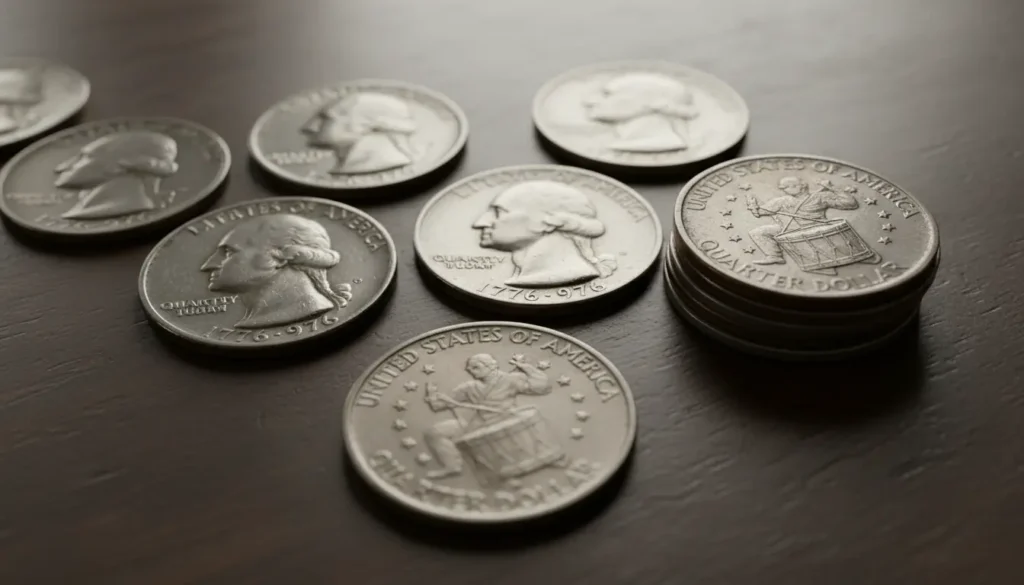
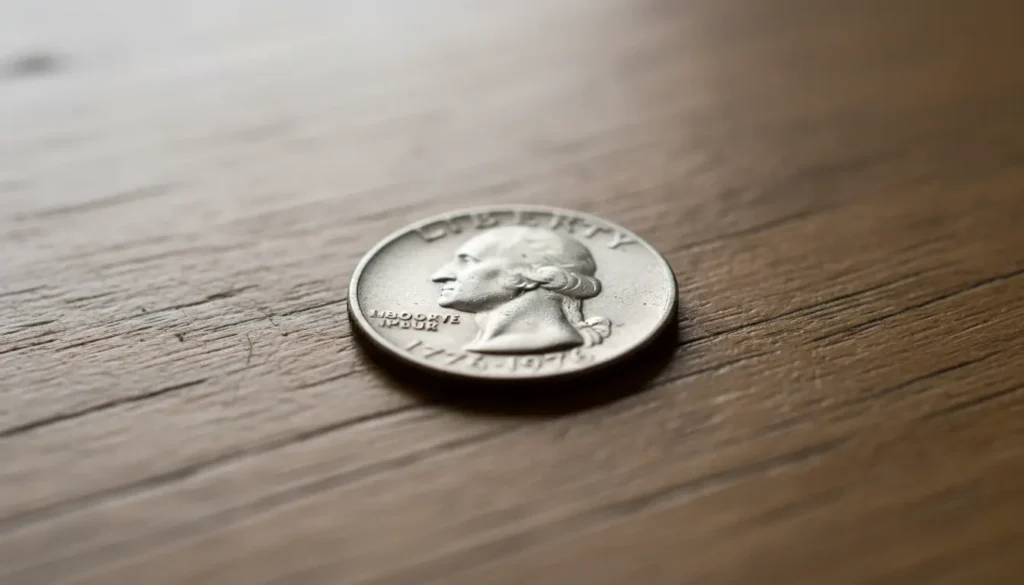
- Check mint mark: Look for D, S, or no mint mark and confirm design details (dual date 1776–1976).
- Keep the coin intact: Avoid cleaning or polishing, which can destroy value.
- Seek a professional opinion: Take the coin to a reputable coin dealer, auction house, or third-party grading service.
How to authenticate and sell a rare Bicentennial Quarter
Authentication and grading are standard practice for coins with suspected high value. Third-party grading services give a trusted condition label that buyers accept.
For significant errors, an auction with specialist numismatic houses or online auction sites that handle coins is appropriate. Always get multiple opinions before selling.
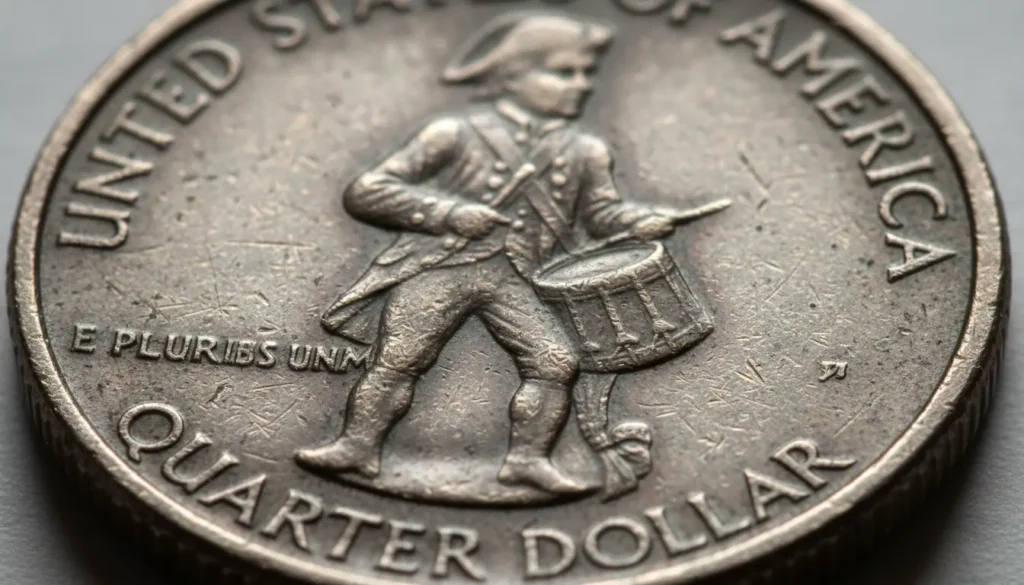
The Bicentennial Quarter design was issued with the dual date 1776–1976 and a special reverse showing a colonial drummer. Despite its historic design, most examples remain common in circulation.
Small case study: A market for errors
A collector discovered a Bicentennial Quarter with a significant off-center strike at a local coin show. After authentication by a specialist and third-party grading, the coin sold at auction for a price well above face value.
This example shows how an identifiable error, confirmed by experts and presented to collectors, can raise a coin’s market value. However, that sale was in the hundreds or low thousands, not near seven figures.
Quick checklist before you act
- Do not clean the coin — cleaning reduces value.
- Use a magnifier and take high-resolution photos from multiple angles.
- Consult online auction records and numismatic databases for similar examples.
- Get a professional appraisal or submit the coin to a reputable grading service if you believe it is unusual.
Final takeaway
A Bicentennial Quarter could be worth more than face value if it has a rare error, silver content, or exceptional grade. Reaching $1 million is extremely unlikely given the coin’s large original mintage and market history.
If you suspect you have a rare Bicentennial Quarter, document it, avoid altering it, and seek professional evaluation. That approach gives you the best chance of realizing any real value your coin may hold.