Could Your Pocket Change Be Worth $1 Million? The Bicentennial Quarter Explained
The 1976 Bicentennial quarter is familiar to many collectors and casual holders. Most are common and worth face value or a small premium. A tiny number of error or silver pieces can be worth much more.
This guide explains how to identify potentially valuable Bicentennial quarters, realistic value ranges, and the steps to authenticate and sell a rare find.
Understanding the Bicentennial Quarter
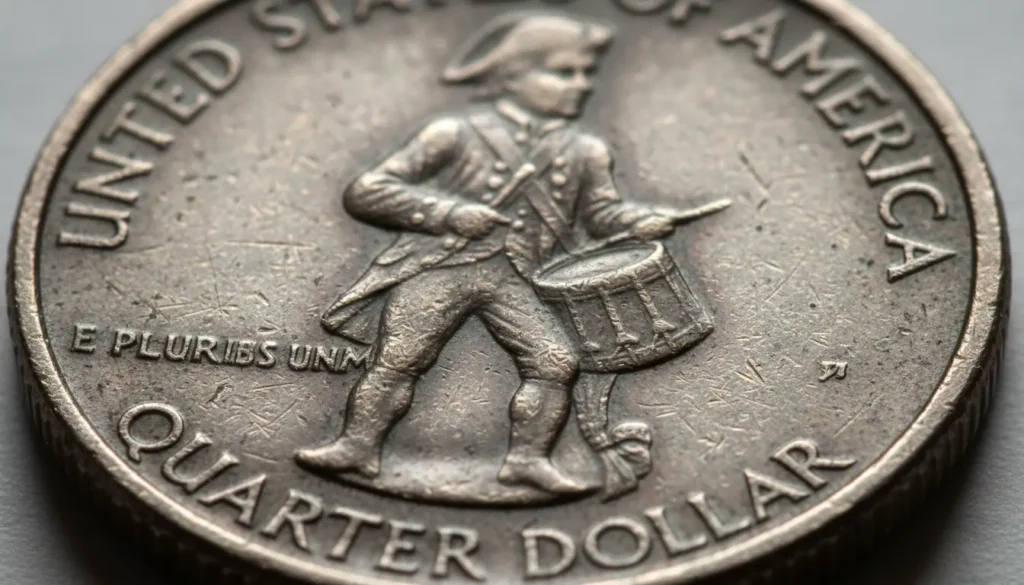
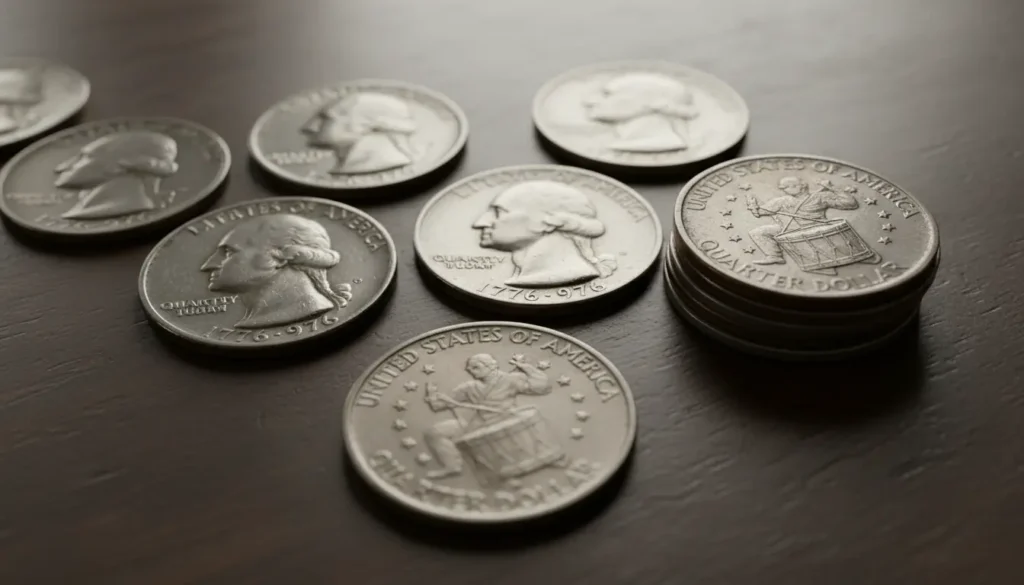
The Bicentennial quarter was issued in 1975–1976 with a dual date 1776–1976 and a special reverse design. Most were minted for circulation in copper-nickel clad. The U.S. Mint also produced limited 40% silver proof and uncirculated sets for collectors.
Knowing which version you have is the first step toward determining value. Clad circulation pieces are common; silver proofs and uncirculated silver coins are collector items.
Key features to check on your Bicentennial Quarter
- Date: Look for 1776–1976 on the obverse.
- Mint mark: P, D, or S may appear depending on the issue and package.
- Finish: Proofs have mirror-like fields; circulation coins have normal finish.
- Edge and color: Silver pieces may appear slightly different and lack the copper core color at the rim.
Why some Bicentennial quarters are rare
Rarity usually comes from composition, minting errors, or exceptional condition. Key drivers of value are:
- Composition: 40% silver proof and uncirculated pieces are scarcer than clad circulation coins.
- Error coins: Off-center strikes, clipped planchets, double dies, and coins struck on the wrong planchet can be scarce and collectible.
- Condition and grade: High-grade coins (MS67+, PR68+) in original holders command higher prices.
Common error types to look for
- Off-center strike — part of the design missing from the rim.
- Double die — doubled design elements, most visible on the obverse lettering or date.
- Clipped planchet — a crescent-shaped missing area on the coin edge.
- Wrong planchet — a quarter struck on a planchet intended for a different denomination or metal.
How to identify a valuable Bicentennial Quarter
Follow these practical inspection steps before assuming big value.
- Check the date and mint mark carefully under magnification.
- Compare finish and color with known examples — proofs look markedly different.
- Look for obvious errors or unusual devices around the rim and fields.
- Weigh and measure if you have precise tools; composition differences can change weight slightly.
- Photograph the coin from both sides with good lighting and a macro lens or phone macro attachment.
When to send a coin for grading
Send a candidate to a reputable third-party grading service (PCGS, NGC, ANACS) if:
- The coin shows a significant mint error.
- You believe the coin is a silver proof or unusually high grade.
- You plan to sell at auction or want a certified value for insurance.
Realistic values: What to expect
Most circulated Bicentennial quarters are worth 25 cents to a few dollars. Higher values apply to silver proofs, choice uncirculated coins, and error pieces.
Here are rough value categories to guide expectations:
- Common circulated clad: face value to $1.
- Uncirculated clad (MS60–MS65): $1–$20 depending on grade.
- 40% silver proof/uncl. pieces: $5–$50+ depending on grade and market.
- Attractive error coins or high-grade certified specimens: hundreds to thousands of dollars.
Claims of a single Bicentennial quarter being worth $1 million are extraordinary and would require a historically significant error, perfect provenance, and top grades combined with collector demand.
Practical steps if you think you have a rare Bicentennial Quarter
- Do not clean or polish the coin; cleaning destroys collector value.
- Document the coin with high-resolution photos and notes about where and how you found it.
- Get an initial opinion from a reputable local coin dealer or a coin club.
- If warranted, submit the coin for third-party grading and authentication.
- Shop around for sale: regional auction houses, specialist coin auctions, or major online auction platforms often bring the best results.
Case study: A cautious real-world example
A collector found a Bicentennial quarter with a noticeable off-center strike and took photos before handling it further. A local dealer confirmed it appeared to be a genuine mint error worth more than face value, and the owner submitted it to a grading service.
After certification and an estate auction, the coin sold for several thousand dollars — a meaningful return, but far from the million-dollar headlines you may see online. This example shows how authentication, grading, and the auction market affect final value.
Final checklist before you get excited
- Verify date, mint mark, and composition.
- Look for clear, documentable errors or proof finishes.
- Avoid cleaning; preserve original surfaces in a holder.
- Get reputable authentication before pursuing high-value sales.
- Adjust expectations: most finds add modest value, but exceptional errors can be lucrative.
Finding a rare Bicentennial quarter can be thrilling. Use careful inspection, documentation, and professional services to turn a neat discovery into a fair market outcome. While a $1 million coin is possible in theory, it is extremely rare — and realistic values usually fall far short of that headline figure.