What is the Bicentennial Quarter?
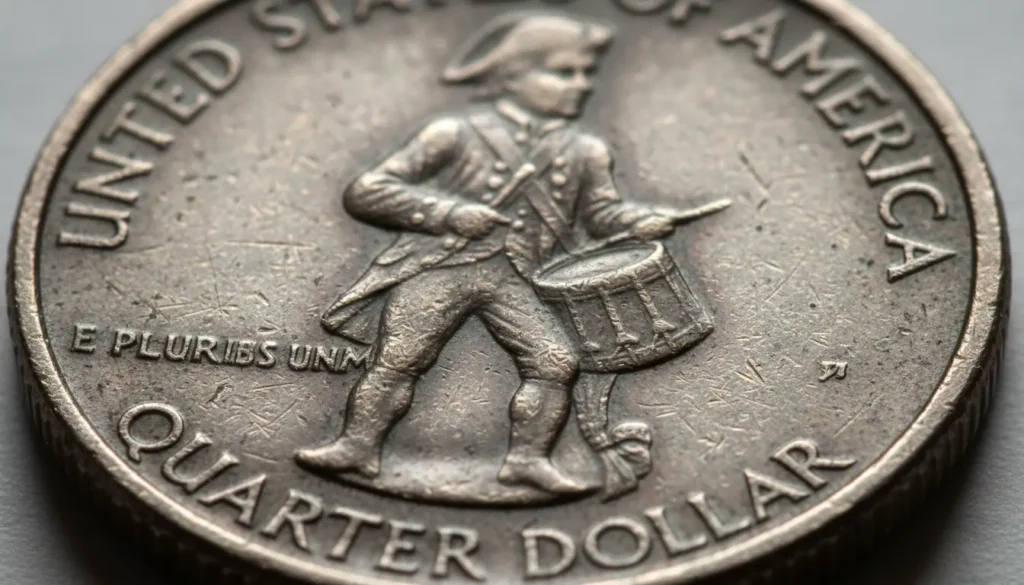
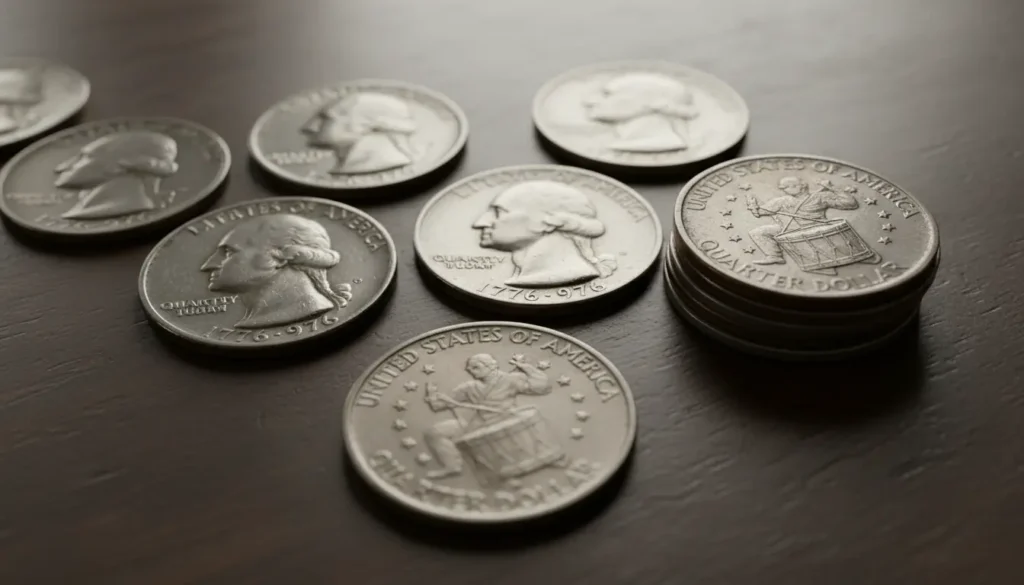
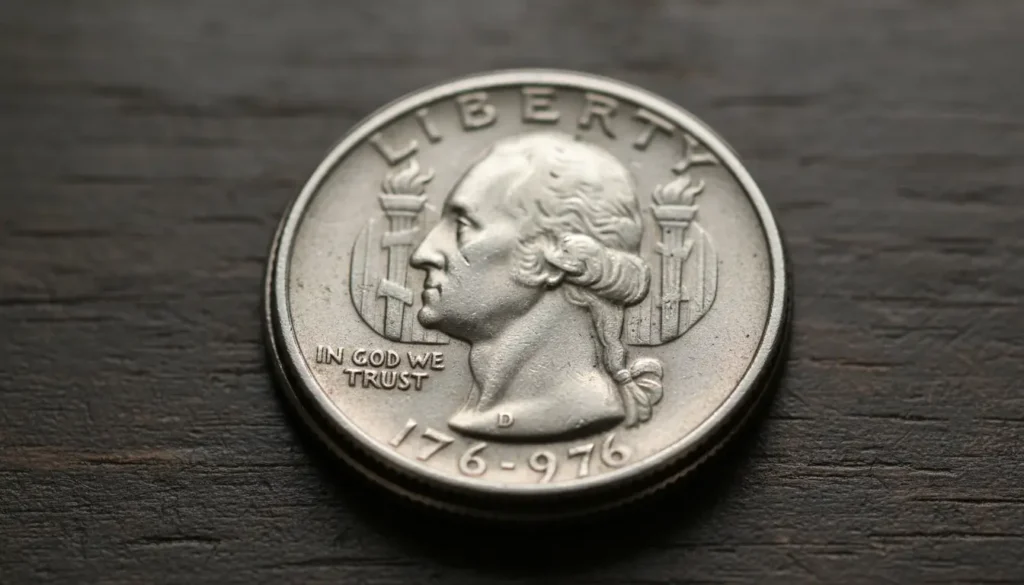
The Bicentennial Quarter was issued by the United States Mint for the 1975-1976 period to celebrate the 200th anniversary of American independence. It features a special reverse design with a colonial drummer and the dual date 1776-1976.
Millions of these quarters were produced for circulation and in proof sets, so most examples are common. Still, certain varieties and errors draw collector interest and higher prices.
Why some Bicentennial Quarters attract attention
Collectors look for features that increase value: silver content, mint errors, proof struck quality, and exceptional condition. For the Bicentennial Quarter, the main categories are circulation clad strikes, proof silver strikes, and experimental or error pieces.
Key factors that can raise interest include:
- 1976-S proof silver strikes: these were made in 40% silver and are worth more than clad examples.
- Striking errors: off-center strikes, double dies, repunched mintmarks, and broadstrikes can be collectible.
- Unique provenance: pieces tied to famous collections or discovery stories may command premiums.
Bicentennial Quarter rarity explained
Rarity depends on surviving population in collectible condition and how many error pieces exist. Most circulation strikes are plentiful, but high-grade proofs and rare error specimens are scarce.
Even scarce Bicentennial Quarters are usually worth hundreds to a few thousand dollars, not the millions often mentioned in sensational headlines.
Could your pocket change be worth $1 million?
In practical terms, finding a Bicentennial Quarter in your pocket that is worth $1 million is extremely unlikely. Modern coins rarely reach seven-figure prices unless they are unique patterns or historically significant prototypes.
However, a theoretical path to very high value exists if a coin meets several unlikely conditions: it must be a unique or one-of-a-kind error or pattern, be authenticated and graded by major services, and attract intense bidding at auction due to desirability or historical importance.
Realistic value scenarios for Bicentennial Quarters
- Common circulation quarter in average condition: face value to a few dollars.
- High-grade uncirculated circulation strike (MS65+): tens to a few hundred dollars.
- 1976-S proof silver, high grade: hundreds to low thousands of dollars.
- Documented, extreme error or unique pattern with provenance: potentially thousands to tens of thousands, rarely more.
How to inspect your Bicentennial Quarter
Follow these steps when you think you might have a valuable Bicentennial Quarter. Work slowly and avoid cleaning the coin.
- Check the date and reverse device: confirm the dual date 1776-1976 and the drummer reverse.
- Look for the mint mark: D for Denver, S for San Francisco, or no mark for Philadelphia on some issues.
- Examine the edge and weight: proof silver strikes may feel slightly different and have a different edge look.
- Search for errors: off-center strikes, broadstrikes, doubled dies, clipped planchets, and die breaks are important.
- Do not clean the coin: cleaning will reduce collector value and can void grading authenticity.
Grading and authentication
If you suspect a rare error or an unusually high-grade proof, have the coin evaluated by a recognized third-party grading service such as PCGS or NGC. Professional grading provides a population report and helps establish market value.
Expect submission costs and turnaround time. For potentially valuable coins, professional authentication is a worthwhile investment.
How to sell or get an appraisal
Options for selling or appraising a Bicentennial Quarter include local coin dealers, auction houses, and online marketplaces. Use multiple opinions before selling a suspected rare piece.
- Local coin shop: good for quick appraisals and offers, but check multiple dealers.
- Specialist dealers: better for errors and proofs, often provide consignment options.
- Auction houses: needed for high-value or uniquely desirable coins to reach serious collectors.
Practical checklist before selling
- Photograph the coin from multiple angles with good lighting.
- Record any visible errors or unusual marks and the mintmark.
- Get at least two independent appraisals or grading opinions.
- Understand fees and consignment terms before listing at auction.
Small real-world example
A collector once submitted a 1976-S Bicentennial proof quarter that looked special because of sharp detail and deep fields. After professional grading, it was certified as a high-grade silver proof and sold at auction for several thousand dollars. The sale was notable for being far above face value, but it was not near seven figures.
This example shows how authentication and condition can turn a modest coin into a meaningful sale, even if the million-dollar outcome remains unlikely.
The 1976 Bicentennial coinage included special proof sets and collector pieces in 40% silver. Many circulation quarters were still made in clad copper-nickel, which are far more common.
Final steps if you find a Bicentennial Quarter that looks special
Handle the coin by the edges, keep it in a protective holder, and avoid any cleaning. Document your find with clear photos and seek authentication from a reputable grading service.
While a million-dollar Bicentennial Quarter is virtually impossible, thoughtful inspection and professional grading can reveal genuine value and ensure you get a fair market price.