The Rare Bicentennial Quarter: What You Need to Know
The 1976 Bicentennial Quarter was issued to celebrate the United States bicentennial. Millions were struck and most are common in circulation. Still, a few specific varieties and errors attract strong collector interest and higher prices.
Why the Bicentennial Quarter Is Special
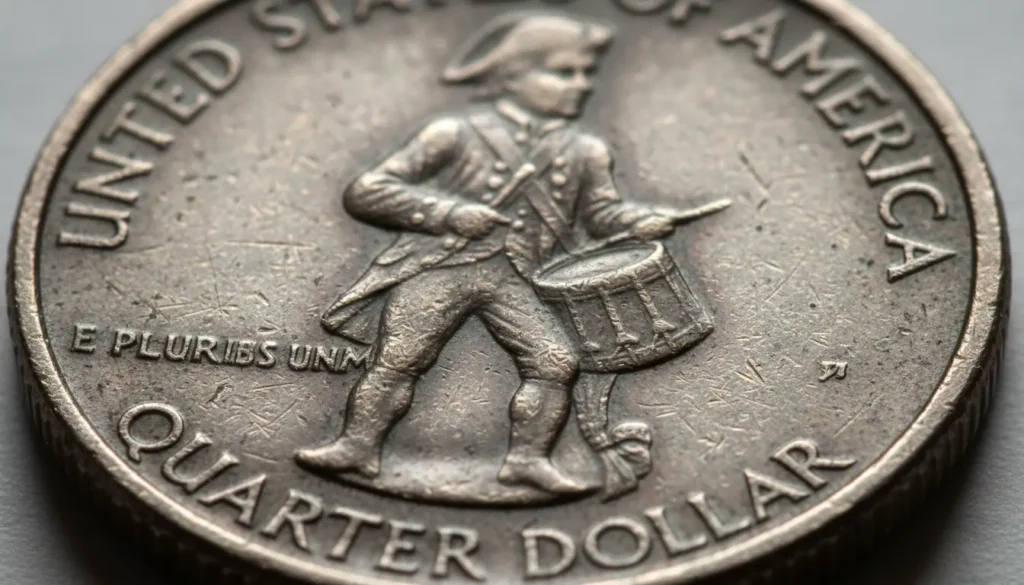
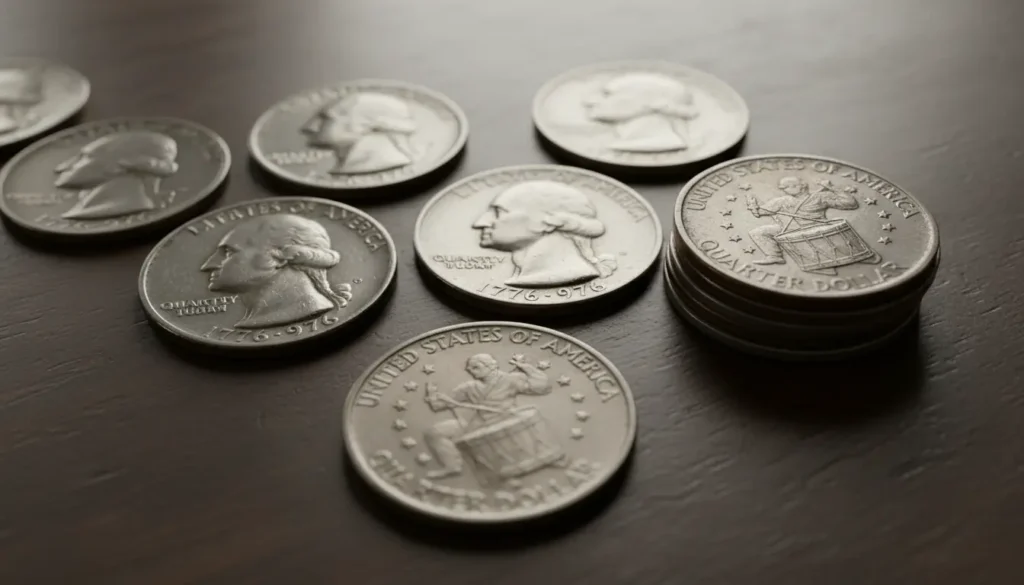
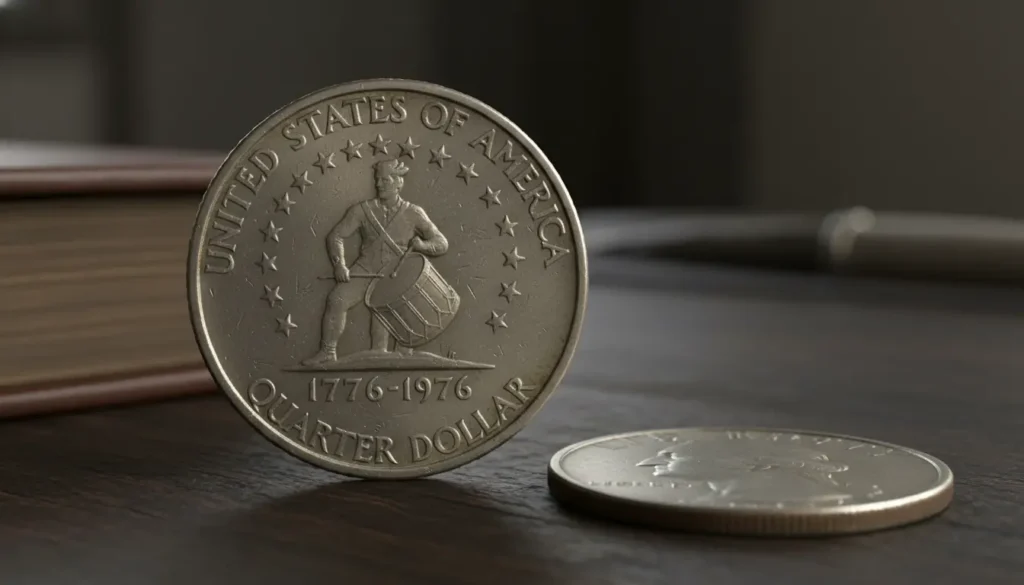
The Bicentennial Quarter features a dual date on the obverse and a special reverse showing a colonial drummer. The design change and large mintage created interest among collectors. However, most examples are worth only face value to a few dollars.
Key points about the Bicentennial Quarter
- Issued in 1975–1976 with the dual date 1776–1976.
- Designer of reverse: Jack L. Ahr.
- Produced at multiple mints: Philadelphia, Denver, and proof strikes from San Francisco.
How to Identify a Rare Bicentennial Quarter
Finding a truly rare Bicentennial Quarter requires attention to detail. Look for mint marks, errors, and condition. These factors determine whether a coin has collector value beyond face value.
Design and Mint Marks
Mint marks are small letters indicating where a coin was struck. For Bicentennial Quarters, a ‘D’ means Denver and an absence of a mint mark typically means Philadelphia. Proof coins have an ‘S’ from San Francisco.
Errors and Varieties
Errors can make a common coin valuable. Examples include doubled dies, off-center strikes, and planchet defects. However, the market only rewards high-grade, dramatic errors.
Which Bicentennial Quarters Are Most Valuable?
Only a handful of varieties reach high prices. Value depends on rarity, demand, and condition. Common categories that can increase value include:
- Doubled die obverse or reverse
- Off-center strikes over a significant degree
- Planchet errors like clipped planchets or wrong-metal strikes
- High-grade uncirculated or proof coins (PCGS/NGC certified)
Could a Bicentennial Quarter Be Worth $1 Million?
A $1 million valuation for a Bicentennial Quarter is extremely unlikely. For a 1976 quarter to reach that level, it would need an unprecedented combination of rarity, historical importance, and near-perfect condition. This has not occurred in recorded sales for Bicentennial quarters.
Most high-value coins that hit six or seven figures are unique rarities or historically significant pieces well outside the Bicentennial series. Collectors have paid big sums for famous errors or one-of-a-kind coins with extensive provenance.
Realistic high-end scenarios
- A previously unknown variety affecting many coins could attract attention, but would still be unlikely to reach $1 million.
- An absolutely unique error in gem condition with strong provenance might sell for tens of thousands, not typically seven figures.
- Grading and authentication by major services (PCGS, NGC) are essential before any high valuation.
The U.S. Mint struck over 1.6 billion Bicentennial Quarters in 1976. That huge production makes most coins very common today.
What to Do If You Find a Potentially Valuable Bicentennial Quarter
Follow a careful process to avoid damaging the coin or misvaluing it. Quick steps preserve both the coin and your chance to properly assess its worth.
- Do not clean or scrub the coin; cleaning reduces value.
- Examine the coin with a magnifier and good light for errors or mint marks.
- Take clear, high-resolution photos of obverse and reverse sides.
- Compare to reference guides or auction records online for similar errors or varieties.
- Consider professional grading if you suspect a high-value error or pristine grade.
Small Real-World Case Study
A collector found a Bicentennial Quarter with a noticeable off-center strike in change at a coffee shop. The coin was shifted about 15 percent and displayed clear strike doubling. After submitting photos to a coin forum and receiving feedback, the collector had the coin graded by a third-party service.
Result: The graded coin sold for several hundred dollars at auction—well above face value but far from six figures. This shows how notable errors can be monetized, but realistic expectations are important.
How Experts Value Bicentennial Quarters
Professional valuers consider rarity, condition, demand, and documentation. Grading services assign numeric grades that strongly influence price. Auction records provide the best evidence of market value.
Final Practical Tips
- Check pockets, jars, and piggy banks—rare coins do turn up in everyday change.
- Use trusted references like PCGS, NGC, and major auction houses for price guides.
- If in doubt, ask for a coin club opinion or a professional appraisal before spending on grading fees.
Conclusion
The Rare Bicentennial Quarter can be worth more than face value if it displays a legitimate error, unusual variety, or superb condition. However, a price tag of $1 million for a Bicentennial Quarter is extremely unlikely. Use careful identification, professional grading, and realistic market comparisons to determine a coin’s true value.