What is the Bicentennial Quarter?
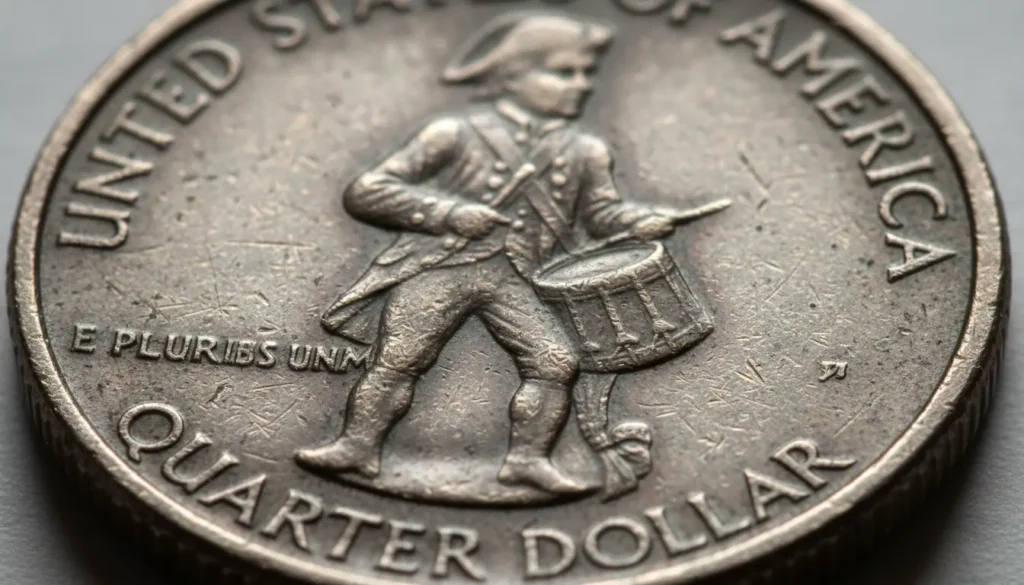
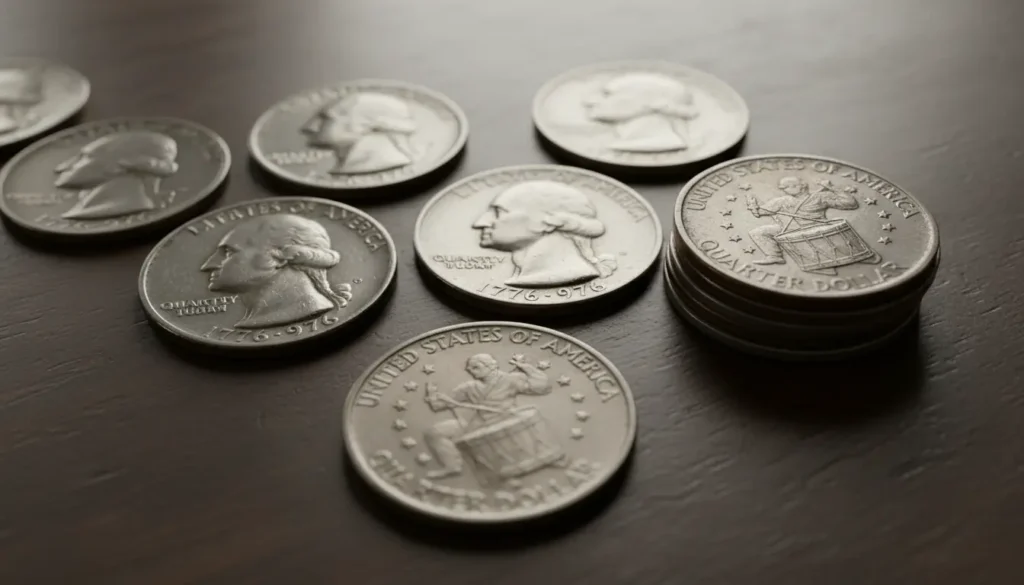
The Bicentennial quarter was issued in 1976 to celebrate the 200th anniversary of the United States. It has a distinctive reverse showing a colonial drummer and a torch encircled by 13 stars.
Millions were produced for circulation and proofs, which makes most Bicentennial quarters common and worth only face value or low premiums in circulated grades.
Could a Bicentennial Quarter Be Worth $1 Million?
Short answer: almost never. For a Bicentennial quarter to reach seven figures, it would need extraordinary and verifiable conditions.
Those conditions usually include:
- An extremely rare mint error or unique variety that is one-of-a-kind.
- Perfect grading by a top third-party grading service (for example MS70 or PR70) with exceptional eye appeal.
- Documented provenance or celebrity ownership that adds collector demand.
Why $1 million is unlikely for most Bicentennial quarters
The Bicentennial quarter was minted in huge numbers at Philadelphia, Denver, and San Francisco. When supply is large, even high-condition coins usually reach modest premiums instead of astronomical prices.
A typical high-grade Bicentennial quarter might attract prices in the low hundreds to a few thousand dollars, not hundreds of thousands or millions.
What Makes a Bicentennial Quarter Valuable?
Look for these value drivers when you inspect a Bicentennial quarter:
- Error coins: off-center strikes, broadstrikes, double dies, or planchet flaws can be valuable.
- Proof vs. business strike: Proof coins, especially early proofs in silver from San Francisco, often carry higher premiums.
- High grade: Coins graded MS67 or above (for business strikes) or PR69/70 (for proofs) are far more valuable.
- Unique varieties: Documented one-off varieties or experimental strikes can command collector interest.
Common error types to watch for
Errors that attract attention from collectors include:
- Missing clad layer or plated planchet
- Severe die cracks or cuds
- Double die obverse or reverse
- Off-center strikes showing substantial design missing
How to Check Your Pocket Change
Follow a simple, practical process to screen coins quickly and safely.
- Visual inspection: Use a bright light and a loupe (10x magnification). Look for unusual doubling, off-centers, or odd edges.
- Weigh and measure: Compare weight and diameter to standard specifications to detect planchet issues.
- Compare examples: Use online auction archives and coin reference guides to match any visible variety.
- Get a second opinion: Post clear photos on reputable coin forums or consult a local coin dealer before making assumptions.
Real-World Example
Case study: A hobbyist found a 1976 quarter with an obvious off-center strike in a jar of circulated coins. After submitting high-resolution photos to a collector forum, the coin was identified as a large broadstrike variety.
The owner sent the coin to a trusted grading service. The certified coin later sold at a specialized auction for a five-figure price because the error was dramatic, well-documented, and rare enough to interest advanced collectors.
This case shows that uncommon errors can be valuable, but even then, reaching $1 million requires far rarer circumstances.
How to Authenticate and Sell a Rare Quarter
Authentication, documentation, and the right sales channel matter when you believe you found something valuable.
- Third-party grading: Submit to a major service like NGC or PCGS for grading and encapsulation.
- Professional appraisal: Seek appraisal from a reputable coin dealer or auction house before selling.
- Choose the right market: Specialized auctions and professional dealers typically reach serious collectors who will pay top prices.
Paperwork and provenance
Keep photos, purchase receipts, and any correspondence. Provenance increases buyer confidence and can improve sale prices.
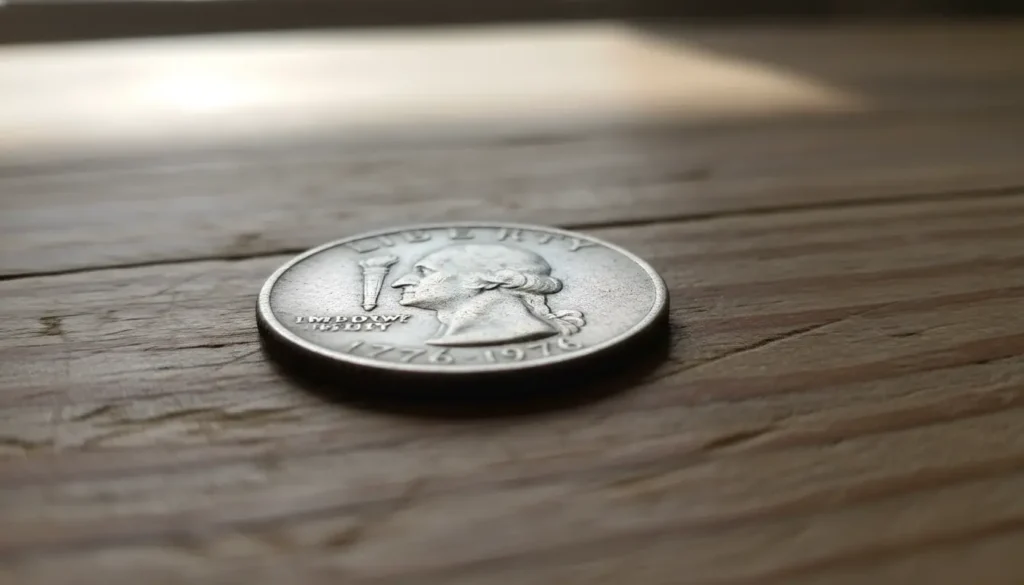
The Bicentennial quarter design was used only in 1975 and 1976. The dual-date 1776-1976 appears on the obverse for those issues, making them distinct from other 1976-dated coins.
Final Checklist Before You Get Excited
- Is the coin an obvious error or rare variety? If not, it is probably common.
- Has it been graded by a reputable service? Uncertified claims are hard to verify.
- Is there provenance or auction history to support a high value? Documentation matters.
- Have you consulted specialists or auction houses? Expert advice prevents costly mistakes.
Bottom Line
While a Bicentennial quarter in your pocket could be worth much more than face value, a $1 million valuation is extremely unlikely. Only unique, verifiable, and highly desirable examples—backed by grading and provenance—stand a chance of reaching extraordinary prices.
Screen coins carefully, document any oddities, and consult professionals before assuming a life-changing value. That approach gives you the best chance to identify a truly rare treasure.