The 1976 Bicentennial quarter is common in everyday change, but certain varieties and errors can be worth far more than face value. This guide explains what to look for, realistic value ranges, and how to verify if a coin might be valuable.
What Is the Bicentennial Quarter?
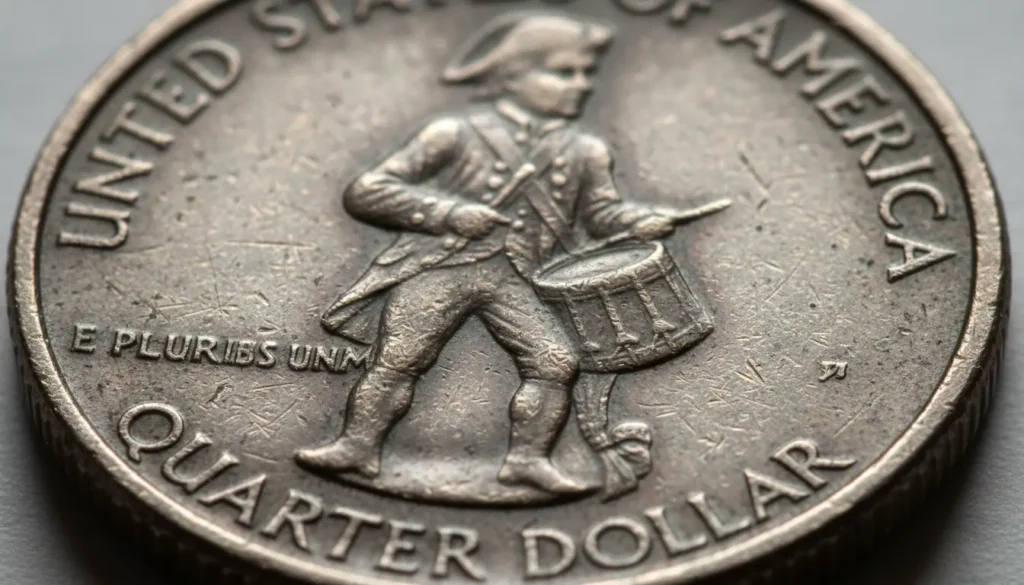
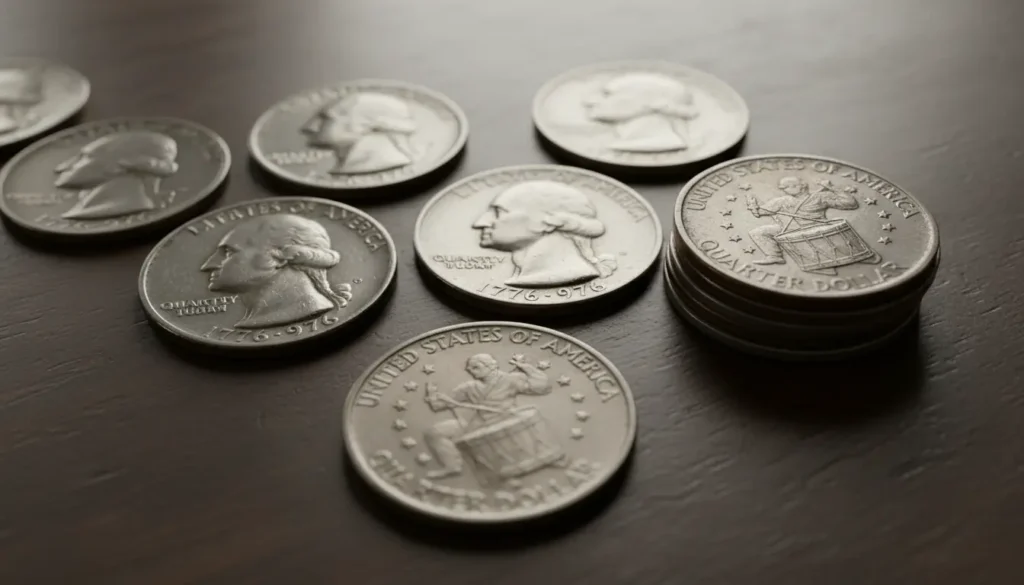
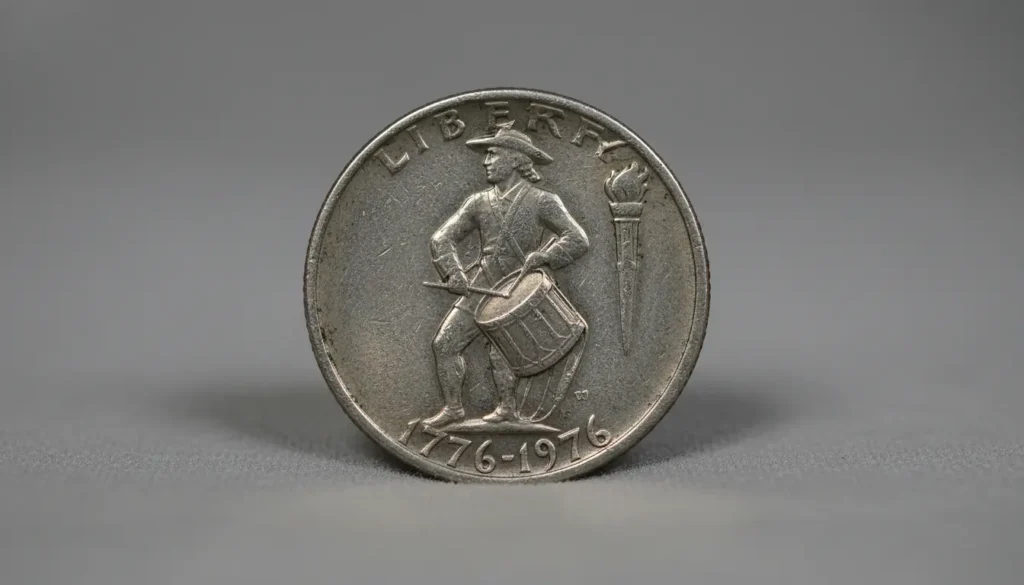
The Bicentennial quarter was struck to honor the United States Bicentennial in 1976. It features a special reverse design showing a colonial drummer and a victory torch encircled by 13 stars.
The U.S. Mint produced large numbers for circulation, plus proof and special mint sets. Most survive in large quantities and have modest collector value unless they have unusual attributes.
Why Some Rare Bicentennial Quarters Are Valuable
Value comes from scarcity, condition, and collector demand. A coin that is unique or extreme in quality will attract premiums.
Common reasons a Bicentennial quarter can be valuable include mint errors, rare die varieties, proof finishes in exceptional grades, and historically significant provenance.
Key signs your Rare Bicentennial Quarter might be valuable
- Errors such as double die, off-center strikes, or broadstrikes.
- Missing mintmark on coins that should show one, especially on proofs.
- Extremely high numerical grade from a major grading service (PCGS, NGC).
- Deep cameo or brilliant proof finishes (DCAM/PR70) on proof quarters.
- Unusual planchet issues like clipped planchets or wrong-metal strikes.
How to Check If Your Bicentennial Quarter Could Be Worth $1 Million
First, be realistic. A million-dollar valuation is extraordinary and requires a coin with unique, documented significance or a one-of-a-kind error in perfect condition.
Follow these practical steps to assess your Bicentennial quarter:
- Inspect visually: Use a magnifier (10x loupe) and good light to check for noticeable errors or die varieties.
- Note mintmarks and finish: Look for P, D, or S and whether it is proof or circulation strike.
- Check for common errors: off-center, doubled die, clipped planchet, or evidence of wrong metal.
- Compare to references: Use online catalogs, coin forums, and specialized variety guides for 1976 quarters.
- Get a professional opinion: Submit high-resolution photos to reputable dealers or post in trusted numismatic communities for feedback.
- Consider grading: If the coin appears rare, send it to PCGS or NGC for authentication and grading.
What grading and certification do
A certified grade from PCGS or NGC confirms authenticity and condition. Market prices jump when a rare variety is slabbed by a top grading service. Without certification, buyers will be skeptical of high valuations.
Realistic Value Ranges for Bicentennial Quarters
Understanding typical values will help set expectations. Most circulated Bicentennial quarters are worth only their face value or up to a few dollars to collectors.
- Circulated common: 25 cents to a few dollars.
- Uncirculated MS60–MS65: a few dollars to around $20–$50 depending on grade and eye appeal.
- High-grade MS66–MS68 or proof DCAM: several hundred to a few thousand dollars in rare cases.
- Significant, authenticated errors or unique one-off varieties: values can be much higher, but million-dollar outcomes are extremely rare and typically require exceptional provenance.
Why million-dollar claims are uncommon
For a Bicentennial quarter to reach near a million dollars, it would need to be a unique specimen with unquestionable rarity, proof of provenance, and intense collector demand. Most Bicentennial varieties do not meet these thresholds.
How to Sell or Protect a Potentially Valuable Bicentennial Quarter
If you think you have a rare Bicentennial quarter, protect its condition by handling it minimally and storing it in an inert holder. Avoid cleaning or polishing the coin.
When selling, seek multiple opinions and competitive offers. Use reputable auction houses or established dealers who specialize in modern rarities.
Checklists before selling
- Get the coin authenticated and graded by PCGS or NGC.
- Request provenance documentation if available.
- Obtain multiple appraisals or consign to a known auction house.
- Keep clear, high-resolution images and detailed descriptions for listings.
Small Case Study: A Collectible Error That Sold Well
A collector discovered a 1976 proof quarter with an unusually strong cameo contrast and an apparent die doubling. After submitting images to a grading service and getting PCGS authentication, the coin received a high proof grade with notation for the variety.
The slabbed coin sold at a major auction for several thousand dollars. This case shows how grading and market exposure can turn a notable variety into a valuable sale. It also demonstrates that while substantial returns are possible, they generally fall far short of the million-dollar mark for most Bicentennial quarters.
Final Practical Tips for Collectors
- Keep expectations realistic: most Bicentennial quarters are common.
- Learn to spot obvious errors and high-grade proof characteristics.
- When in doubt, get professional authentication before sharing or selling.
- Document and preserve any candidate coin to maintain value.
Finding a million-dollar Bicentennial quarter is possible only in extraordinary circumstances. For most people, these coins are a modest but interesting part of a modern coin collection. Careful inspection, reliable grading, and market research are the best paths to discovering true value in your pocket change.