What is the Bicentennial Quarter?
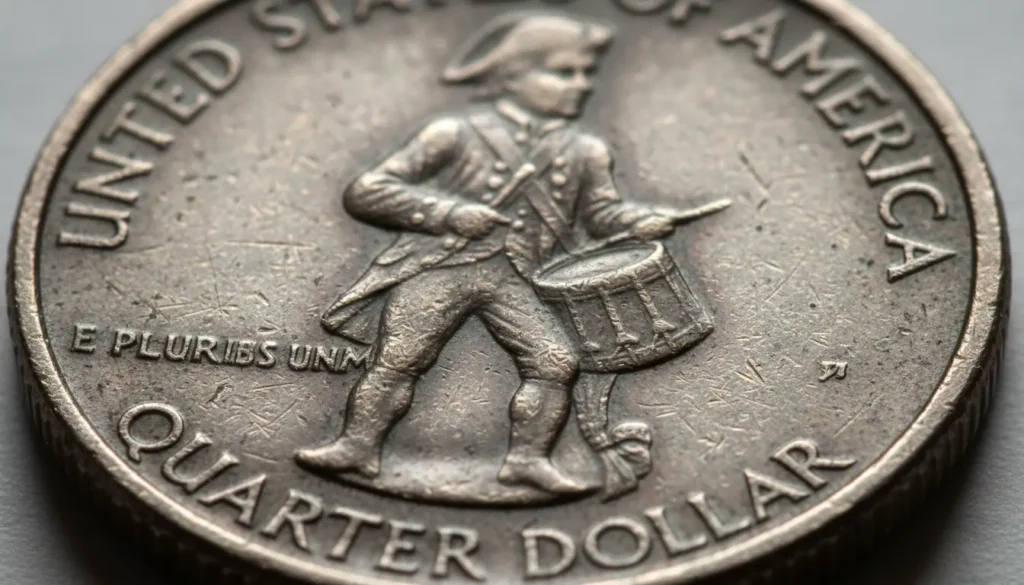
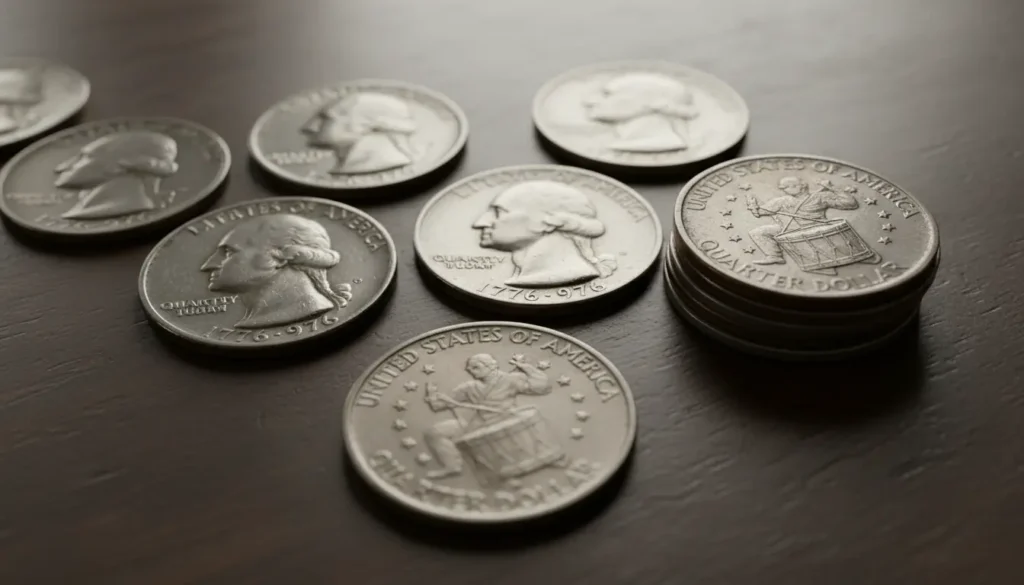
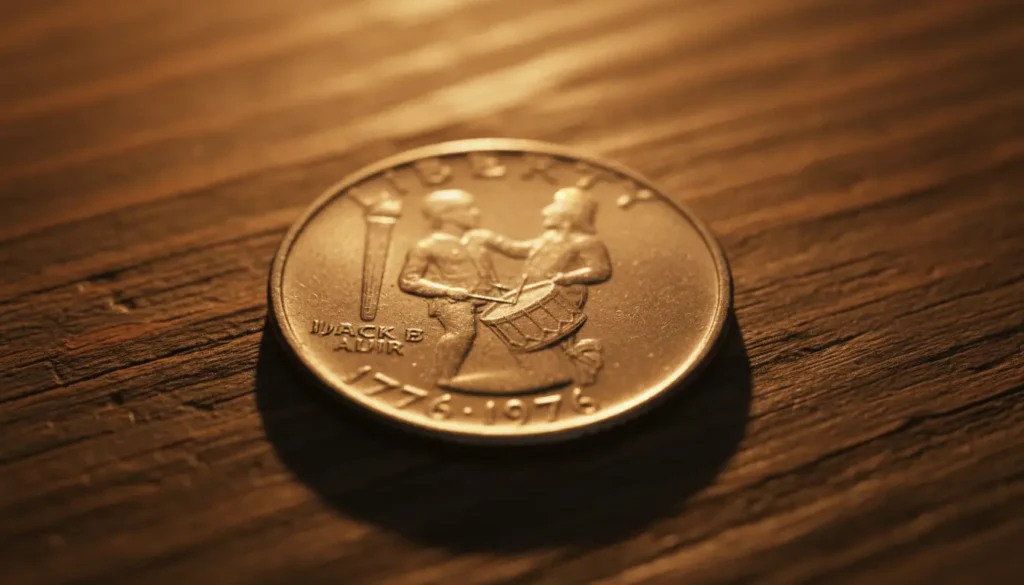
The Bicentennial Quarter was issued in 1975 and 1976 to mark the United States’ 200th anniversary. Its reverse shows a colonial drummer and a victory torch encircled by 13 stars. Millions were produced, so most of these quarters remain common today.
Why the Bicentennial Quarter attracts collectors
The design change and high mintages make the Bicentennial Quarter an interesting modern series for collectors. A few features push some examples into higher value ranges.
- Commemorative design — distinct from regular Washington quarters.
- Proof and silver issues produced for collectors in limited numbers.
- Mint errors and unusual strikes that can be rare and desirable.
Types and mint marks to know
Common versions include business-strike copper-nickel clad coins from Philadelphia and Denver. Collector versions came from San Francisco, including proof strikes and a limited number of 40% silver proof quarters.
Look for mint marks: no mint mark (Philadelphia), D (Denver), and S (San Francisco). Collectors often pay premiums for high-grade S proofs and silver examples.
Why some Bicentennial Quarters are rare
Rarity among Bicentennial Quarters centers on three main factors: low supply of a specific variety, extreme condition, and major minting errors. Any one of these can transform a common coin into a collectible.
Common rarity drivers
- Limited mintage varieties, such as early proofs or silver issues.
- Top grades (MS67 and higher for business strikes, PR67 and higher for proofs).
- Significant mint errors: off-center strikes, broadstrikes, clipped planchets, and major double dies.
Could your pocket change be worth $1 million?
In plain terms: it is extremely unlikely, but not technically impossible. Most Bicentennial Quarters are worth face value or a modest premium. However, unique or extraordinary pieces can attract very high prices from specialized collectors.
What would it take for a Bicentennial Quarter to reach seven figures? Generally, one or more of these conditions must be met:
- A one-of-a-kind, dramatic mint error with undeniable authenticity and provenance.
- Proof that the coin played a major role in numismatic history or belonged to a highly famous collection.
- Unusually high grade combined with extreme scarcity for that specific issue.
Realistic value ranges
Most circulated Bicentennial Quarters sell for face value to a few dollars. Collector-grade uncirculated coins might range from $5 to $100 depending on grade and eye appeal. Silver proofs and top-grade proofs can fetch a few hundred to low thousands at auction. The seven-figure level would require an extraordinary and verifiable story plus rarity.
Some of the most valuable modern coins are error coins and unique strikes. An otherwise common design can become rare when a serious minting mistake occurs.
How to check a Bicentennial Quarter in your pocket
Follow a careful process to determine if a coin might be valuable. Start with simple observations, then escalate to professional help if needed.
- Inspect the coin: look for mint marks, unusual features, or obvious errors.
- Compare to reference images: use reputable coin guides or grading service galleries.
- Check condition: is the coin worn, scratched, or clean with full detail?
- If you suspect an error or a very high grade, have it photographed and sent to a professional grading service.
When to seek professional grading
If a coin shows an extreme error (large off-center strike, major die break, or missing elements) or appears to be in near-perfect condition, professional grading by services like NGC or PCGS can authenticate and quantify the value. Grading is essential before offering such a coin at auction.
Small real-world case study
Case: A hobbyist found a Bicentennial Quarter with a strong off-center strike. The flan left a clear portion of the design missing, and the rim was intact. After submitting high-quality photos to an online coin forum, members recommended professional grading. The coin was sent to a reputable grading service and was authenticated as a significant mint error. It sold at auction to a specialist collector for a price well above face value, demonstrating how a documented error plus grading can create real auction interest.
Practical next steps if you think you have a rare Bicentennial Quarter
- Do not clean or polish the coin — cleaning can severely reduce value.
- Document the find with clear photos from multiple angles.
- Ask for opinions from trusted coin communities and reference sites.
- Consider third-party grading before selling or insuring an expensive coin.
While a Bicentennial Quarter in your pocket is unlikely to be worth $1 million, rare varieties and extreme errors do occasionally command high prices. Careful inspection, documentation, and authentication are the practical steps to determine if your coin is an everyday piece or a true numismatic exception.