Finding a Bicentennial quarter in your pocket raises a common question: could it be extremely valuable? The short answer is that a typical Bicentennial quarter is common and worth little above face value. However, a few specific varieties and errors can be valuable to collectors.
What is the Bicentennial Quarter?
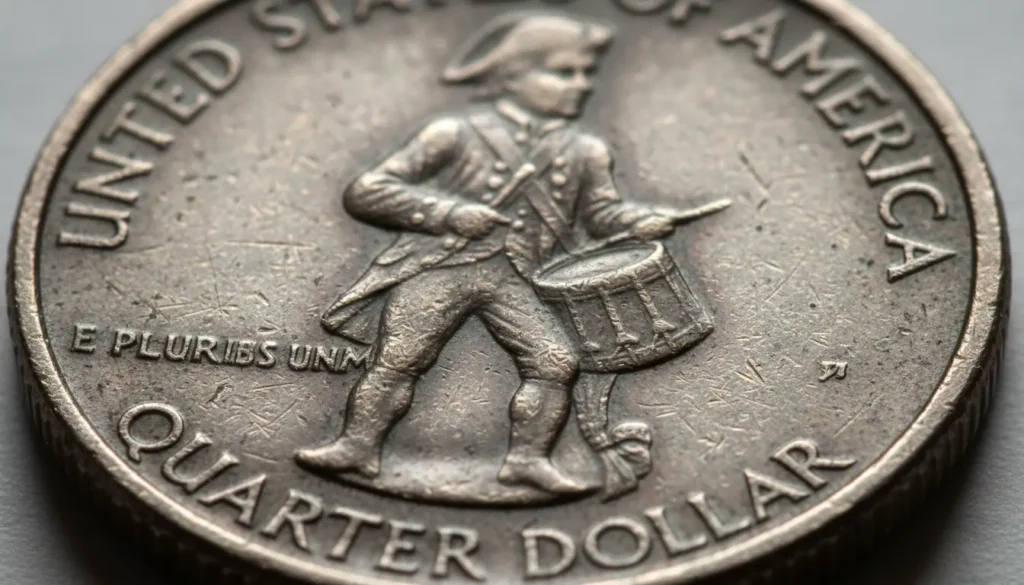
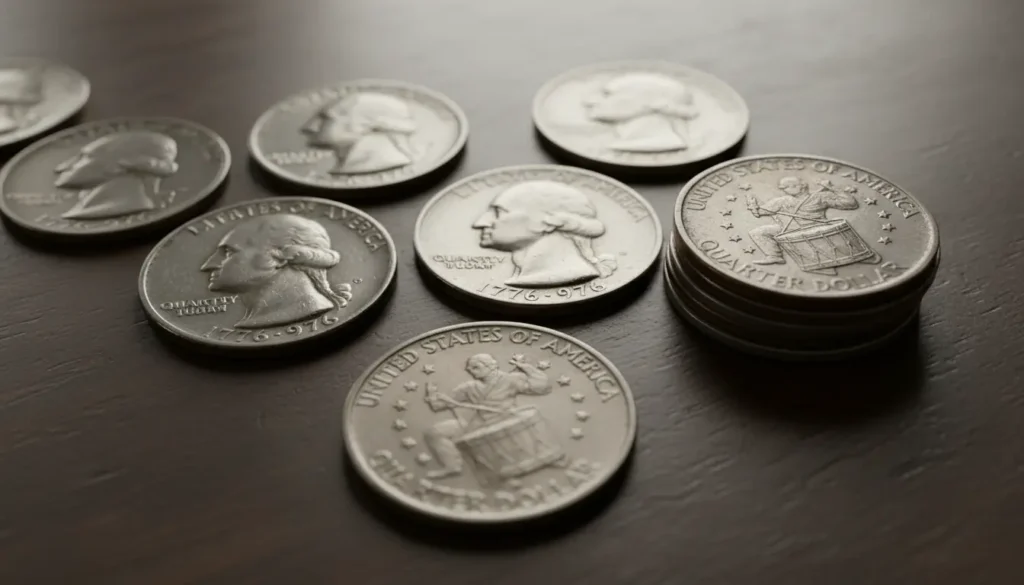
The Bicentennial quarter was issued to mark the 200th anniversary of American independence. Coins struck for circulation and proof sets carry the dual date 1776–1976 and a special reverse design showing a colonial drummer.
Millions of these quarters were produced for general use and for collector sets. Because of that large mintage, most Bicentennial quarters are common and not worth large sums by themselves.
How to Identify a Rare Bicentennial Quarter
Rarity usually comes from minting errors, unusual planchets, or exceptionally high grade. When checking a possible rare Bicentennial quarter, focus on these features first.
Key features to inspect
- Mint mark: Look for D (Denver) or S (San Francisco) on the coin; some proofs and silver-clad issues were struck at San Francisco.
- Date: All Bicentennial quarters show 1776–1976. A different date would indicate another issue.
- Surface and strike: Check for doubled dies, off-center strikes, or clipped planchets.
- Metal composition: Proof silver-clad quarters (1976-S) have a different look and weight than standard copper-nickel pieces.
- Condition: Uncirculated or proof coins with no wear and strong luster command higher prices.
Common error types that add value
- Doubled die obverse or reverse
- Off-center strikes greater than a few percent
- Clipped planchets or broadstrikes
- Wrong planchet or plated coins
Steps to Authenticate and Grade Your Bicentennial Quarter
If you believe you have a rare piece, follow a clear, practical path to confirm the find and protect its value.
- Do not clean the coin. Cleaning can drastically reduce value.
- Photograph both sides using a macro or phone close-up under good light.
- Use a loupe or magnifier to inspect details: mint mark, die doubling, and edge.
- Weigh and measure the coin if you have precise tools; compare to standard specifications.
- Consult reference guides or online coin communities for similar error types and images.
- Consider third-party grading via PCGS or NGC if the coin appears rare or uncirculated; a certified grade increases buyer confidence.
How Much Could a Bicentennial Quarter Be Worth?
Realistic value depends on type and condition. Most circulated Bicentennial quarters are worth their face value or slightly more to collectors.
- Circulated common pieces: about 25 cents to a few dollars.
- Uncirculated business strikes: typically a few dollars to tens of dollars depending on grade.
- Proof silver-clad (1976-S) in high grade: can fetch hundreds to a few thousand dollars for top graded examples.
- Major mint errors or extremely rare varieties: values can jump to thousands or tens of thousands in exceptional cases.
Could a Bicentennial quarter be worth $1 million? Extremely unlikely. To reach seven figures, a coin usually must combine extraordinary rarity, a dramatic historical story, and an immaculate grade certified by a leading grading service. No widely known verified sale of a Bicentennial quarter reaches that level; most high-end Bicentennial sales fall far short of $1 million.
Real-World Example
Collectors and auction catalogs show patterns in value. For example, auction records for high-grade 1976-S proof silver-clad quarters show sales in the low thousands for exceptional graded pieces. That demonstrates how top examples can be valuable, but not anywhere close to a million dollars.
All Bicentennial quarters bear the dual date 1776–1976 even if they were struck in 1975. The special reverse design was used for all circulation and proof issues intended to mark the bicentennial.
What to Do If You Think You Found a Valuable Bicentennial Quarter
Follow a careful approach to maximize the chance of a fair appraisal and sale.
- Preserve the coin in a soft holder or flip; avoid cleaning or polishing.
- Document the find with clear photos and notes about where it was found.
- Ask for opinions from experienced collectors or reputable coin dealers.
- If evidence points to a genuine error or high grade, submit the coin to a trusted grading service.
- When selling, use established auction houses or reputable dealers who specialize in coins.
With the right proof and documentation, you may attract serious collectors. But remember the odds: most Bicentennial quarters are plentiful, and only a small fraction are worth significantly more than face value.
In short, check your coins carefully, get professional advice when warranted, and keep expectations realistic. A million-dollar Bicentennial quarter is possible only in the rarest of hypothetical scenarios; the practical path is to seek authentication for any unusual features and use certified grading to reveal true market value.