The 1776–1976 Bicentennial quarter is a common piece of U.S. pocket change, but a few examples command collector attention. This practical guide explains what to look for, why some Bicentennial quarters are rare, and how to check if a coin you own could be valuable.
What is the Bicentennial quarter?
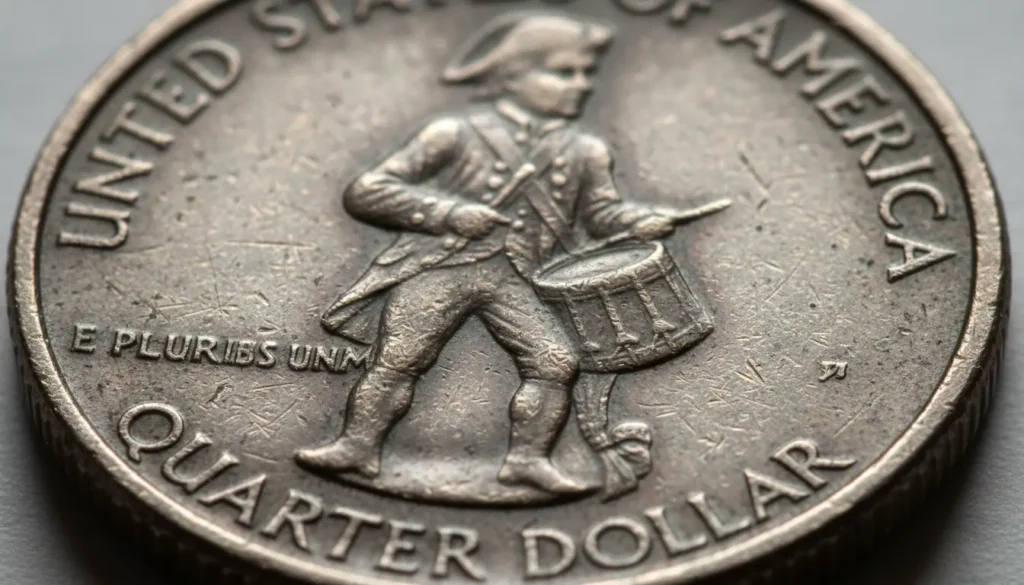
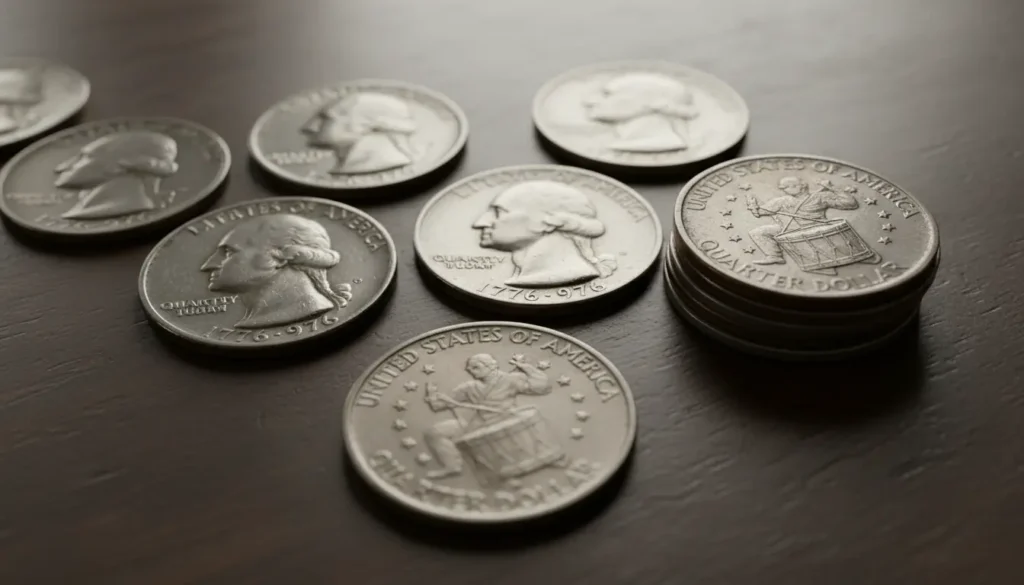
The Bicentennial quarter was issued to mark the 200th anniversary of American independence. All circulating quarters struck for the program bear the dual date 1776 1976 and a special reverse showing a colonial drummer.
Key facts to remember: the bicentennial design appeared on quarters, half dollars, and dollars. Mint marks include D (Denver) and S (San Francisco); many Philadelphia pieces have no mint mark.
Which Bicentennial quarters are rare?
Most Bicentennial quarters are common and worth face value. Rarity and value come from a few specific categories:
- High-grade specimens (uncirculated or proof graded near perfection)
- Silver-clad/40% silver collector strikes struck for proof or special sets
- Documented mint errors (off-center strikes, broadstrikes, clipped planchets, major die breaks)
- Uncommon varieties or die errors verified by grading services
Silver and proof issues
San Francisco struck special 40% silver Bicentennial coins for collectors. These silver proofs and high-grade uncirculated silver pieces are worth more than base-metal circulating coins, especially when graded and authenticated.
Error coins and varieties
Error coins attract collectors because they are unique. Examples that boost value include major off-center strikes, significant doubling, or large planchet clips. The more extreme the error, the higher the collector interest.
How to examine a Bicentennial quarter for value
Follow a simple inspection routine before assuming a coin is valuable. Use a loupe and good light, and never clean the coin.
- Check the date: it should read 1776 1976 on the obverse.
- Look for mint marks (D or S). San Francisco “S” proofs are often silver and collectible.
- Inspect the rim and fields for scratches, hairlines, or contact marks that reduce grade.
- Search for obvious errors: off-center, clipped planchet, doubled die, or broadstrike.
- Note surface finish: proof coins can have deep cameo contrast (DCAM), which increases value.
Grading and authentication
Value depends heavily on grade and authenticity. Professional grading services such as PCGS and NGC provide accepted certification. A high-grade PR70 or MS69 coin will sell for a significant premium over raw examples.
Steps to get a coin graded:
- Do not clean or polish the coin; cleaning drastically reduces value.
- Document the coin with clear photos showing obverse, reverse, and any errors.
- Submit to a reputable grading service or consult a trusted coin dealer for advice.
Where to sell or appraise a valuable Bicentennial quarter
If you believe your coin is rare, get multiple opinions. Options include local coin dealers, certified appraisers, and online auction houses that handle numismatic lots.
Places to consider:
- Professional grading services (PCGS, NGC) for certification
- Specialist coin dealers with experience in errors and proofs
- Auction houses with numismatic catalogs for high-end coins
There are no quarters dated 1975. All quarters struck in 1975 and 1976 for circulation were dated 1776 1976 as part of the Bicentennial program.
Real-world example: an off-center find
A collector discovered a Bicentennial quarter in circulation with a noticeable off-center strike. The coin retained much of its original luster and displayed a dramatic portion missing from one side.
After documenting the find, the collector submitted the coin to a grading service. The piece was authenticated as an off-center error and sold through a specialist dealer to a private collector. The sale price was well above face value and typical circulated premiums, demonstrating how verified errors attract niche buyers.
Could a Bicentennial quarter be worth $1 million?
Realistically, a Bicentennial quarter reaching $1 million would require an extremely rare combination of factors: an unrepeatable mint error, flawless proof grade (or unique provenance), and intense collector demand. For this coin type, prices in the high tens of thousands are more plausible for extraordinary pieces; seven-figure sales are effectively unheard of in documented public auctions.
Important reminders:
- Do not assume rarity based on appearance alone—authentication matters.
- Grading significantly increases buyer confidence and liquidity.
- Market conditions and collector trends influence final sale prices.
Practical checklist if you find a Bicentennial quarter you think is rare
- Do not clean the coin or handle it more than necessary.
- Take clear photos of both sides and any unusual features.
- Note the mint mark and any visible errors or unusual surfaces.
- Consult a reputable coin dealer or a professional grading service.
- Compare sale records on auction websites and dealer price guides.
Most Bicentennial quarters are common and worth face value, but a small number can be valuable if they meet strict criteria. Careful inspection, proper documentation, and professional grading are the most reliable ways to determine if a coin in your pocket has real collector value.