Many people ask whether a Bicentennial quarter found in pocket change could be worth an extraordinary sum. The short answer is that while some Bicentennial quarters have value above face, a $1 million sale is virtually unheard of. This guide explains what makes a Bicentennial quarter collectible and how to check whether yours might be valuable.
Why the Rare Bicentennial Quarter Attracts Collectors
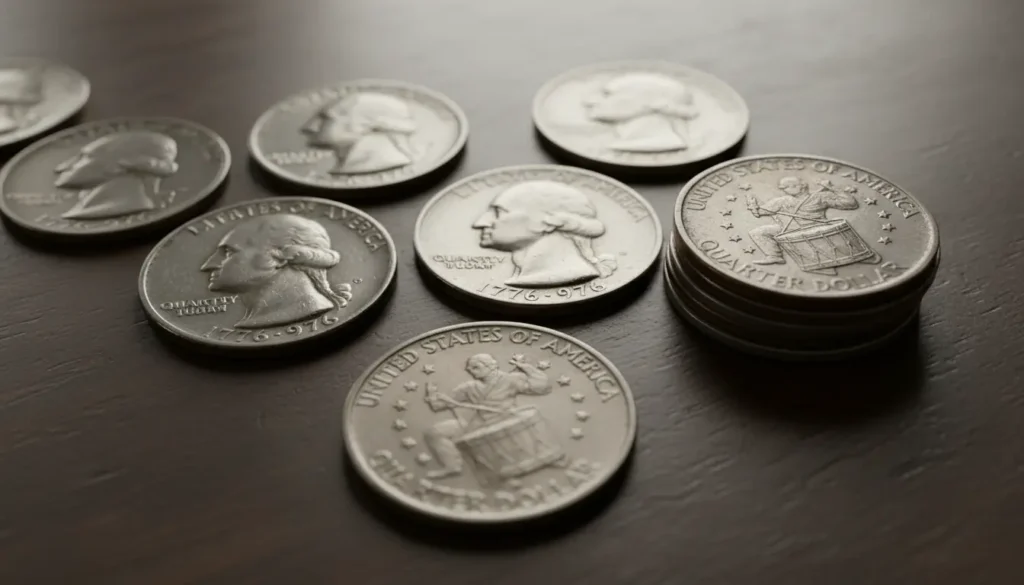
The Bicentennial quarter, dated 1776–1976, was issued to celebrate the United States bicentennial. Millions were produced, so most are common and worth face or modest premiums. Collectors still prize certain examples for design variations, production errors, and high-grade proof versions.
Factors that increase collector interest include mint mark, mint state grade, proof or uncirculated status, and documented errors. A handful of error coins and special proofs can sell for several hundred or a few thousand dollars, but seven-figure prices are not supported by auction records for this series.
Common collectible categories for Bicentennial quarters
- Proof versions and coins from official proof sets
- High-grade mint state pieces (professional grading like MS 67+)
- Clear die varieties or doubled die strikes
- Obvious minting errors (off-center strikes, clipped planchets, wrong metal planchets)
Key signs your Bicentennial Quarter could be rare
Look for a few clear markers when you suspect a coin is more than ordinary. Use a loupe or magnifier and good light to inspect details. If you see something unusual, document it before handling too much.
Visual and physical checks
- Mint mark: Check the reverse or obverse for S, D, or no mint mark. Some mint-marked proofs and mint-state coins are more desirable.
- Design anomalies: Look for doubling, filled die areas, or die cracks around the drummer or date.
- Edge and composition: A wrong planchet (metal or weight inconsistent with standard clad quarters) can create high value for error coins.
- Strike quality: Sharply struck coins with full detail typically fetch higher prices than weakly struck ones.
How to verify a Rare Bicentennial Quarter
Verification is a step-by-step process you can follow at home and then with professionals. Accurate identification and authentication matter a lot for value.
Steps to verify and document value
- Photograph the coin from multiple angles and note any unusual marks.
- Compare to images in a trusted reference like the Red Book or major grading services’ galleries.
- Use a scale and caliper to check weight and diameter against standard specifications.
- Consider submitting the coin to a professional grading service (PCGS, NGC) for authentication and grade.
Professional grading adds buyer confidence and usually increases resale value. Expect submission fees and turnaround time; weigh costs against likely value before sending multiple coins.
Realistic price expectations for Bicentennial quarters
Most circulated Bicentennial quarters are worth face value or a small premium, typically between $0.25 and a few dollars. Uncirculated and proof examples command higher prices, and error coins can reach higher levels depending on rarity and condition.
A practical rule: if a coin looks ordinary, it probably is ordinary. If you find a clear, authenticated error or an exceptional certified grade, a premium is justified. However, no verified public auction results support a Bicentennial quarter selling for $1 million.
How collectors and sellers determine price
- Compare sales on auction sites and reputable coin dealer listings.
- Use price guides and recent auction records for similar coins and grades.
- Factor in grading fees, seller commissions, and shipping when estimating net proceeds.
How to sell a Rare Bicentennial Quarter
If your coin appears rare, start by getting it authenticated. Graded coins attract more buyers and sell more reliably. Choose between local dealers, online auction houses, and specialist coin auctions depending on expected value.
For lower-value coins, local coin shops or online marketplaces work well. For higher-value or rare errors, auction houses and major numismatic dealers reach serious collectors.
Checklist before selling
- Get professional photos and condition notes.
- Secure authentication and grading if the coin merits it.
- Request multiple price opinions from reputable dealers or auction houses.
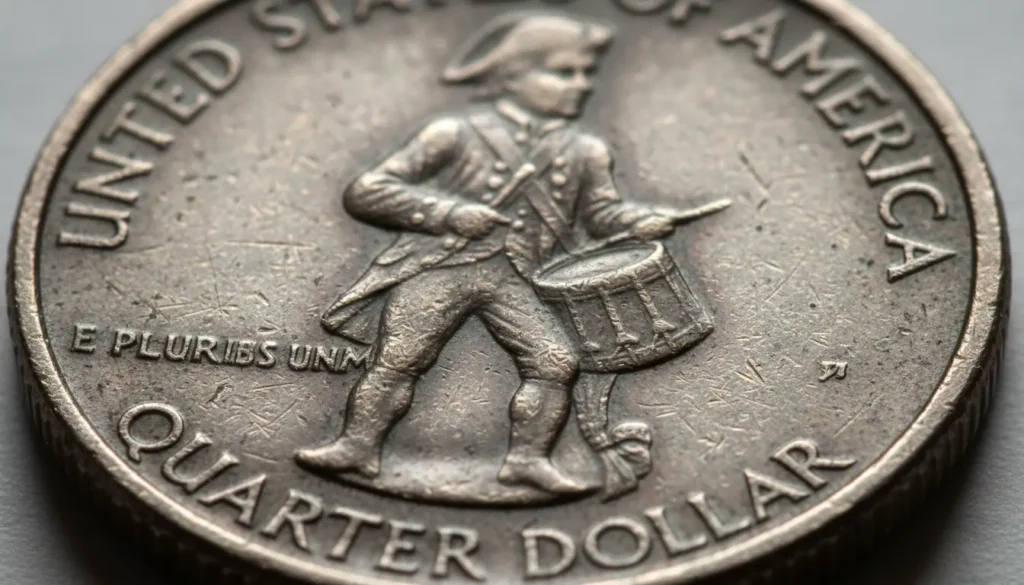
The Bicentennial quarter reverse showing a colonial drummer was issued for the United States bicentennial and carries the dual date 1776–1976. These quarters were struck in large numbers, so most are common today.
Case study: Identifying and selling a notable Bicentennial error (process)
A collector found a Bicentennial quarter with an obvious off-center strike in a pocket change roll. The steps taken were practical and repeatable: photograph, document, and consult reference images. After an initial dealer appraisal, the coin was submitted to a grading service and authenticated as a significant error strike.
With a certified grade and clear documentation, the seller listed the coin at a specialist auction and sold to a collector. The sale netted a multiple of face value, illustrating how authentication and the right sales channel can unlock value—even if it was far below seven figures.
Final practical tips
- Don’t assume a coin is worth a fortune without proof: verify first.
- Handle coins by the edges and store them safely to preserve grade.
- Use trusted graders and dealers to authenticate and market valuable pieces.
- Keep realistic expectations: rare examples fetch premiums, but $1 million for a Bicentennial quarter is not supported by market records.
If you think you have an unusually rare Bicentennial quarter, start with careful documentation and a grading opinion. That will tell you what you have and guide whether professional auction marketing is a sensible next step.