The 1976 Bicentennial Quarter is familiar to many Americans. Most were produced in huge numbers for circulation and collector sets. Still, a few unusual pieces and errors fuel the question: could your Bicentennial quarter be worth $1 million?
What Is the Bicentennial Quarter?
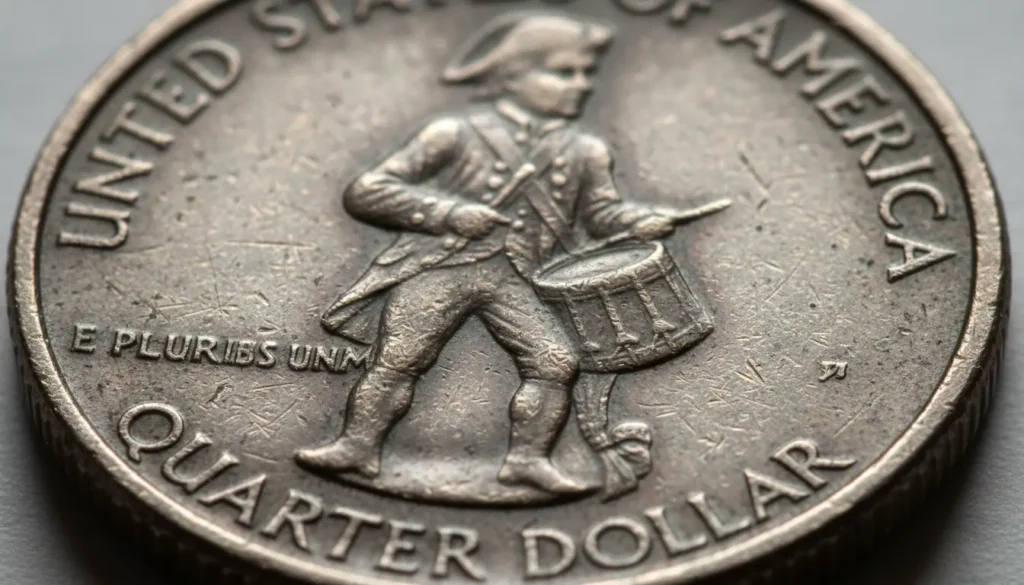
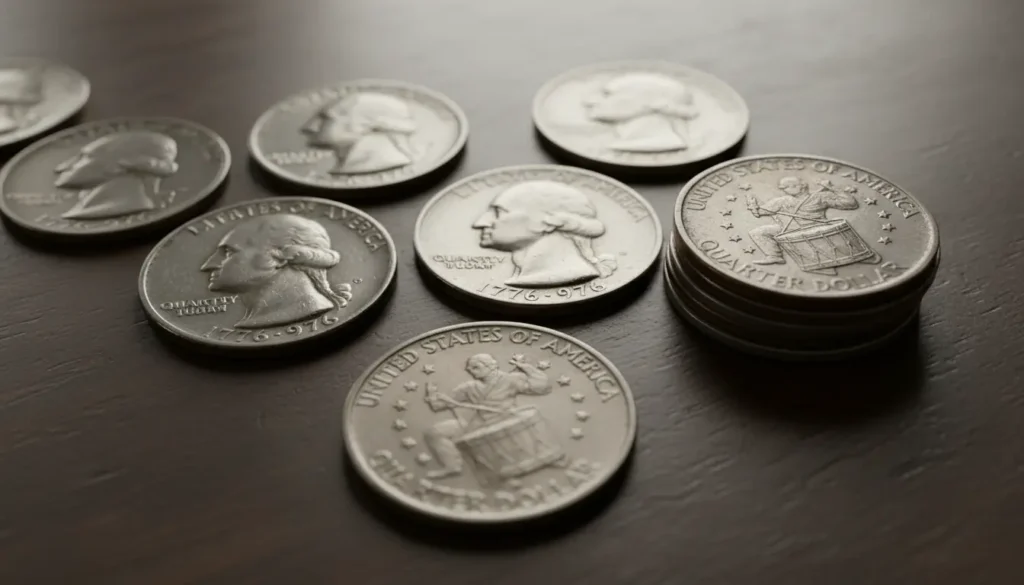
The Bicentennial Quarter was struck in 1975–1976 to celebrate America’s 200th anniversary. It features a special reverse design showing a colonial drummer and a victory torch. These coins were made for regular circulation and proof sets, and some proofs were struck on 40% silver planchets for collectors.
Why Some Bicentennial Quarters Are Rare
Rarity can come from errors, experimental strikes, or surviving numbers in high grade. Most Bicentennial quarters are common, but a very small subset draws collector interest. Understanding what makes a rare Bicentennial quarter starts with identifying the specific rarity factor.
Minting Errors and Varieties
Errors can create collectible rarity. Common error types include doubled dies, die breaks, off-center strikes, clipped planchets, and wrong-metal strikes. A few Bicentennial quarters with significant, documented errors exist and can be worth substantially more than face value.
Condition and Grading
Condition matters. Mint State (MS) grades for circulation strikes and Proof (PR) grades for proofs determine market value. Even a scarce variety often needs an above-average grade to reach high auction prices.
Could Your Bicentennial Quarter Be Worth $1 Million?
Short answer: very unlikely. No widely documented sale of a Bicentennial quarter reached $1 million as of 2024. Modern coins from the 1970s rarely fetch seven-figure prices unless they are unique, historically significant, or linked to an extraordinary error that produces true one-of-a-kind specimens.
How Experts Value Rare Bicentennial Quarters
Professional valuers and auction houses use several criteria to price a rare Bicentennial quarter. Key factors include rarity, provenance, grade, market demand, and documentation.
- Rarity: How many examples exist? One-of-a-kind pieces are the most valuable.
- Provenance: Is there a reliable ownership history?
- Grade: High-grade coins (MS/PR 67+) are far more valuable than low-grade examples.
- Documentation: Photographs and expert opinions help verify errors.
- Market demand: Collector interest can swing prices significantly.
What To Do If You Think You Found a Rare Bicentennial Quarter
Follow a careful, step-by-step approach. Rushing or improper handling can damage a possible rarity and reduce its value.
- Inspect without cleaning. Use a magnifier and good light to look for doubling, die cracks, off-center strikes, or odd metal.
- Compare to reference images from reliable sources like PCGS, NGC, or major auction houses.
- Weigh and measure. Use a digital scale and calipers to check for wrong metal or planchet size.
- Document the coin. Take clear photos of both sides and any notable features.
- Get an expert opinion. Consult a reputable coin dealer or submit the coin to a recognized grading service (PCGS or NGC) for authentication.
- Avoid cleaning or polishing. Cleaning reduces value and may disqualify certification.
Many 1976 proof Bicentennial quarters were struck on 40% silver planchets for collectors. These silver proofs are collectible but are not automatically worth large sums unless they show significant, authenticated anomalies.
Real-World Example: Auction Records and Market Reality
Market data provide the best reality check. Auction databases and dealer price guides show that notable Bicentennial quarter errors have sold in the low thousands to low tens of thousands of dollars, depending on severity and grade. None have matched the top-tier sales of early U.S. coinage that can reach seven figures.
For collectors, this pattern is familiar: modern coins can be valuable, but extreme values usually belong to older, rarer, or historically unique pieces. If your coin has a clear, dramatic error backed by strong documentation and perfect condition, it could be very valuable — but a million-dollar result remains improbable.
Case Study: How a Collector Moves from Discovery to Sale
A collector found a distinct die crack and doubling on a circulated 1976 quarter in a coin roll. They photographed the coin, compared it to auction listings, and then took it to a local dealer. The dealer advised submission to a grading service. After certification as an authentic error and a strong grade, the coin sold at auction to a specialist for a price well above face value, illustrating the correct workflow from discovery to sale.
Conclusion
A rare Bicentennial quarter can be worth significantly more than face value, especially when a major mint error, exceptional grade, or clear provenance is present. However, reaching $1 million is extremely unlikely for a 1976 quarter. Follow careful steps: document, avoid cleaning, get expert opinions, and use established grading services before pursuing a high-value sale.
If you think you have a rare Bicentennial quarter, start with photos and an expert consultation. That practical approach protects value and guides you toward an informed outcome.