The 1976 Bicentennial quarter is a familiar coin to many Americans. Most are common and worth face value to small premiums, but a few rare varieties and errors can attract collector interest.
What Is a Bicentennial Quarter?
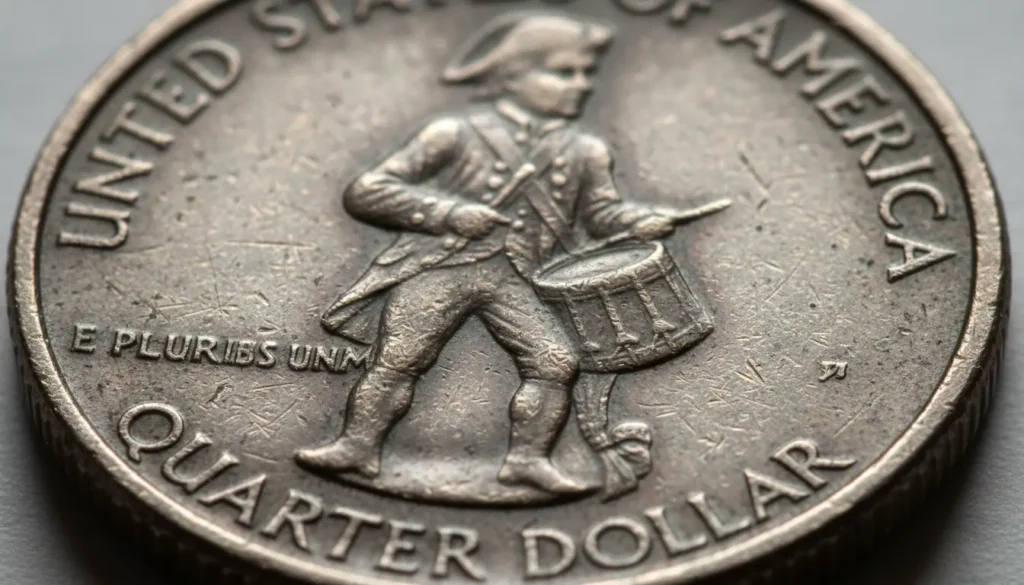
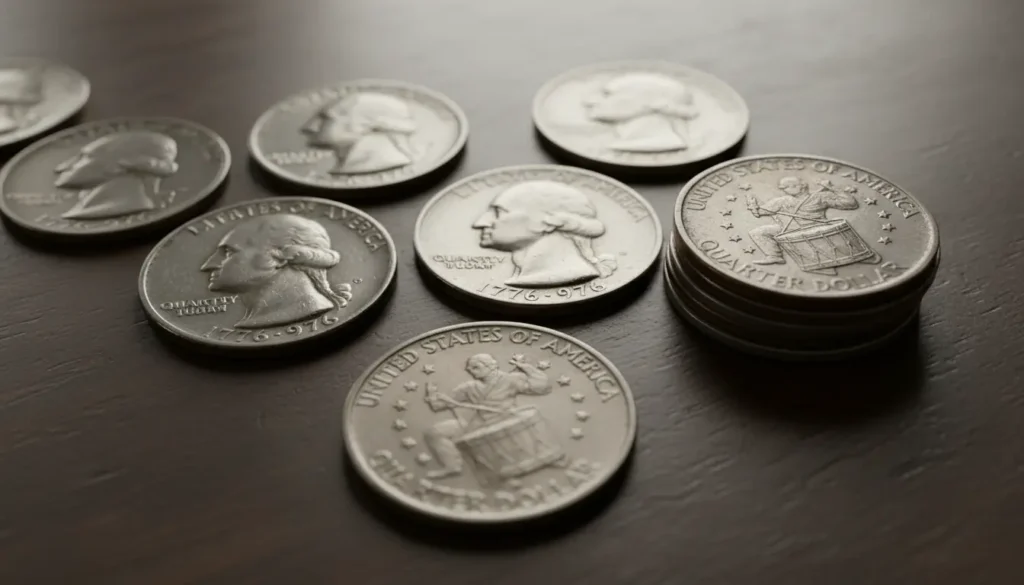
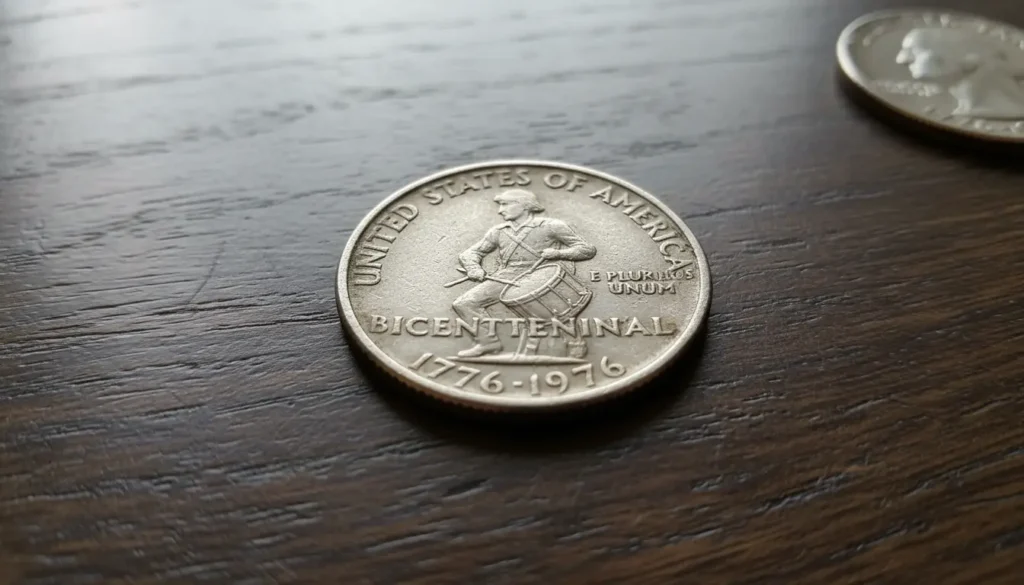
The Bicentennial quarter was issued to celebrate the 200th anniversary of the United States in 1976. It features a dual date 1776–1976 and the special colonial drummer reverse design.
Millions were produced in circulating and proof formats, plus special mint sets. High mintage makes most pieces common, but collectors search for unusual strikes, errors, and minting variations.
How to Identify a Rare Bicentennial Quarter
Finding a rare Bicentennial quarter requires close inspection and knowledge. Look for errors, mint marks, special finishes, and condition extremes that can raise value.
Key features to check
- Mint mark location and presence (no mint mark, D, S) and oddities around it.
- Obverse and reverse doubling or doubled die characteristics.
- Off-center strikes, clipped planchets, and other physical errors.
- Proof versus circulation strike; proof coins often have cameo contrast and sharper detail.
- Condition—uncirculated coins graded by major services (PCGS, NGC) command higher prices.
Common Varieties and Known Errors
Collectors focus on several recognized varieties and errors. Many of these are subtle and require a loupe or microscope.
- Doubled die obverse or reverse, which can show doubling on dates, lettering, or design elements.
- Off-center strikes that reveal part of the design missing; value depends on degree and attractiveness.
- Die cracks and cuds that make each coin unique and sometimes desirable to specialists.
- SMS (Special Mint Set) or proof finishes from certain mints that are scarce in high grades.
Could Your Pocket Change Be Worth One Million Dollars?
Short answer: It is extremely unlikely, but not impossible in theory. The vast majority of Bicentennial quarters are common and sell for little over face value.
For a coin to approach a seven-figure price, it would need to be an extremely rare, historically important, or uniquely error-bearing piece in top condition. Such coins are exceptional across all coin series.
What would increase a quarter to near one million?
- Unique, museum-quality errors that are one-of-a-kind and well-documented.
- Historically significant provenance linking the coin to a famous event or collection.
- Unusually high-grade specimens of a true rarity with certified top population reports.
Even with those factors, reaching one million dollars for a Bicentennial quarter is not typical. More realistic premium scenarios are in the hundreds to low thousands for notable errors or proof coins.
Some Bicentennial quarters were struck as proofs, circulation strikes, and special mint sets. The colonial drummer reverse design was created specifically for the 200th anniversary and appears only on the 1976 quarters.
Steps To Verify and Sell a Rare Bicentennial Quarter
If you suspect you have a valuable Bicentennial quarter, follow a clear verification path. Proper steps protect value and increase buyer confidence.
Practical verification steps
- Inspect the coin carefully with a loupe (10x) and good light. Note unusual features, doubling, or damage.
- Compare with reference photos in specialized guides or online databases to identify varieties.
- Avoid cleaning or polishing the coin, as that can permanently reduce value.
- Consider professional grading if the coin appears rare or is in exceptionally high grade. Grading by PCGS or NGC adds market trust.
- If confirmed rare, consult reputable dealers or auction houses for appraisal and sale options.
Case Study: A Collector Who Found an Unusual Coin
A hobbyist found a 1976 quarter with a pronounced die crack and unusual doubling in a jar of change. Initial online research suggested it was a recognized error variety.
The collector sent the coin to a grading service, which verified the variety and assigned a grade. The coin sold through a reputable auction for a price well above face value, covering grading and seller fees and leaving the collector with a modest profit.
This case shows the realistic path from discovery to sale. The result was meaningful for the individual, but not a multi-million-dollar outcome.
Practical Tips for Everyday Coin Hunters
Most valuable finds come from careful, patient searching and knowledge-building. Beginners should focus on learning key varieties and handling coins properly.
- Carry a small loupe and a reference app or book when hunting coins.
- Join local coin clubs to learn from experienced collectors and share finds.
- Store potential treasures in coin flips or holders and avoid touching surfaces with bare hands.
- Document any discovery with photos and notes before sending coins for grading.
Final Assessment: Realistic Expectations
While a Bicentennial quarter worth one million dollars makes for an exciting headline, it is a highly unlikely outcome. Most valuable Bicentennial quarters achieve modest sums relative to other rare American coins.
If you find a Bicentennial quarter that looks unusual, follow verification steps, seek expert opinion, and consider professional grading. That approach gives you the best chance to realize true market value.
Good luck on your coin hunts, and remember that careful inspection and realistic expectations are the keys to success in numismatics.