Understanding the Bicentennial Quarter
The Bicentennial quarter was issued in 1975 and 1976 to celebrate the United States’ 200th anniversary. Most contain the standard copper-nickel clad composition, while special proof versions were struck in silver for collectors.
Millions of these coins were produced, so the vast majority are common. Still, certain varieties and errors can be rare and collectible.
What is the Bicentennial Quarter design?
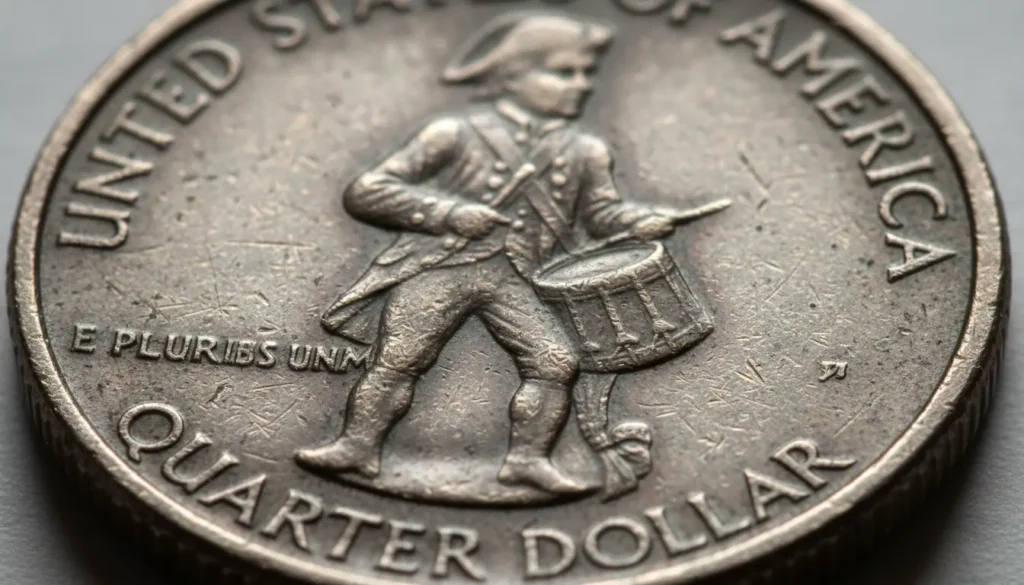
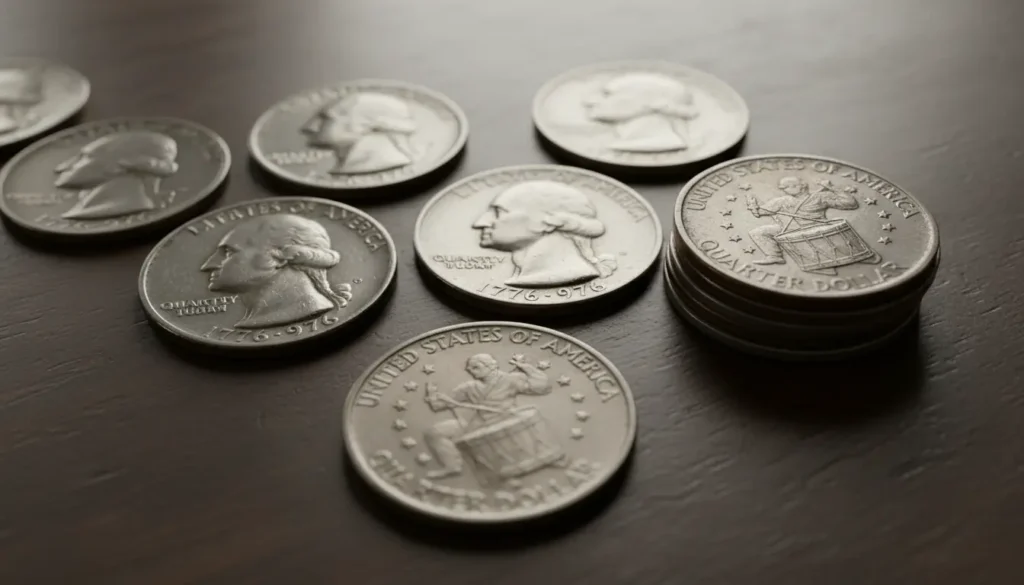
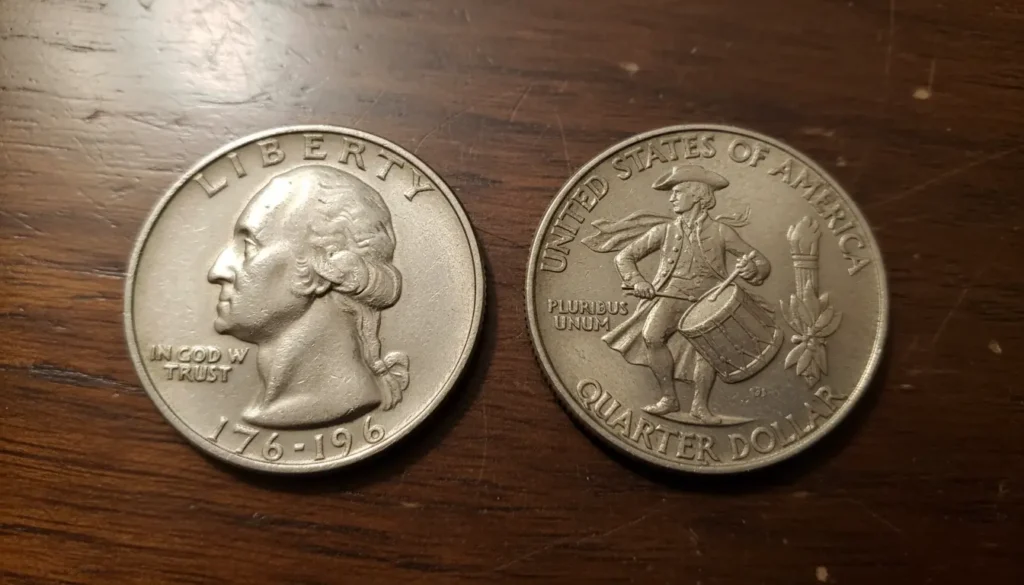
The reverse shows a colonial drummer and the dual date 1776-1976. The obverse has Washington’s portrait as in other quarters of the era. The design is familiar to many, which makes subtle differences important for rarity.
What Makes a Bicentennial Quarter Rare?
Rarity comes from limited production, unusual minting errors, or special metal content. For Bicentennial quarters, the main rare categories are mint errors, proof silver strikes, and high-grade pieces.
Common reasons a coin may be rare include:
- Off-center strikes or broadstrikes
- Double die obverse or reverse (visible doubling in lettering or date)
- Planchet errors like clipped planchets or wrong-metal strikes
- Mint state coins with exceptional surfaces and high grading
- Silver proof coins from 1976-S (limited and sought after)
Which mint marks matter?
Mint marks like D (Denver), S (San Francisco), and no mint mark should be checked. The 1976-S silver proof quarters are a particular collector focus because they were issued in a small silver proof set.
Could Your Pocket Change Be Worth $1 Million?
Short answer: highly unlikely. There are no widely documented, verified sales of a Bicentennial quarter reaching $1 million. Most valuable Bicentennial quarters sell for hundreds to a few thousands of dollars, depending on the error type and grade.
That said, dramatic rarities in coin collecting do exist. A truly unique, extreme error coin or a perfect specimen with an unusual provenance could attract high bids. But $1 million is an extreme outlier and not a reasonable expectation for most finds.
Realistic value ranges
- Common circulated Bicentennial quarter: face value to a few dollars
- Uncirculated mint state MS60–MS65: $5–$100 typically
- Proof silver 1976-S in high grade: $20–$300 depending on grade
- Notable errors (off-center, broadstrike): hundreds to low thousands
- Extremely rare, documented, and unique errors: potentially tens of thousands
How to Check and Value Your Bicentennial Quarter
Follow a simple, step-by-step approach to evaluate a potentially valuable coin. Being methodical reduces mistakes and helps you present the coin to buyers or graders.
Step-by-step checklist
- Examine the coin under good light and a 10x loupe for doubling or die breaks.
- Look for mintmarks near the date; note S, D, or none.
- Check for planchet or striking errors: off-center strike, clipped planchet, or wrong metal.
- Compare to reference images in reputable coin guides or the PCGS and NGC online databases.
- Weigh and measure the diameter if you suspect a wrong-metal strike.
When to get professional grading
If you find an error or the coin appears to be in exceptionally high condition, consider third-party grading. Grading adds credibility and helps with resale. Major services include NGC and PCGS.
How to Sell or Get a Coin Appraised
Selling without grading can reduce value because buyers price in uncertainty. Use grading for high-value candidates, and choose reputable auction houses or specialist dealers for errors and rare pieces.
Steps to sell responsibly:
- Get clear photos and document any provenance you have.
- Obtain a professional grade if the coin looks like a high-value candidate.
- Use specialized coin auctions or forums for sale; avoid quick online listings where possible.
Millions of Bicentennial quarters were minted, making most common. Small errors can still be valuable because collectors prize uniqueness over age alone.
Small Real-World Case Study
A casual collector once found a Bicentennial quarter that appeared off-center by about 20 percent. After posting clear photos to a coin forum, they consulted a local dealer who recommended third-party grading. The coin was verified as an off-center strike and later sold at auction to a specialist for several thousand dollars.
This example shows the process: discovery, research, grading, and sale. Each step increased buyer confidence and the final price.
Tips for Collectors and Finder Guidance
If you think you have a rare Bicentennial quarter, remain calm and follow these practical tips.
- Do not clean the coin; cleaning destroys surface details and reduces value.
- Handle coins by the edges to avoid oils from skin causing damage.
- Document where and how you found the coin; provenance can help in some sales.
- Get multiple opinions: online forums, local dealers, and grading services can offer different perspectives.
Final Takeaway
While it is very unlikely a Bicentennial quarter in your pocket is worth $1 million, uncommon varieties and mint errors can be valuable. Use careful inspection, reputable references, and third-party grading to determine value.
Being informed and methodical gives the best chance to turn a surprising find into a fair sale for both buyer and seller.