Most people have Bicentennial Quarters in jars or pocket change after the 1975–1976 coinage redesign. These coins were produced in huge numbers, but a few specific types and errors can be worth significantly more than face value. This article explains what to look for and how realistic a seven‑figure price really is.
What Is the Bicentennial Quarter?
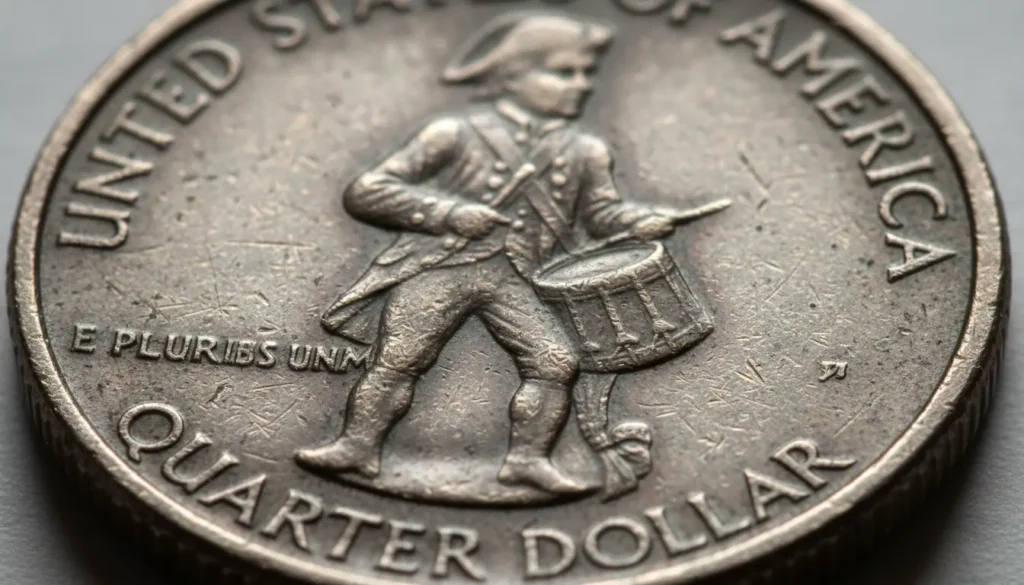
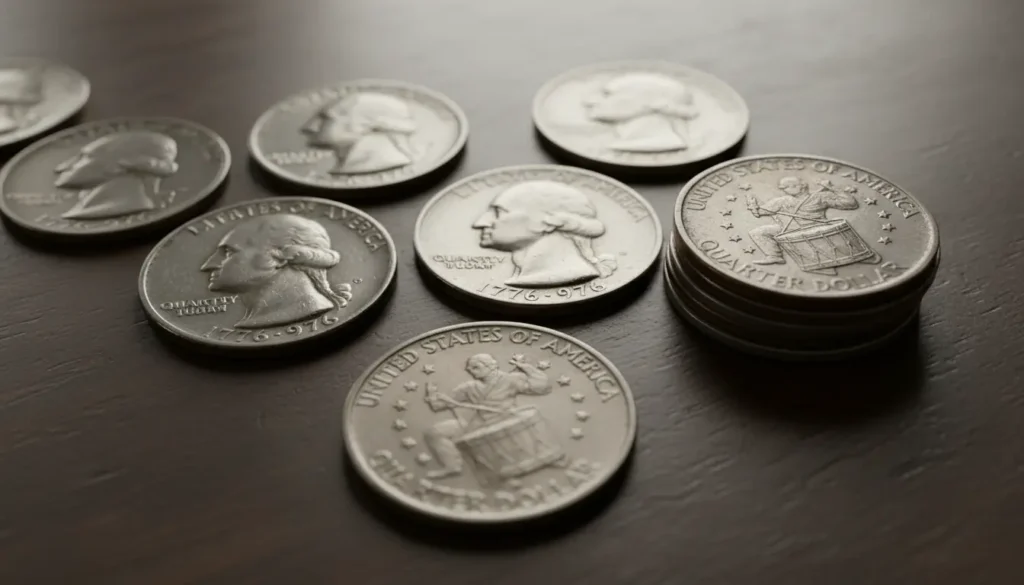
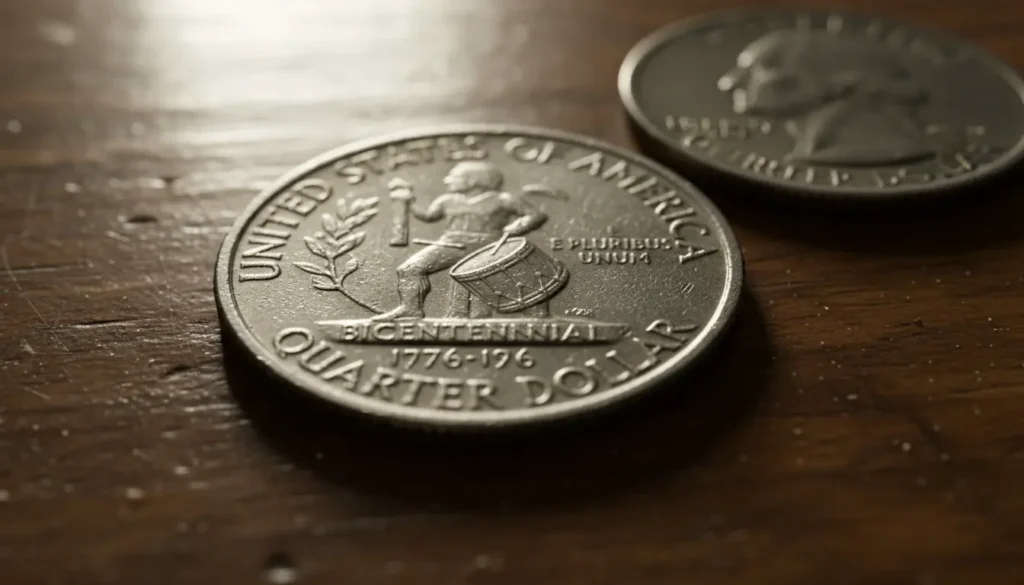
The Bicentennial Quarter is the U.S. 25‑cent piece dated 1776–1976. It replaced the regular Washington quarter reverse for the two‑year celebration of the United States Bicentennial.
Its reverse depicts a colonial drummer and 13 stars, and the dual date 1776–1976 appears on the coin. The design was intended for wide circulation and for special collector sets.
Why Some Bicentennial Quarters Are Valuable
Value comes from rarity, condition, composition, errors, and market demand. These factors affect any collectible coin, including the Bicentennial Quarter.
Key value drivers for Bicentennial Quarters include:
- Silver content — special 40% silver proofs and uncirculated pieces were produced for collector sets.
- High mint state grades — coins graded MS65 and above (or PR grades for proofs) gain premiums.
- Major minting errors — large off‑center strikes, die breaks, double dies, or wrong planchets.
- Scarce varieties — limited production run coins or misattributed mint marks.
Bicentennial Quarter Silver vs. Circulation Strikes
Most Bicentennial Quarters found in circulation are copper‑nickel clad and are common. The 40% silver versions were sold only in special mint and proof sets. Because those silver pieces were not released into circulation, they are less common and more collectible.
How to Check if Your Bicentennial Quarter Could Be Worth Money
Follow a clear inspection process to assess potential value. A careful, step‑by‑step check will save time and avoid mistakes.
1. Check the Date and Mint Mark
Look for the dual date 1776–1976 on the reverse. Mint marks (D, S, or none) are typically on the obverse under Washington’s neck. Note the mint mark carefully and compare with known varieties.
2. Identify Composition
Silver proof coins were produced for collectors. If the coin came from original mint packaging, it could be a silver version. Claimed silver coins should be authenticated because silver quarters are more valuable than clad circulation strikes.
3. Inspect for Errors
Major errors can boost value dramatically. Look for:
- Off‑center strikes (especially more than 15–20%)
- Broadstrikes or clipped planchets
- Die cracks, doubling, or wrong planchet strikes
Minor defects usually do not add much value, but dramatic, well‑documented errors may attract collectors and specialty dealers.
4. Grade and Authenticate
Send any candidate coin to a recognized grading service such as PCGS or NGC. A certified grade and authentication greatly increase buyer confidence and auction prices.
Realistic Market Expectations
Could a Bicentennial Quarter be worth 1 million? In practical terms, almost never. Millions of Bicentennial Quarters were produced, and even rare errors or silver proofs typically sell for hundreds to low tens of thousands of dollars—not seven figures.
Factors that limit seven‑figure values include high original mintage numbers, readily available certified examples, and strong but not extraordinary collector demand. Even dramatic modern coin errors seldom reach million‑dollar sales unless tied to extraordinary provenance or uniqueness.
What to Do If You Think You Have a Rare Example
If you believe you hold a valuable Bicentennial Quarter, follow these practical steps:
- Do not clean or polish the coin — cleaning destroys collector value.
- Photograph the coin clearly, showing obverse, reverse, edge, and any anomalies.
- Check records and recent auction results for similar coins to set expectations.
- Submit the coin for professional grading and authentication.
- Consult reputable coin dealers or auction houses for valuation and sales routes.
The Bicentennial design was used on quarters, half dollars and dollars in 1975–1976. Collector silver versions of these coins were sold in special mint and proof sets, making the silver pieces more collectible than common circulation strikes.
Case Study: A Found Collector Coin
A small estate sale contained a sealed mint set dated 1976. One collector recognized the packaging as containing a silver‑clad Bicentennial Quarter and sent the coin for grading. The certified proof grade and original packaging helped the piece sell well above typical circulation values at a specialist auction.
This example shows how packaging, certification, and presentation matter. The same coin, if removed from original packaging and poorly preserved, would likely fetch much less.
Summary: Could Your Pocket Change Be Worth 1 Million?
While the idea is exciting, a Bicentennial Quarter in circulation is extremely unlikely to be worth a million dollars. Valuable examples exist, but they are rare and usually command prices in the hundreds to low tens of thousands of dollars range.
If you suspect you have a rare Bicentennial Quarter, document it, avoid cleaning it, and seek professional grading and appraisal. That path gives you the best chance of realizing the coin’s true market value.
For beginners, joining a local coin club or consulting price guides and recent auction results can help you learn how to spot coins worth a closer look. Careful handling and proper authentication are the keys to turning a surprising find into a fair sale.