The idea that a single Bicentennial quarter from your change could be worth $1 million is exciting. This guide explains what makes a Bicentennial quarter rare, how to check one properly, and realistic expectations for value. Follow these practical steps before assuming you have a fortune in your pocket.
What is the Bicentennial Quarter?
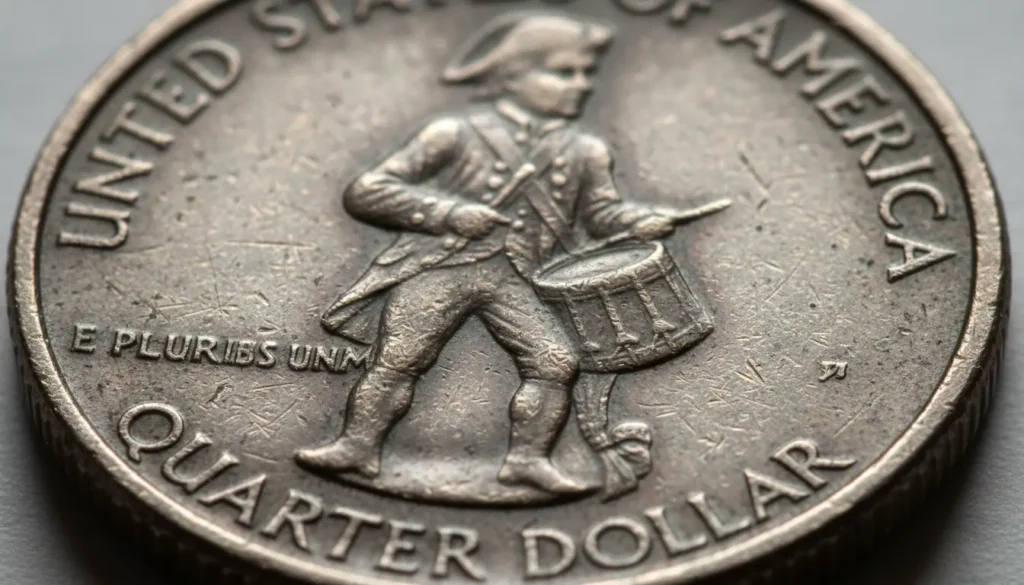
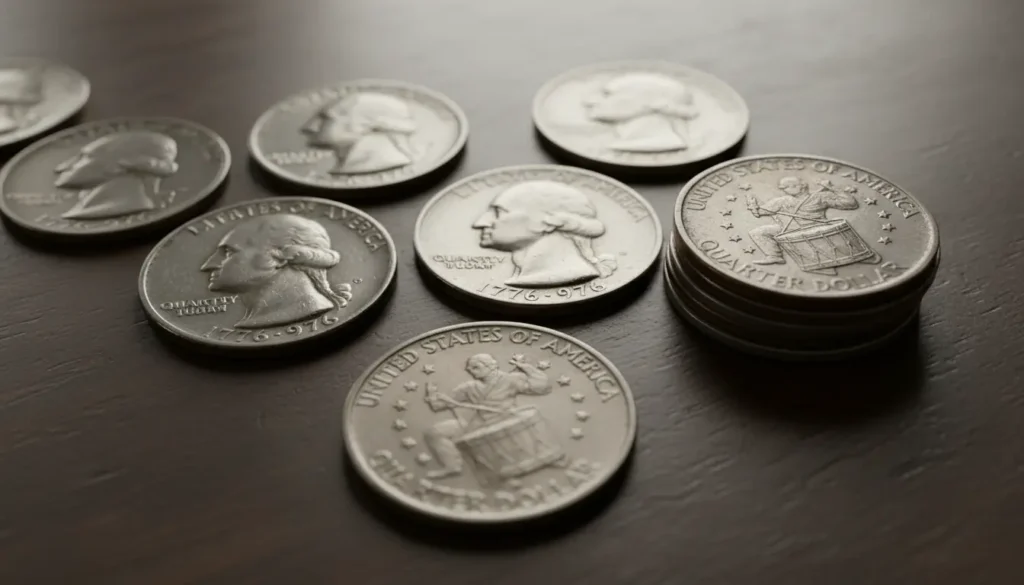
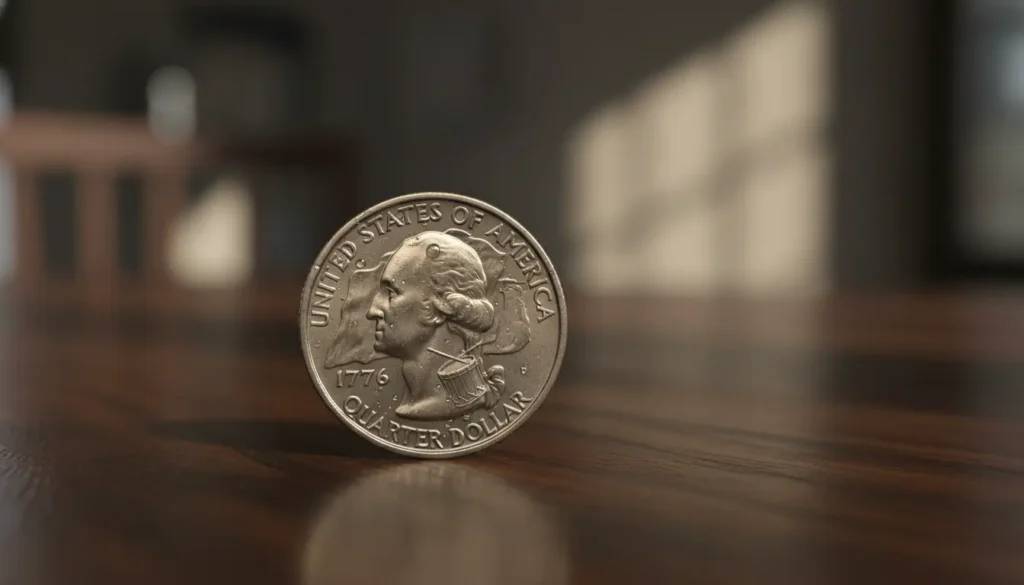
The Bicentennial quarter was issued in 1975–1976 to mark the United States Bicentennial. It carries the dual date 1776–1976 and a special reverse design showing a colonial drummer and a victory torch encircled by 13 stars.
The coins were struck for circulation and special collector sets. Most pieces you find in change are common copper-nickel clad issues, while collectors often seek proof or silver-clad examples from mint sets.
Why Some Bicentennial Quarters Are Valuable
Most Bicentennial quarters are common and worth face value or minor premiums in uncirculated condition. A small subset becomes valuable based on condition, composition, or minting errors.
Key value factors for a Bicentennial quarter
- Condition and grade: High grades (MS/PR 65+) command higher prices.
- Composition: Silver-clad proof or uncirculated pieces from special sets are more sought after than circulation clad coins.
- Mint errors: Off-center strikes, double strikes, die breaks, or planchet defects can increase value dramatically.
- Scarcity and provenance: Verified rarity and documented history add to price.
Common valuable errors to watch for
Typical error types that can boost value include off-center strikes, broadstrikes, and significant die doubling. Not all errors are rare enough to be valuable, but dramatic or well-documented ones often attract collectors and bidders.
The Bicentennial quarter features a drummer on the reverse and the dual date 1776–1976. Special silver versions were produced for collectors and are distinct from circulation coins.
How to Check if Your Bicentennial Quarter Is Rare
Handle any candidate coin carefully and avoid cleaning or altering it. Follow these steps in order to evaluate potential rarity.
Step-by-step inspection
- Visual check: Look for the dual date 1776–1976 and any obvious damage or unusual features.
- Magnify: Use a loupe (5x–10x) to inspect for doubling, die cracks, or off-center characteristics.
- Identify mint marks: Check for D (Denver) or S (San Francisco) mint marks; S often denotes proof issues which can be more valuable.
- Compare: Use a reliable coin guide or online auction archives to compare photos of known varieties and errors.
- Seek expert grading: If you believe the coin is exceptional, submit it to a grading service like PCGS or NGC for authentication and grading.
Realistic Value Expectations
While sensational headlines sometimes suggest coins can be worth seven figures, Bicentennial quarters reaching $1 million are essentially unheard of in verified public sales. Most high-value Bicentennial quarters sell in the range of tens to thousands of dollars, depending on rarity and condition.
Key takeaways:
- Face-value and common circulated pieces are worth 25 cents.
- High-grade proof or 40% silver-clad collector coins can fetch premiums but usually not astronomical sums.
- Exceptionally rare, well-documented error pieces can sell for multiple thousands; widely publicized million-dollar sales involve far rarer dates or denominations.
Case Study: A Misstruck Bicentennial Quarter Found in Change
A U.S. collector reported finding a noticeably off-center 1976 quarter in a jar of coins. The coin showed a large portion of the design missing due to a strike error and was submitted to a third-party grading service for authentication.
After grading and authentication, the coin sold at a specialty auction. Although not a million-dollar sale, the misstruck quarter fetched a strong premium compared with a standard quarter and highlighted how a clear, dramatic error can significantly increase value.
How to Sell a Potentially Valuable Bicentennial Quarter
If you believe you have a valuable coin, follow a careful selling process to maximize return and avoid scams.
Recommended selling steps
- Get authentication and grading from a respected service (PCGS, NGC).
- Research recent auction results for similar coins and error types.
- Choose a reputable auction house or specialized coin dealer for sale or consignment.
- Avoid public posts that solicit quick cash offers without verification.
Final Checklist Before You Get Excited
- Is the coin a 1776–1976 Bicentennial quarter? If not, it’s not the subject here.
- Does it show proof or silver-clad characteristics? Those are more collectible.
- Are there clear minting errors or unusually high grade? If yes, get professional grading.
- Have you compared it to verified auction examples? Use reputable databases and past sales.
In short, while the idea of a million-dollar Bicentennial quarter is extremely unlikely, rare and dramatic errors or top-graded collector pieces can still be valuable. Careful inspection, authentication, and research are the practical steps to determine if your pocket change holds real worth.