The Bicentennial quarter is one of the most recognizable U.S. circulating coins. Many people wonder whether a 1776–1976 quarter in their pocket could be worth huge sums of money. This article explains how to evaluate a Bicentennial quarter, which varieties are scarce, and what realistic values look like.
What is the Bicentennial Quarter?
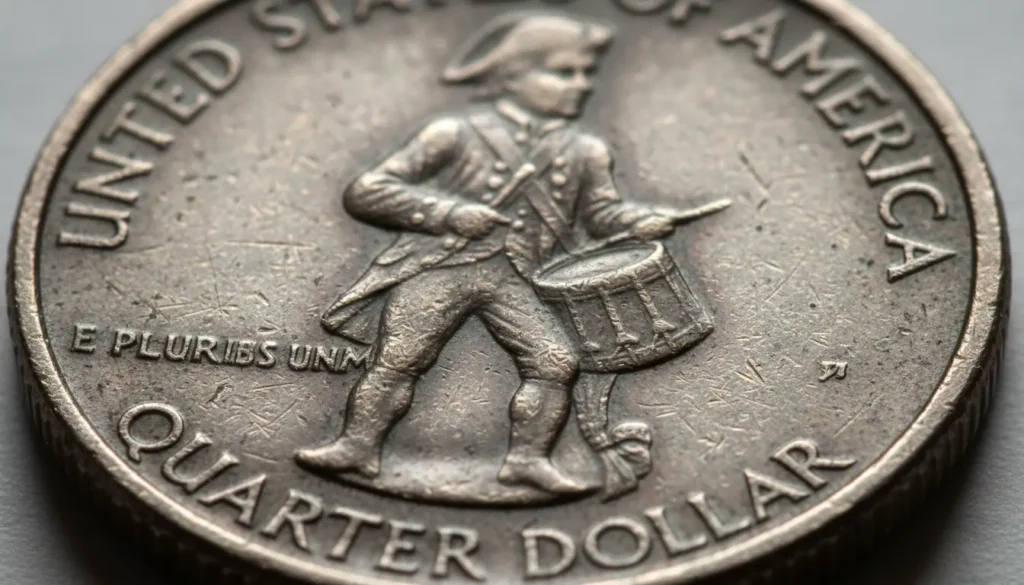
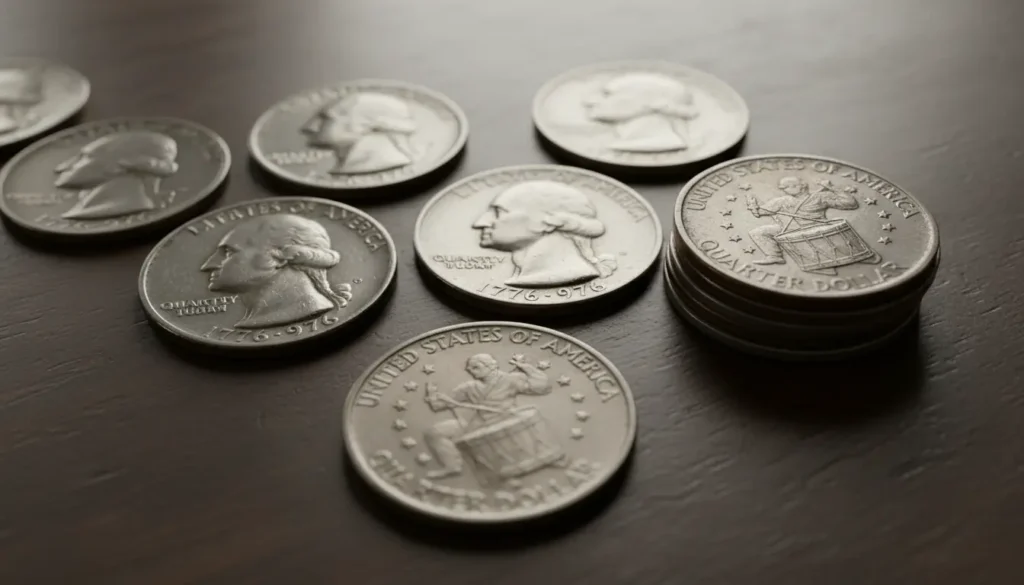
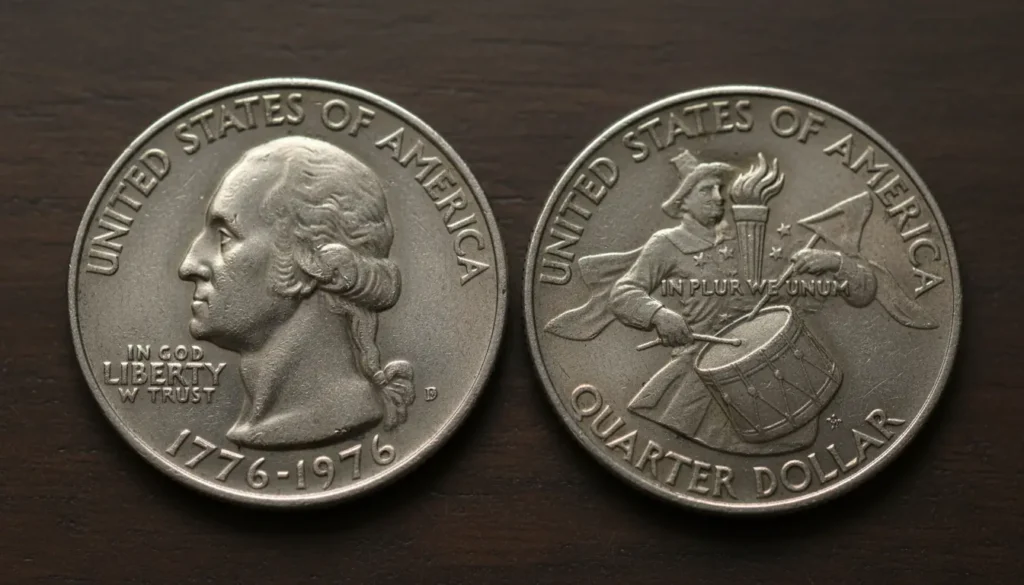
The Bicentennial quarter was issued to mark the United States’ 200th anniversary. The reverse features a colonial drummer and the dual date 1776–1976. These quarters were struck at Philadelphia, Denver, and San Francisco.
Most Bicentennial quarters were produced for general circulation, while San Francisco minted special proof and 40% silver-clad versions for collectors. Production numbers were large, which affects rarity and value.
Why the Million Dollar Question?
Online headlines sometimes suggest ordinary coins might be worth millions. For most modern circulating issues, including the Bicentennial quarter, that is very unlikely. Million-dollar sales usually involve extremely scarce early U.S. coins or unique error pieces.
That said, certain Bicentennial quarters can be valuable when they have dramatic errors, unusual minting variations, or exceptionally high grades from major grading services.
Which Bicentennial Quarters Are Potentially Valuable?
Focus on three categories when judging a quarter’s potential value: mint type, errors, and grade. Each affects price differently.
1. Silver Proofs and San Francisco Issues
San Francisco proofs (marked S) and the 40% silver-clad proof quarters are more desirable than ordinary circulation strikes. They were produced in limited numbers relative to circulation pieces and often come with deep cameo contrast.
2. Minting Errors
Errors that can add value include off-center strikes, broadstrikes, doubled dies, and significant planchet or cladding errors. The more dramatic and unusual the error, the higher the collector interest.
3. High Grades From Trusted Graders
Grades from PCGS or NGC can elevate value. An uncirculated coin graded MS67 or higher, or a proof graded PR69/70, carries a premium. But even high grades on common-date Bicentennial quarters rarely reach extreme prices.
How to Check Your Bicentennial Quarter
Follow these practical steps to assess a Bicentennial quarter found in circulation or a collection.
- Look at the reverse for the dual date 1776–1976 and the drummer design.
- Find the mint mark: no mint mark typically means Philadelphia, D for Denver, S for San Francisco (often on proofs).
- Check for obvious errors: off-center strike, doubling, missing layers of the clad planchet, or severe die cracks.
- Examine condition under magnification: hairlines, wear, luster, and contact marks matter for grading.
- Compare to known variety guides and error galleries online to spot potential rarities.
Getting a Professional Opinion
If you find what looks like an error or a coin in exceptional condition, get a second opinion. Reputable dealers or local coin clubs can offer guidance. For high-value claims, submit the coin to a third-party grading service such as PCGS or NGC for authentication and grading.
Grading services also maintain population reports which help you understand how many examples of a high-grade variety exist. This data strongly influences market value.
Realistic Value Expectations
Most Bicentennial quarters in circulation are worth face value or a small premium if in uncirculated condition. Silver proofs, significant errors, and high-graded examples may sell for hundreds to a few thousand dollars in many cases.
Extreme sales into five- or six-figure ranges are rare and typically require a combination of uniqueness, error severity, and excellent documentation. A million-dollar Bicentennial quarter would be extraordinary and has not been established as a market norm.
Quick Price Ranges (General)
- Common circulated Bicentennial quarter: face value to a couple of dollars.
- Uncirculated (MS60–MS65): modest premiums, often $5–$100 depending on eye appeal.
- San Francisco 40% silver proof: typically higher, ranging from $20 to a few hundred dollars.
- Recognized dramatic errors graded high: hundreds to low thousands; exceptional, documented pieces can fetch more.
Small Case Study
Case study: A collector discovered a 1976-S quarter with a noticeable off-center strike and strong original luster. After consulting a dealer and submitting the coin for authentication, the piece was graded as a high-end error by a major service and sold at auction to a specialist buyer for several thousand dollars.
This example shows the path from discovery to sale: identify, document, authenticate, and market to the right buyer. That route is how high prices are achieved—not by chance, but by process.
Practical Tips for Selling or Insuring
- Keep the coin in a protective holder to avoid further damage.
- Document how and where you found the coin and any initial observations.
- Get at least two independent appraisals for unusual pieces.
- Use reputable auction houses or dealers with a track record in error or modern-coin markets.
Bottom Line: Could Your Pocket Change Be Worth $1 Million?
While it is not impossible for a modern coin to command very high prices, a Bicentennial quarter reaching $1 million is extremely unlikely. Most value comes from limited mintage, rarity, and unique errors combined with top condition and strong buyer demand.
If you think you have a rare Bicentennial quarter, follow the verification steps above. Authentication and grading are the best ways to discover the true market value and avoid disappointment.