What is the Rare Bicentennial Quarter?
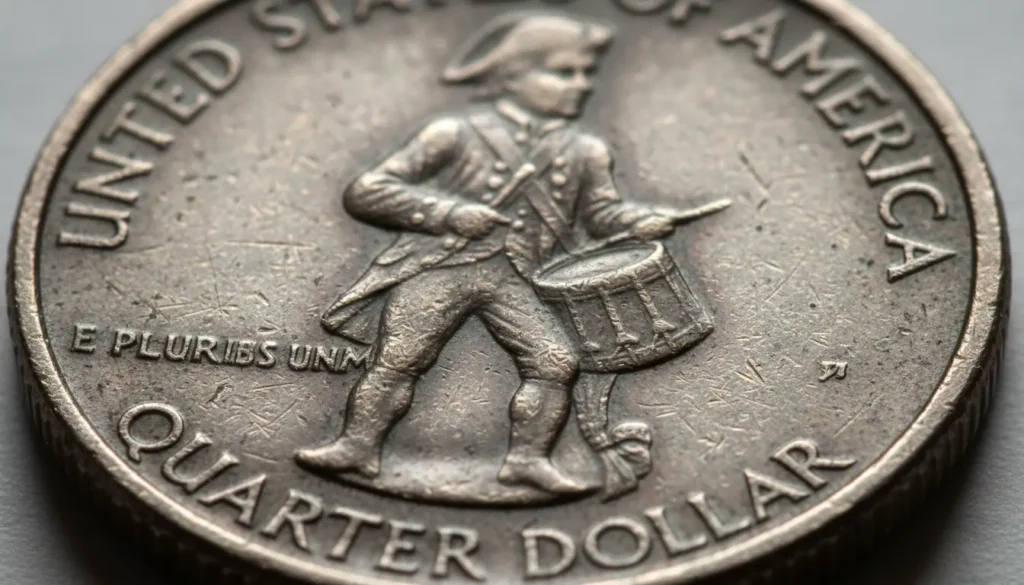
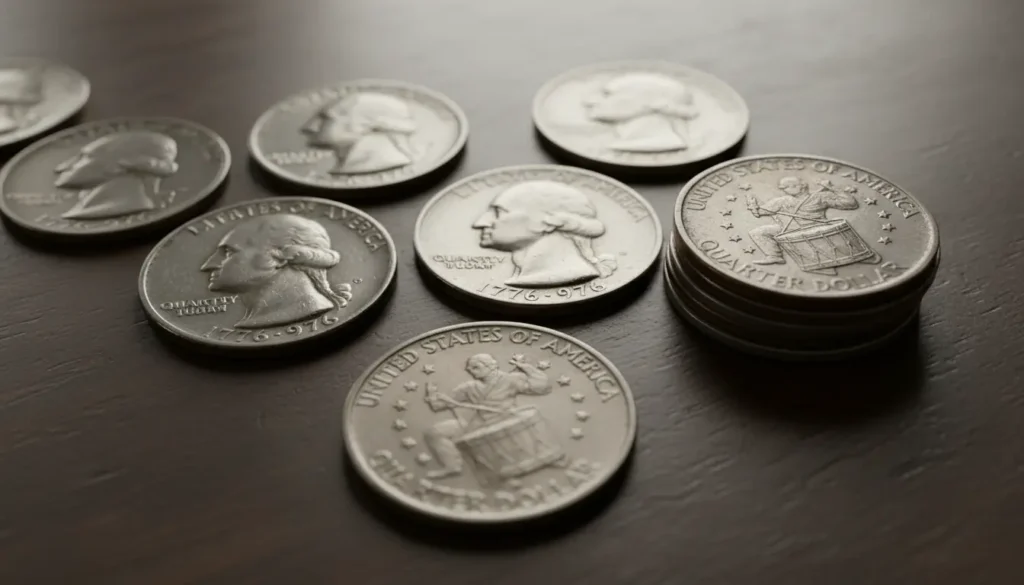
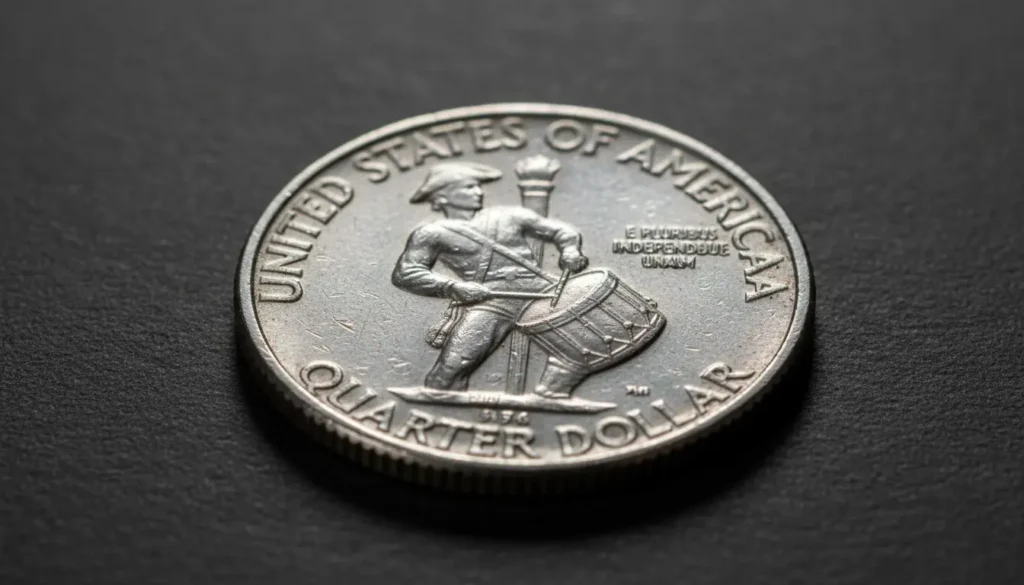
The Bicentennial quarter refers to the U.S. quarter struck for the 1776-1976 celebration. These coins carry the dual date 1776-1976 and a special reverse design. Most are common today, but certain varieties and errors can be scarce.
This article explains how a Bicentennial quarter could become valuable and gives practical steps to check your coins.
Why some Bicentennial quarters are worth more
Collectors value coins for rarity, condition, and demand. For Bicentennial quarters, the main value drivers are errors, minting variety, composition, and preservation. A normal circulated coin is still worth face value, while unusual specimens can attract collector interest.
Key value factors for a Rare Bicentennial Quarter
- Mint mark and mint location (P, D, S)
- Proof versus circulation strikes
- Silver content in special proof sets (40 percent silver strikes)
- Obvious minting errors like double die, off-center strike, or broadstrike
- High grade condition from professional grading services
Could a Bicentennial quarter be worth 1 million?
A million-dollar sale for a Bicentennial quarter would be extraordinary and is not documented in mainstream numismatic records. Most rare Bicentennial quarters sell for a few hundred to several thousand dollars, depending on the error and grade.
That said, coins have reached extreme prices when they are uniquely historic, have perfect preserved condition, or a strong provenance. For Bicentennial quarters, those scenarios are very rare.
How to inspect a Bicentennial quarter yourself
Follow these practical steps before assuming high value. Start with visual checks, then move to basic tests.
Step by step inspection
- Look at both sides under good light and a magnifier. Note any doubled letters, shifts, or odd shapes.
- Check the date area: Bicentennial quarters show 1776-1976 instead of a single year.
- Find the mint mark near Washington’s neck or on the obverse depending on strike year and type.
- Weigh and measure if you have precise tools. Unusual weight may indicate composition differences.
- Test for magnetism. Quarters are not magnetic; a magnetic response suggests later contamination or a non-standard planchet.
When to seek professional grading
If you find a visible error or an unusually nice specimen, submit the coin to a trusted third-party grader such as PCGS or NGC. Grading will authenticate the error and give an objective condition grade that buyers accept.
Professional grading costs money but can multiply the coin’s value and make it easier to sell in auctions or to collectors.
How dealers and auctions value Bicentennial quarters
Dealers use recent auction records, price guides, and demand to set prices. Errors with documentation and high grades can command premiums. Keep these tips in mind when selling:
- Get multiple opinions from dealers or graders
- Request an auction estimate if the coin is unusual
- Keep provenance and any original packaging or mint set information
Realistic value ranges
Typical values vary widely by condition and type. General ranges are:
- Circulated common quarter: face value to a few dollars
- Uncirculated circulation strike: low double digits in higher grades
- 40 percent silver proof in original set: often modest premiums over face, sometimes more
- Authenticated and dramatic mint errors: hundreds to thousands of dollars depending on rarity
Expect to see a wide spread. The million-dollar outcome is extremely unlikely without an unprecedented discovery or documented history placing a unique coin above standard market value.
The Bicentennial quarter was produced for 1975 and 1976 and all official circulation strikes bear the dual date 1776-1976. No standard circulation quarter was dated 1976 alone.
Case study: Finding value in a pocket find
A collector found a Bicentennial quarter in a jar at home and noticed an odd doubled lettering under magnification. They photographed the coin, compared images in reliable forums, and then submitted the coin to a third-party grading service.
Authentication confirmed a significant doubling on the reverse. The graded coin sold to a collector at a specialist auction for several thousand dollars. The seller used the auction house’s condition report and images to attract bidders.
This example shows the typical process: detect an anomaly, document it, authenticate, and then offer it through a reputable channel.
Practical checklist before you sell
- Document clear photos of both sides
- Retain any original packaging or mint set paperwork
- Seek at least two independent opinions or a grading submission
- Compare past auction records and dealer price guides
- Choose a selling channel: private sale, auction house, or online marketplace
Conclusion: Be realistic, but stay curious
The Rare Bicentennial Quarter can be valuable, but a 1 million valuation is near-impossible under known market conditions. Most increases in value come from authenticated errors, composition, and high-grade preservation.
Follow the steps here: inspect carefully, document, and use professional graders and reputable selling channels for the best chance of realizing any substantial value.