Understanding the Bicentennial quarter and why collectors care
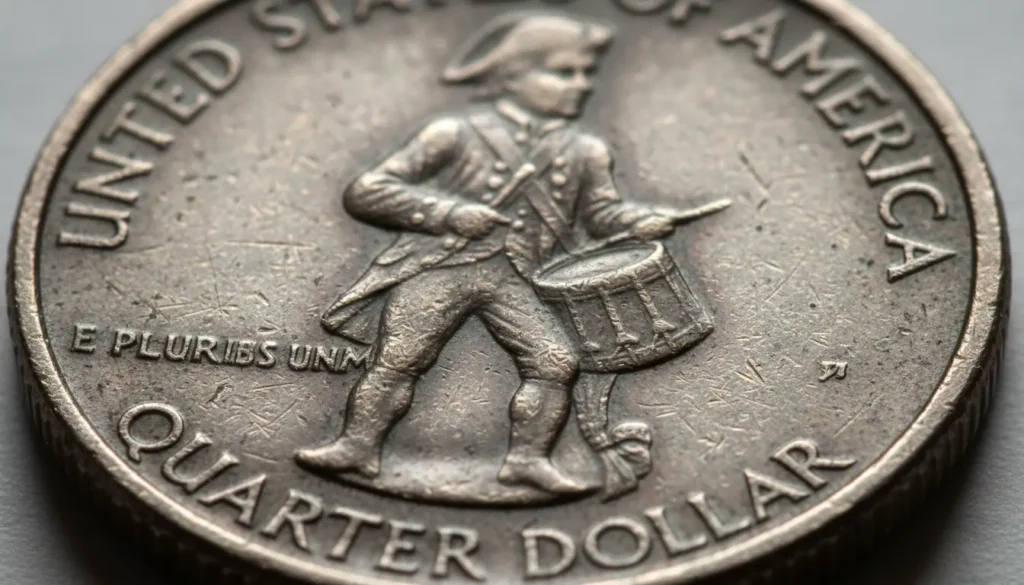
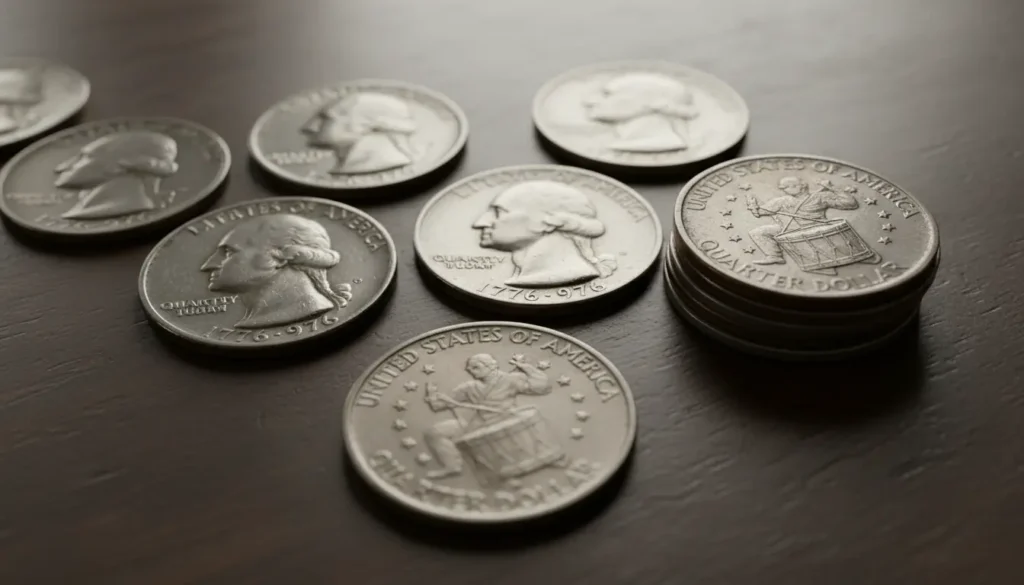
The Bicentennial quarter was issued in 1975–1976 to mark the United States bicentennial. It shows the dual date 1776–1976 and a special colonial drummer reverse. Millions were produced for circulation and collector sets.
Because so many were struck, most Bicentennial quarters are common. However, a few error coins and special mint runs can draw strong collector interest. This guide explains how to spot those rare Bicentennial quarter types and what could make one worth a very large sum.
What makes a rare Bicentennial quarter valuable?
Value comes from rarity, condition, and demand. For Bicentennial quarters, unusual factors include mint errors, mintages, and special silver proof examples.
Key value drivers include:
- Major die errors like double dies or dramatic off-center strikes.
- Unique minting mistakes such as wrong planchet or broadstrike varieties.
- High-grade specimens (MS65 and above) or certified pristine proofs.
- Authentication and professional grading that confirm the coin is genuine and rare.
Common Bicentennial quarter varieties
Collectors often look for differences between circulation strikes and proof coins, and for mintmarks like D (Denver) and S (San Francisco). There are also 40% silver proof quarters sold in special sets from the San Francisco Mint.
Examples of interesting types to check:
- 1976-S silver proof quarters from 40% silver proof sets.
- Circulation errors: off-center strikes, clipped planchets, and double die obverses or reverses.
- Unusual struck-throughs or repunched mintmarks that create unique appearances.
How to inspect a Bicentennial quarter yourself
Start with these practical steps. You do not need special tools to perform an initial check.
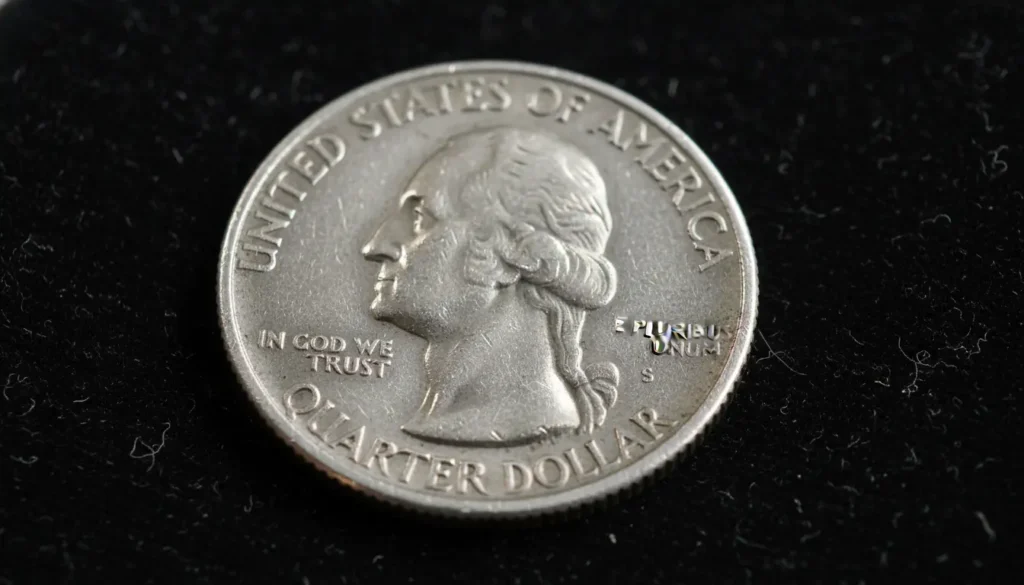
- Look closely at the date and mintmark under good light. Use a magnifier to spot doubling or repunching.
- Examine the rim and fields for die cracks, cud marks, or clipped planchet edges.
- Check the edge for reeding consistency; some errors alter the edge pattern.
- Do not clean the coin. Cleaning destroys surface details and reduces value dramatically.
When to seek professional grading and authentication
If you find a coin with a dramatic error or exceptionally sharp details, have it evaluated by a reputable grading service like PCGS or NGC. Submit only if you believe it may be valuable; grading fees and shipping costs apply.
Professional grading gives buyers confidence and typically increases market value for rare coins.
San Francisco struck special 40% silver proof Bicentennial quarters for collectors. These silver proofs are different from the clad circulation quarters and can have higher collector value when well preserved.
Realistic market expectations: could a Bicentennial quarter be worth one million?
In practical terms, a standard Bicentennial quarter from circulation is worth only its face value or a small premium in very high grade. Most valuable examples sell for hundreds to a few thousand dollars depending on rarity and condition.
Reaching a seven-figure price is extremely unlikely. That outcome would require a uniquely significant error or provenance that makes the coin historically important and wholly unique. Even then, buyers at that level are rare and cautious.
How to approach a coin you suspect is extremely valuable
- Stop handling the coin; store it in a soft, inert holder to avoid damage.
- Document the coin with high-resolution photos under multiple angles and good lighting.
- Contact a reputable coin dealer or auction house for a preliminary assessment.
- If the dealer suggests potential rarity, submit the coin for professional grading and authentication.
Case study: a careful find and the path to value
A collector found a heavily off-center Bicentennial quarter while sorting pocket change. The coin showed a dramatic displacement revealing part of the inner planchet and doubled imagery. The collector stopped handling the coin and photographed it.
They took the coin to a local coin shop, which advised professional grading. After authentication and grading, the error coin sold at a specialist auction for a strong premium over typical values. The sale demonstrated that rare, dramatic errors can attract collector interest—though not necessarily reach seven figures.
Practical tips if you think you own a rare Bicentennial quarter
- Do not clean, alter, or repair the coin.
- Store it in a proper holder or coin flip made from inert materials.
- Get multiple professional opinions before selling or consigning to auction.
- Keep documentation of how and where you found the coin; provenance can help at auction.
Final advice on rare Bicentennial quarter value
Most Bicentennial quarters are common and hold only modest value. Still, dramatic errors, high-grade proofs, and authenticated rarities can have strong collector demand. A million-dollar outcome is theoretically possible but highly improbable.
If you believe you have an unusual Bicentennial quarter, follow proper handling, document the coin, and use professional grading to confirm its value. That approach gives you the best chance to realize the coin’s true market potential.