What Is the Bicentennial Quarter?
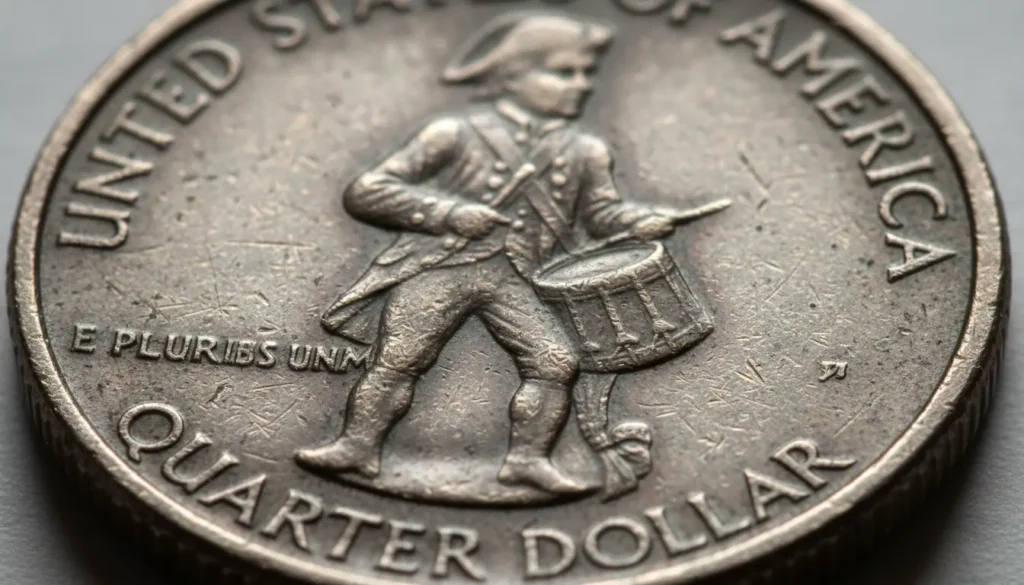
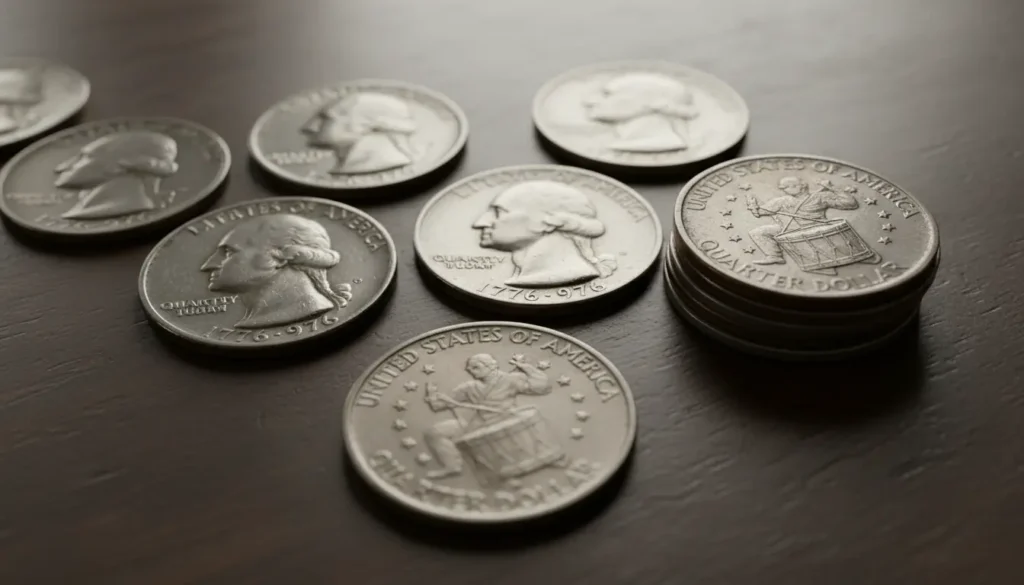
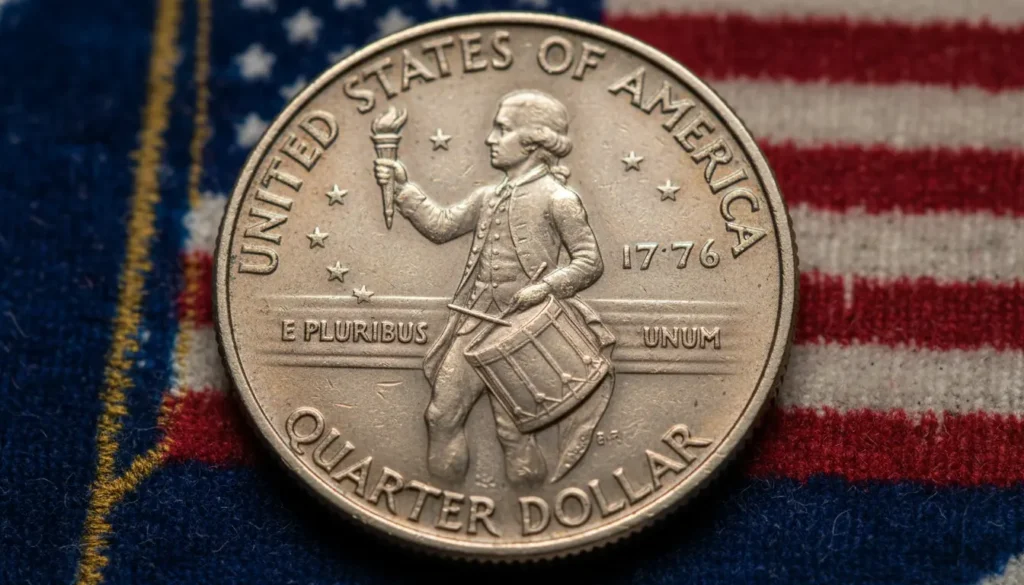
The Bicentennial quarter was issued in 1975–1976 to mark the 200th anniversary of American independence. It features a dual date, 1776–1976, and a special reverse design with a colonial drummer by Jack L. Ahr.
These coins were produced in large quantities for circulation and in special proof and mint sets. That wide production makes most Bicentennial quarters common and of modest value.
What Makes a Rare Bicentennial Quarter Valuable?
Value comes from scarcity, condition, and collector demand. For Bicentennial quarters, the usual value drivers are unusual errors, mint state condition, and special mint issues.
Common value factors
- Mint errors: off-center strikes, clipped planchets, broadstrikes, doubled dies, or repunched mint marks.
- High grade: coins graded MS67–MS70 (mint state) or PR69–PR70 (proof) by major services like PCGS or NGC.
- Silver composition: 1976-S proof quarters struck on 40% silver planchets were released in special sets and can command a premium.
- Provenance and rarity: documented pedigrees or uniquely rare varieties increase interest.
Could a Bicentennial Quarter Be Worth $1 Million?
Short answer: extremely unlikely. The Bicentennial quarter was minted in the hundreds of millions, so typical specimens have little intrinsic rarity.
For a modern coin like this to approach seven figures, it would need a combination of extraordinary factors: a unique, dramatic error; absolute perfection (a universally accepted MS70 or PR70); and strong buyer interest tied to an exceptional story or provenance.
Why million-dollar values are improbable
- High mintage reduces scarcity and long-term collector demand.
- Even notable error coins from common-date issues typically sell for thousands or tens of thousands, not millions.
- A million-dollar sale usually involves historically significant coins with tiny surviving populations or legal and cultural stories that magnify value.
Most Bicentennial quarters in circulation are worth face value. Only specific errors, silver proofs, or top-graded pieces carry notable premiums.
How to Check If Your Bicentennial Quarter Is Valuable
Follow a step-by-step process to evaluate any potential rare coin in your pocket. Be methodical and avoid assumptions.
Step-by-step inspection
- Look at the date and mint mark. The coin will show 1776–1976; mint marks include D, S, or no mark for Philadelphia pieces.
- Examine the coin under a magnifier for doubling, off-center strikes, or unusual planchet issues.
- Compare to images of known error types online or in numismatic guides.
- Weigh and test composition only if you have proper equipment; otherwise leave testing to professionals to avoid damaging the coin.
- If you find a potential error or an exceptionally clean specimen, photograph both sides and document how you acquired it.
When to seek professional help
If your inspection reveals an obvious error or the coin looks flawless and mirror-like, submit it to a reputable third-party grading service (PCGS, NGC) for authentication and grading. Certification often increases buyer confidence and market value.
Real-World Case Study
A collector brought a 1976-S proof quarter from a storage box to a local coin shop after noticing deep mirror fields and strong contrast. The dealer suspected it was a 40% silver proof in exceptional condition and recommended submitting it to a grading service.
After certification as a high-grade proof with deep cameo contrast, the coin sold at a regional auction for a price well above face value, demonstrating how provenance and certification add measurable value. The sale was notable but far from seven figures.
Tips to Maximize Value
If you think you own a valuable Bicentennial quarter, take careful steps to preserve and document it. Small actions can affect final sale price.
- Do not clean or polish the coin; cleaning can severely reduce value.
- Store the coin in a soft, non-reactive holder and avoid handling the surfaces.
- Document discovery circumstances and any receipts or prior ownership information.
- Get photos and consider professional grading for high-potential pieces.
- Research auction records and consult experienced dealers before selling.
Conclusion
While it is fun to imagine a Bicentennial quarter hiding a million-dollar value in your pocket, the reality is that such outcomes are extraordinarily rare. Most Bicentennial quarters are common and trade at modest premiums only when errors or exceptional grades are present.
That said, if you find a quarter with a striking error or an apparent perfect strike, document it and seek expert authentication. You may have a coin worth far more than its face value, even if a million dollars remains unlikely.