What Is the Bicentennial Quarter?
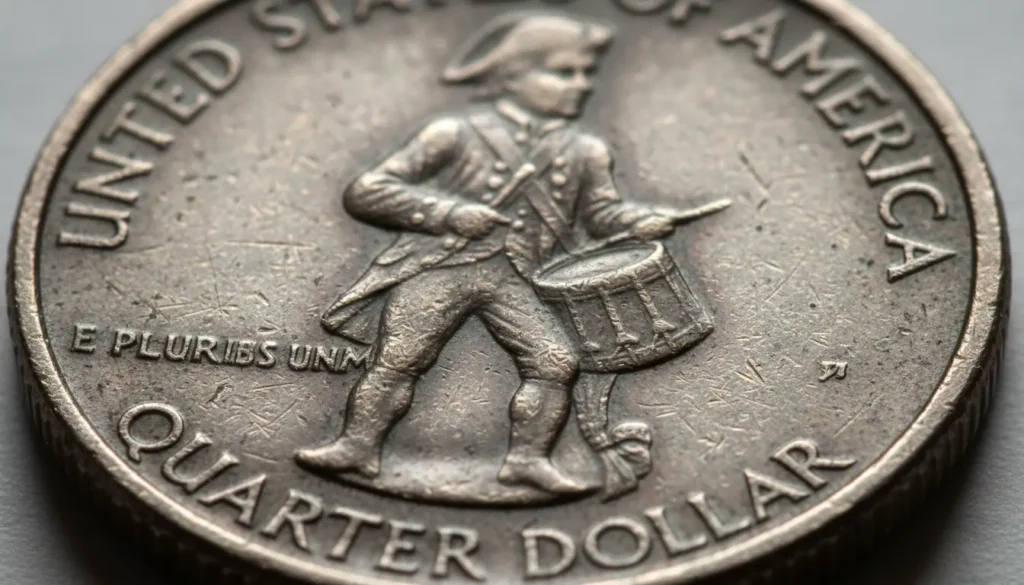
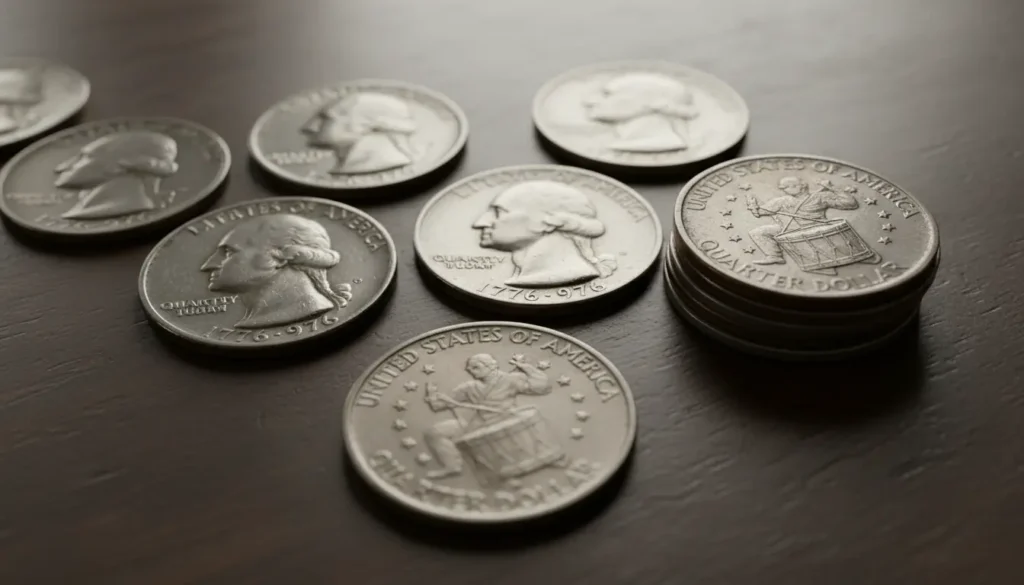
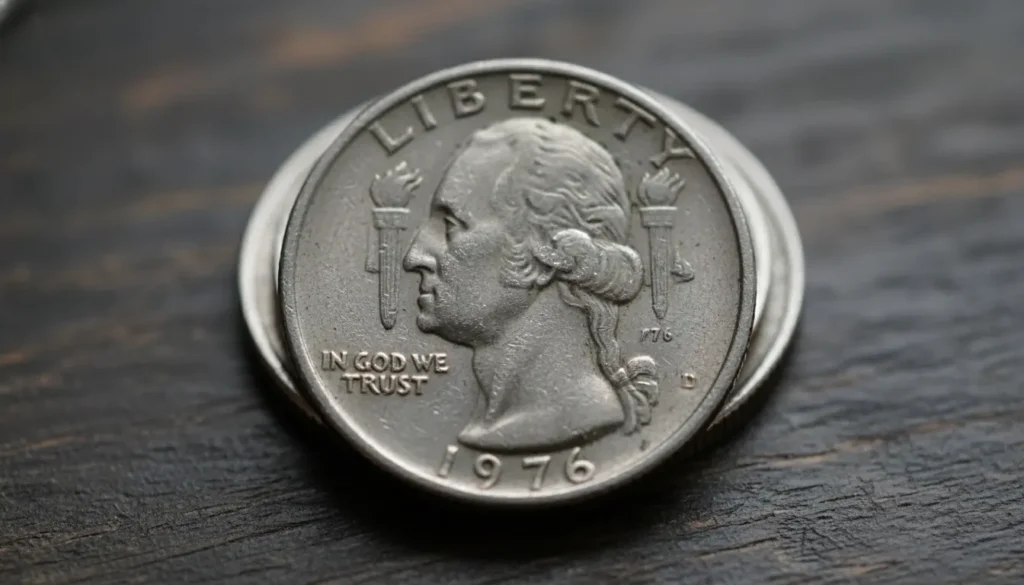
The Bicentennial quarter is a U.S. 25-cent coin issued to celebrate the 200th anniversary of American independence. It carries the dual date “1776–1976” and a special reverse design showing a colonial drummer and a victory torch encircled by 13 stars.
These quarters were minted in large numbers and circulated widely, so most are common. Still, certain varieties, errors, and high-grade proof pieces can attract collector interest.
Why Some Bicentennial Quarters Are Rare
Rarity comes from low production, unique errors, minting varieties, or exceptional condition. For the Bicentennial quarter, the following factors create scarcity:
- Proof and silver-clad proof strikes with low surviving populations.
- Minting errors such as off-center strikes, double dies, or clipped planchets.
- Unique die varieties or repunched mint marks that are documented by specialists.
- Extremely high grades (MS/PR 67 and above) that few coins achieve.
How to Identify a Rare Bicentennial Quarter
Every collector should know what to look for. Simple checks at home can reveal whether a coin deserves professional attention.
Look for Mint Marks, Date and Type
All Bicentennial quarters are dated 1776–1976. They were produced at Philadelphia (no mint mark on most circulations), Denver (D), and San Francisco (S). Proof versions and silver-clad proofs were primarily from San Francisco.
Knowing the mint helps narrow value ranges since some mint-marked proof pieces had lower surviving numbers.
Check for Errors and Varieties
Common collectible attributes include:
- Off-center strikes — the design is cut off due to misalignment.
- Doubled die obverse or reverse — doubling on letters or imagery.
- Clipped planchets — missing edge segments from the blanking process.
- Die cracks and die breaks creating unusual raised lines.
Use a loupe (10x) or a magnified photo to inspect lettering, stars, and the drummer detail for anomalies.
Could a Bicentennial Quarter Be Worth $1 Million?
Short answer: extremely unlikely. A Bicentennial quarter would need to be a unique, historically significant, and verifiably authenticated error or variety in perfect condition to approach a seven-figure value.
Most valuable Bicentennial quarters that come to market reach prices in the low thousands to tens of thousands of dollars depending on rarity and grade. The market values are driven by collector demand, documented rarity, and auction competition.
What Would It Take to Reach $1 Million?
For a modern commemorative coin like the Bicentennial quarter, the following conditions would be needed:
- A unique or singular error with clear photographic evidence and provenance.
- Official grading by top services (PCGS, NGC) with a top-population grade.
- Strong collector interest and rivalry at major auctions.
- Documented historical significance or a celebrity connection boosting demand.
Even when multiple factors align, reaching $1 million remains very rare for 20th-century quarters.
How to Get a Bicentennial Quarter Properly Evaluated
If you think you have a special quarter, follow a methodical path to confirm value and sell responsibly.
- Keep the coin safe in a soft holder; avoid cleaning or handling the surfaces.
- Photograph the coin with good lighting and a macro lens or phone camera close-up.
- Compare with reference guides and online databases of errors and varieties.
- Send high-quality photos to reputable dealers or online forums for a preliminary opinion.
- If promising, submit the coin to a professional grading service (PCGS or NGC) for authentication and grading.
Case Study: Finding Value in an Unexpected Place
A collector found a worn 1776–1976 quarter in a jar of coins. At first glance it looked ordinary. He photographed the obverse and reverse, noticing unusual doubling near the drummer’s arm.
After posting images to a specialist forum, members suggested it might be a doubled die reverse. He sent the coin for grading and authentication. The certified coin attracted interest from multiple collectors and sold for several thousand dollars at auction — far above face value, but not close to seven figures.
The Bicentennial quarter carries the dates 1776–1976 but was actually minted in 1975 and 1976. These coins were struck to meet demand for the bicentennial year.
Practical Tips for Sellers and Buyers
If you want to buy or sell, use these practical steps to reduce risk and maximize value.
- Use graded coins for high-value transactions—grading gives buyers confidence.
- Work with established auction houses or dealer members of the ANA (American Numismatic Association).
- Ask for provenance and prior sale records when prices seem unusually high.
- Keep realistic expectations: common Bicentennial quarters are worth face value or small premiums for circulated pieces.
Conclusion: Keep Your Eyes Open, But Be Realistic
While the idea that a pocket Bicentennial quarter could be worth $1 million is exciting, it is highly improbable. That said, genuine errors, low-population proofs, and top-grade examples do command notable prices.
If you think you own a rare Bicentennial quarter, document it, avoid cleaning, and seek authentication. Proper evaluation is the only way to turn a curiosity into confirmed value.