Overview of the Bicentennial Quarter
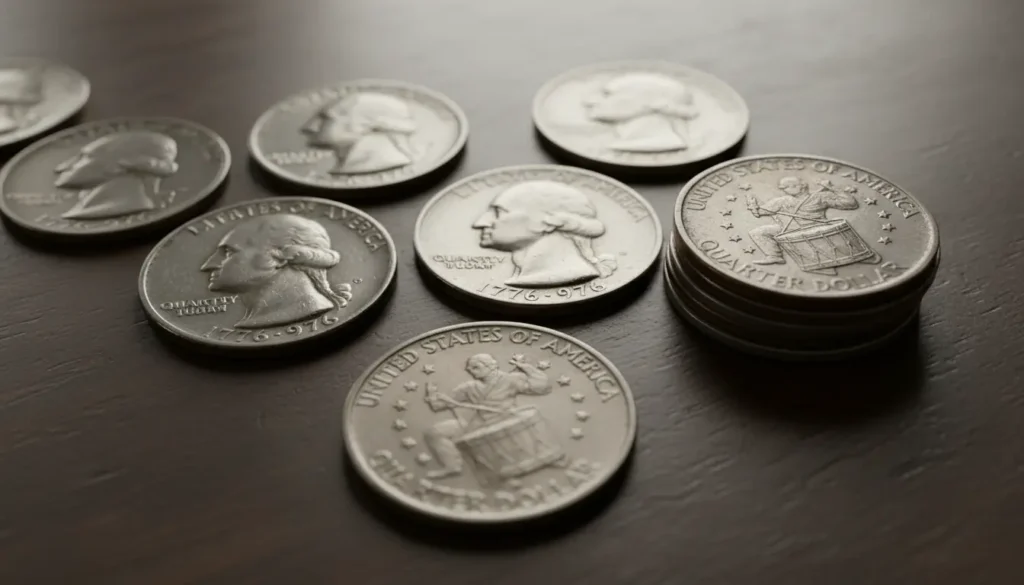
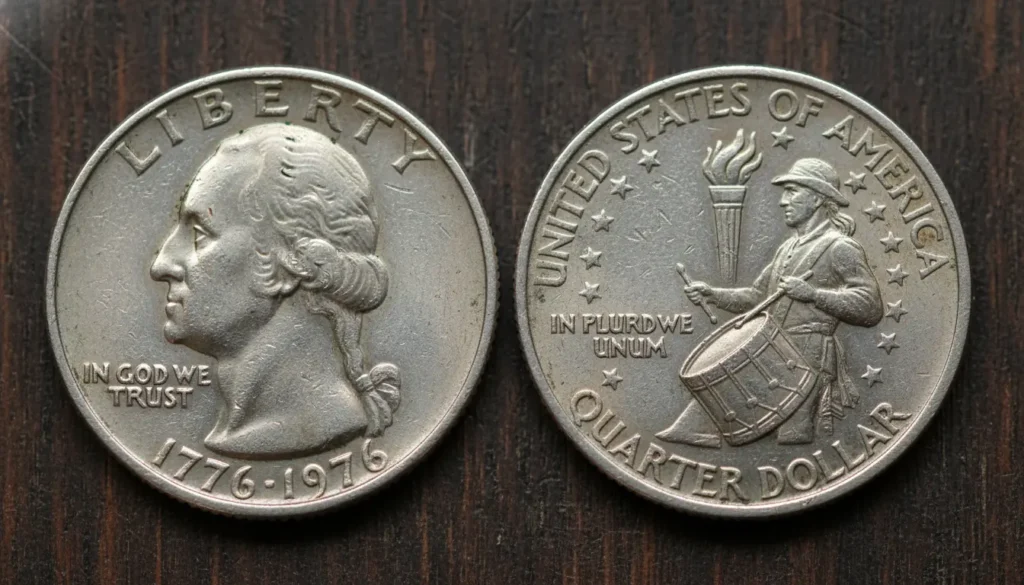
The Bicentennial Quarter was issued to mark the United States 200th anniversary. These coins carry the dual date 1776–1976 and a special reverse design that differs from the standard quarter.
Millions were made for circulation and collector sets, so most Bicentennial Quarters are common. A few rare versions and error coins attract strong collector interest.
What Makes a Bicentennial Quarter Rare?
Rarity comes from limited production, unique minting errors, or survival of high grades. For the Bicentennial Quarter these factors include proof or silver-clad issues and recognized mint errors.
Key elements that can raise value are condition, composition, mint mark, and documented errors. Market demand and professional grading also play large roles.
Common rarity factors for Bicentennial Quarter
- Silver-clad proof versions sold in special sets.
- High grade examples (MS65 and above or PR65+ for proofs).
- Recognized mint errors: off-center strikes, repunched mint marks, and doubling.
- Unusual die variations or proof-like business strikes.
How to Identify a Rare Bicentennial Quarter
Start with visual inspection. Look for unusual marks, inconsistencies, or mirror-like surfaces that suggest a proof or silver-clad strike.
Follow a step-by-step check:
- Verify the date: look for 1776–1976 on the coin.
- Look for a mint mark and note it (P, D, S, or none).
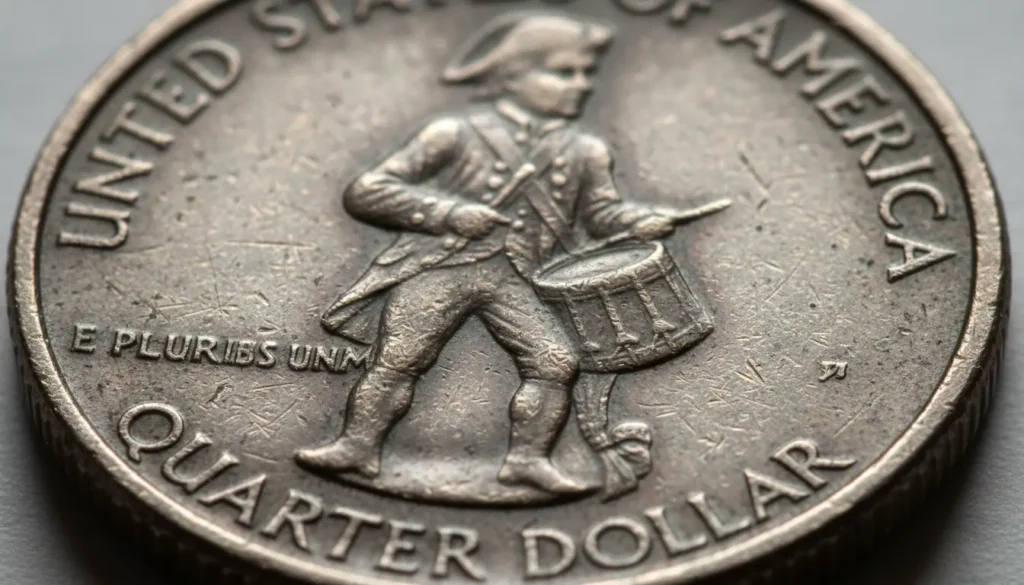
- Check the reverse design: the drummer and torch motif is standard for Bicentennial quarters.
- Search for obvious errors: misalignment, doubling, or off-center strikes.
Tools and simple tests
- Use a magnifier (10x loupe) to inspect die marks and doubling.
- Compare with images from reputable coin guides or the U.S. Mint.
- Weighing and dimension tests help confirm composition—use a calibrated scale if available.
Are Any Bicentennial Quarters Worth 1 Million?
A million-dollar valuation for a Bicentennial Quarter is extremely unlikely. No widely documented sale supports a regular Bicentennial quarter reaching that number in typical market conditions.
However, theoretically rare combinations—an authenticated, one-of-a-kind major mint error in flawless grade—could attract extraordinary bids. The realistic market for top Bicentennial examples tends to be in the hundreds to low thousands dollars, with exceptional pieces reaching higher.
What Values Can You Expect?
Typical circulated Bicentennial Quarters are worth face value or modest premiums to collectors. Proofs, silver-clad collector strikes, and high-grade mint-state examples sell for more.
Example value ranges (general guidance):
- Circulated common: face value to a few dollars.
- Uncirculated MS60–MS64: low tens to low hundreds of dollars depending on eye appeal.
- High grade MS65+ or proof PR65+: hundreds to a few thousand dollars for very rare variants.
All official Bicentennial coins bear the dual date 1776–1976. The quarter reverse design featuring a drummer and torch was created just for the 200th anniversary.
Practical Steps If You Think You Have a Rare Bicentennial Quarter
Handle the coin carefully by the edges and avoid cleaning it. Cleaning can dramatically reduce value and grading potential.
Next actions to take:
- Photograph the coin with good lighting and magnified shots of notable features.
- Compare photos with reference guides and auction results from reputable dealers.
- Get a professional opinion: local coin dealer, coin club, or online forum.
- For high-potential coins, consider third-party grading from PCGS or NGC before selling.
How grading affects value
Professional grading documents condition and authenticity. A high grade (MS69–MS70 or PR69–PR70) can multiply value and give buyers confidence.
Grading costs money, so prioritize coins that show strong potential on initial inspection.
Case Study: What a Careful Approach Can Yield
A collector discovered a Bicentennial Quarter in a box of inherited coins and noticed a mirrored proof-like surface. They photographed the coin and asked for opinions on a coin forum.
After sending high-quality images to a reputable dealer, the coin was submitted to a grading service. It received a high proof grade and sold at auction for several thousand dollars. The collector credited careful documentation and professional grading for the result.
Final Checklist Before You Sell or Submit
- Confirm the coin has the 1776–1976 date and correct reverse design.
- Document any visible errors or unusual features with clear photos.
- Research recent auction results for similar coins and grades.
- Choose a reputable grader and, if selling, a trusted auction house or dealer.
Bottom Line on the Million Dollar Question
While it makes for a compelling headline, the chance that a random Bicentennial Quarter in your pocket is worth 1 million is effectively zero. Still, some Bicentennial Quarters hold real collector value.
If you think you found something unusual, follow the steps above: document, research, and consult professionals before making decisions.